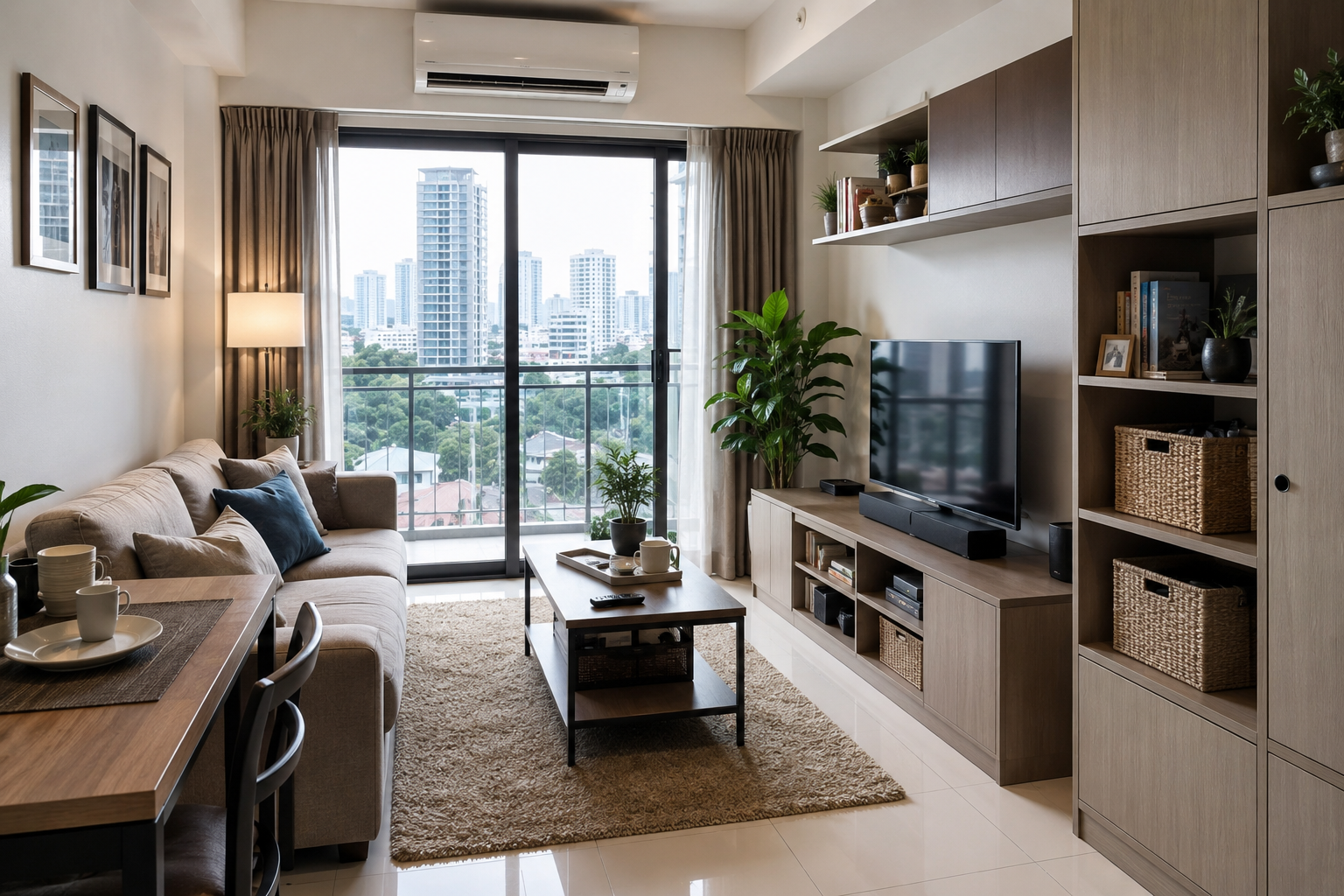
Living in a condominium has plenty of advantages. Condos can put residents close to offices, shopping centers, restaurants, schools, transportation, and entertainment while reducing the amount of maintenance associated with a larger house.
The challenge is space.
A condo may provide everything you need for comfortable living, but the floor area can be considerably smaller than a traditional home. A poorly planned layout can quickly make a condo feel crowded, particularly when furniture, appliances, clothing, kitchen equipment, work-from-home supplies, and everyday belongings begin competing for the same limited space.
The good news is that small-space living does not mean sacrificing comfort or style.
With the right furniture, storage solutions, layout, lighting, and organization strategy, even a compact condo can feel spacious, functional, and comfortable.
The key is to stop thinking about space only in terms of floor area.
Instead, look at the unused vertical space, hidden storage, multifunctional furniture, circulation areas, and visual space within the condo.
Here are 10 practical small-space living ideas that can help you make the most of your condo.
1. Choose Multifunctional Furniture

One of the easiest ways to maximize a small condo is to make your furniture work harder.
In a large home, you might have room for a separate sofa, guest bed, office, dining area, storage cabinet, and entertainment unit.
In a smaller condo, having a separate piece of furniture for every function can quickly consume the available floor space.
Instead, look for furniture that serves two or more purposes.
Examples include:
- Sofa beds
- Storage ottomans
- Extendable dining tables
- Foldable dining tables
- Beds with drawers
- Lift-up storage beds
- Coffee tables with storage
- Fold-down desks
- Nesting tables
- Benches with hidden storage
- Modular sofas
- Wall-mounted desks
A storage ottoman, for example, can function as seating, a footrest, and a place to store blankets or other items.
A sofa bed can transform a living room into a guest sleeping area without requiring a dedicated guest bedroom.
Why multifunctional furniture works
Every piece of furniture occupies physical space.
If one piece performs several functions, you can potentially reduce the total number of objects occupying the room.
That doesn’t necessarily mean buying the smallest furniture available.
Instead, think about function per square meter.
A slightly larger piece that performs three functions may actually be more useful than three separate smaller pieces.
2. Use Vertical Space Instead of Only Floor Space

One of the most overlooked small-condo storage opportunities is the wall.
When floor space is limited, start looking upward.
Vertical storage can include:
- Tall bookshelves
- Floor-to-ceiling cabinets
- Wall-mounted shelves
- Hanging organizers
- Pegboards
- Floating cabinets
- Wall-mounted desks
- Tall wardrobes
- Kitchen wall storage
- Bathroom shelving
A tall cabinet can provide significantly more storage than a short cabinet occupying a similar amount of floor area.
Make the upper walls useful
Items that aren’t used every day can be placed higher up.
For example:
Easy-to-reach storage
Use for:
- Everyday dishes
- Clothing
- Work supplies
- Frequently used kitchen equipment
Higher storage
Use for:
- Seasonal items
- Luggage
- Extra bedding
- Decorations
- Rarely used appliances
A small folding step stool can make high storage much easier to access.
Don’t forget the area above doors
The wall space above a doorway is often wasted.
A shallow shelf or cabinet can provide useful storage without interfering with normal movement.
3. Select Furniture That Fits the Scale of the Condo
Large furniture can overwhelm a small room.
A massive sectional sofa may look impressive in a showroom but feel completely different when placed inside a compact condo living room.
Before buying furniture, measure:
- Wall length
- Door openings
- Elevator dimensions
- Hallways
- Window locations
- Electrical outlets
- Walking paths
- Existing furniture
Then compare those measurements with the furniture’s actual dimensions.
Don’t rely on appearance alone
Furniture can look relatively small in a large showroom because the surrounding room is enormous.
Before purchasing, use masking tape on the floor to outline the furniture’s footprint.
For example, mark the planned dimensions of:
- Sofa
- Dining table
- Bed
- Desk
- Cabinet
Then walk around the marked area.
This gives you a much better idea of whether the furniture will actually work.
4. Create a Flexible Dining Area
A dining table can take up a surprising amount of space.
If you live alone or with one other person, you may not need a large permanent dining table.
Consider:
- Two-person dining tables
- Drop-leaf tables
- Extendable tables
- Wall-mounted tables
- Folding tables
- Narrow console tables
- Kitchen counters with stools
A drop-leaf table can remain compact most of the time and expand when guests arrive.
Another option is a narrow table placed against a wall.
When you’re eating, chairs can be pulled out. When the table isn’t being used, the chairs can be pushed underneath it.
Small dining areas don’t have to feel cramped
A mirror, pendant light, wall artwork, or attractive dining chairs can create a defined dining zone without requiring a large room.
5. Make Your Bedroom Work Harder

The bedroom is one of the most important areas to optimize because the bed already occupies a substantial amount of floor space.
Look for opportunities to use the space around and underneath it.
Consider a storage bed
Beds with drawers or lift-up platforms can provide storage for:
- Extra bedding
- Towels
- Seasonal clothing
- Luggage
- Shoes
- Household items
Use the space beside the bed
Instead of a traditional bedside table, consider a:
- Narrow floating shelf
- Wall-mounted nightstand
- Small drawer unit
- Headboard with built-in storage
This can preserve valuable floor space.
Consider a wall-mounted bedside light
Replacing table lamps with wall-mounted lights can free up the surface of a small nightstand.
6. Keep the Kitchen Organized by Frequency of Use

Small condo kitchens can become cluttered quickly because appliances and cookware compete for limited counter and cabinet space.
A useful approach is to organize your kitchen according to how frequently you use each item.
Everyday items
Keep easily accessible:
- Plates
- Cups
- Cooking utensils
- Coffee supplies
- Frequently used cookware
Occasionally used items
Store farther away:
- Baking equipment
- Specialty appliances
- Large serving dishes
- Holiday cookware
Rarely used items
Consider higher cabinets or storage areas outside the kitchen.
7. Take Advantage of Hidden Storage
One of the best small-space living ideas for condos is to use storage that isn’t immediately obvious.
Examples include:
- Storage under beds
- Ottomans
- Hollow benches
- Storage behind mirrors
- Cabinets above toilets
- Drawers under sofas
- Over-door organizers
- Storage beneath desks
- Built-in wardrobes
- Furniture with concealed compartments
The goal is to reduce visual clutter
A room can have plenty of storage and still look messy if everything is visible.
Closed storage helps create a cleaner visual appearance.
For example, instead of having several baskets, boxes, appliances, and household supplies sitting around the living room, use one properly sized cabinet to contain them.
8. Use Mirrors and Lighting to Create a More Open Feeling
You cannot physically make your condo larger with a mirror.
But you can make the space feel more open.
Mirrors can reflect:
- Natural light
- Windows
- Artwork
- Attractive architectural features
- Open areas
A large mirror positioned strategically can add visual depth.
Lighting matters too
A small room with one ceiling light can feel flat and cramped.
Consider layering:
- Ceiling lighting
- Floor lamps
- Wall lights
- Under-cabinet lighting
- Desk lamps
- Accent lighting
Warm, comfortable lighting can make a compact condo feel much more inviting.
Don’t block natural light
Avoid placing tall cabinets or furniture directly in front of windows unless necessary.
Natural light is one of the easiest ways to make a small room feel larger.
9. Create Zones Instead of Separate Rooms

A compact condo may not have enough space for a dedicated office, dining room, living room, and entertainment room.
That doesn’t mean each function needs its own room.
Instead, create zones.
For example:
Living zone
Sofa + coffee table + television
Work zone
Small desk + chair + wall storage
Dining zone
Compact table + two chairs
Sleeping zone
Bed + wardrobe + bedside storage
The important thing is to visually separate the functions.
You can use:
- Rugs
- Lighting
- Furniture orientation
- Shelving
- Curtains
- Paint
- Wall décor
A rug underneath a dining table can visually establish a dining zone without requiring walls.
10. Adopt a “One In, One Out” Approach
Even the best-designed condo will eventually become crowded if possessions continuously accumulate.
One of the most effective long-term small-space living strategies is simple:
When something new comes in, something old goes out.
For example, if you buy:
- A new pair of shoes → remove an old pair
- A new kitchen appliance → consider whether an older appliance is still needed
- New clothing → donate or sell something you no longer wear
- New décor → reconsider an item already occupying the same space
This isn’t about owning as little as possible.
It’s about making sure your belongings remain appropriate for the amount of space you have.
Bonus: Use a Space-Planning Checklist Before Buying Anything
Before purchasing furniture or storage for your condo, ask five questions:
1. What function does it provide?
Don’t buy furniture simply because it looks good.
2. How often will I use it?
Frequently used items deserve easier access.
3. Where will it go?
Know the exact location before purchasing.
4. What is its actual measurement?
Measure width, depth, and height.
5. Can another item perform the same function?
If yes, consider whether you actually need both.
This simple process can prevent many small-condo storage problems.
Small Condo Furniture: What Should You Prioritize?
If your budget is limited, prioritize furniture that provides the greatest combination of comfort, function, storage, and flexibility.
A practical priority list could look like this:
| Furniture | What to Look For |
|---|---|
| Sofa | Compact footprint, comfortable, possibly modular |
| Bed | Storage underneath |
| Dining table | Extendable or foldable |
| Coffee table | Storage or lift-top design |
| Desk | Wall-mounted or compact |
| Wardrobe | Tall rather than unnecessarily wide |
| Ottoman | Storage + seating |
| Shelving | Vertical and adjustable |
| TV console | Closed storage |
| Entry bench | Seating + shoe storage |
The exact choices depend on the condo’s layout and your lifestyle.
Small Condo Design Mistakes to Avoid
Sometimes creating more space isn’t about buying something new.
It’s about removing things that don’t work.
Avoid oversized furniture
A huge sofa can make the entire room feel smaller.
Avoid too many small decorative objects
Many tiny items can create visual clutter.
Avoid blocking windows
Natural light is valuable.
Avoid unused furniture
If you never use a chair, side table, or cabinet, it may be consuming space unnecessarily.
Avoid buying storage without measuring
A cabinet that doesn’t fit properly can create another problem instead of solving one.
Avoid filling every wall
Some empty wall space is useful. It allows the room to breathe visually.
Small-Space Living Doesn’t Mean Small Comfort
The biggest misconception about condo living is that a smaller home automatically has to feel uncomfortable.
It doesn’t.
The difference often comes down to planning.
A compact condo with carefully selected furniture, effective storage, good lighting, and clear zones can feel considerably better than a larger home filled with oversized furniture and unnecessary possessions.
The objective isn’t to squeeze as many things as possible into the condo.
It’s to make every square meter useful.
Frequently Asked Questions
How can I make my small condo look bigger?
Use appropriately scaled furniture, keep walkways open, maximize natural light, use mirrors strategically, reduce visual clutter, and make better use of vertical storage.
What furniture is best for a small condo?
Multifunctional and appropriately scaled furniture is usually the most useful. Consider storage beds, sofa beds, extendable tables, nesting tables, storage ottomans, and compact desks.
How do I maximize storage in a small condo?
Use vertical cabinets, under-bed storage, wall shelves, over-door organizers, built-in storage, and furniture with hidden compartments.
What colors are best for a small condo?
Lighter colors can help reflect available light and create an open visual feeling, although color choice should ultimately reflect your style and the condo’s lighting.
How do I make a small condo feel less cluttered?
Reduce unnecessary possessions, use closed storage, keep surfaces relatively clear, and assign a specific location to frequently used items.
Can I have a home office in a small condo?
Yes. A compact desk, wall-mounted desk, fold-down workstation, or dedicated corner can create a functional workspace without requiring a separate room.
How do I fit a dining area into a small condo?
Consider a two-person table, drop-leaf table, extendable table, wall-mounted table, or narrow dining counter.
Conclusion
Small-space condo living is ultimately a design and organization challenge rather than simply a question of square footage.
The most successful small condos make furniture perform multiple functions, use vertical space, control clutter, create flexible zones, and take advantage of natural light.
Start with the areas that cause the biggest problems in your home.
If your bedroom lacks storage, look underneath the bed.
If your kitchen counters are constantly crowded, reorganize according to frequency of use.
If your living room feels cramped, reconsider the size and function of the furniture.
And before buying anything new, ask whether it genuinely improves the way you use your home.
The best small-space living strategy isn’t fitting more things into your condo. It’s making better use of the space you already have.