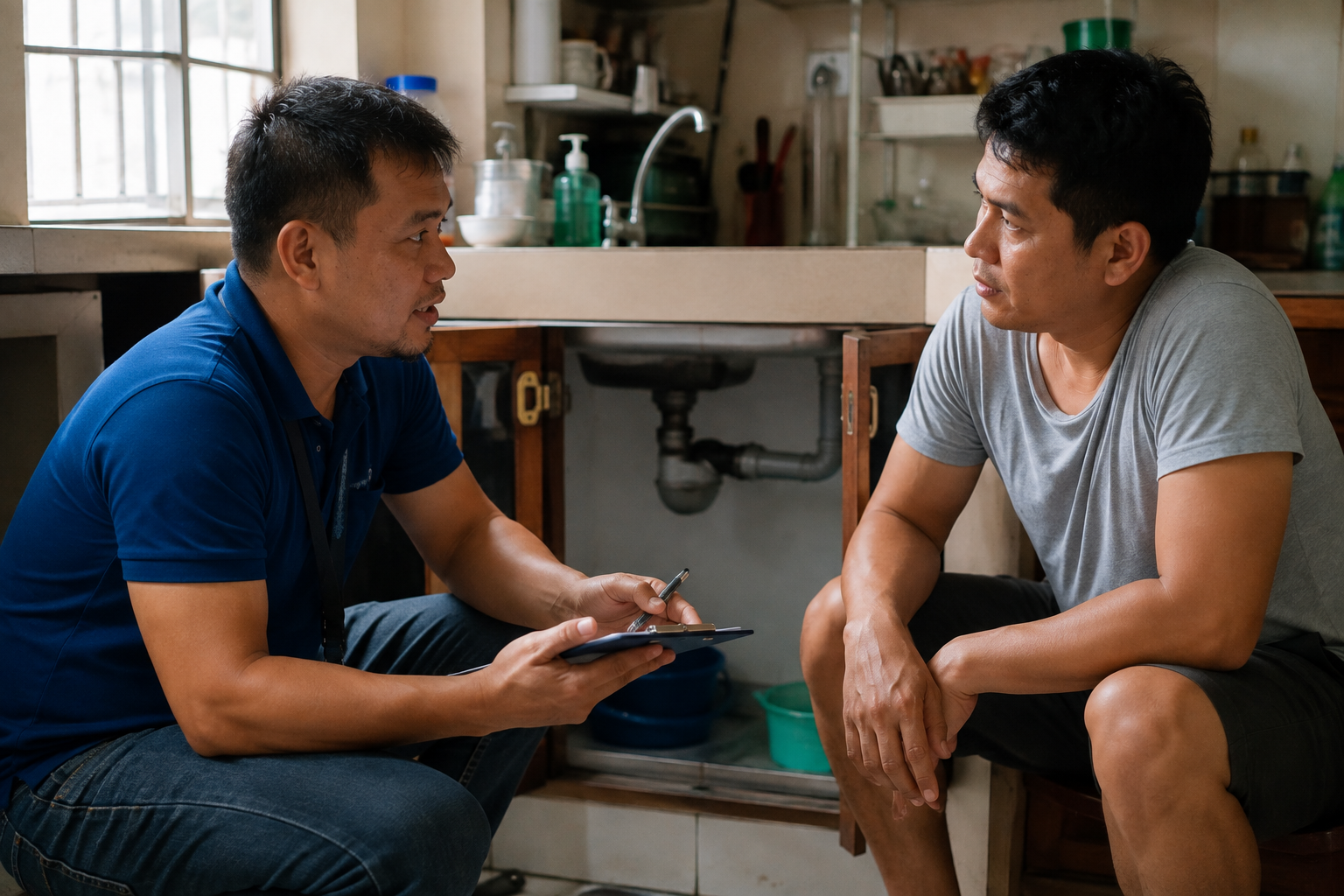
Tag: home repairs

  • How to Find a Reliable Plumber in the Philippines

    How to Find a Reliable Plumber in the Philippines

    Finding a plumber is easy.

    Finding a reliable plumber who arrives when promised, understands the problem, uses appropriate materials, explains the work clearly, and completes the repair properly can be much more difficult.

    A leaking faucet may be a simple repair.

    A leaking pipe inside a wall, recurring drain blockage, damaged sewer line, or major water leak can be considerably more complicated.

    Choosing the wrong person can result in temporary repairs, additional damage, wasted money, and the need to hire someone else to correct the original work.

    For homeowners in the Philippines, it is therefore worth taking some time to compare plumbing professionals before agreeing to a major repair.

    This guide explains how to find a reliable plumber, what to check before hiring, how to compare quotations, and what questions to ask.


    What Does a Plumber Do?

    Plumbers work with water supply systems, drainage systems, pipes, fixtures, and related plumbing installations.

    Depending on their experience and the project, plumbing services can include:

    • Pipe repairs
    • Pipe installation
    • Leak detection
    • Faucet repairs
    • Faucet installation
    • Toilet repairs
    • Drain cleaning
    • Drain repairs
    • Sink installation
    • Bathroom plumbing
    • Kitchen plumbing
    • Water supply systems
    • Water heater plumbing
    • New construction plumbing
    • Plumbing maintenance

    Not every plumber specializes in every type of project.

    That’s why the first question should be:

    “Do you handle this type of plumbing work?”


    Why Choosing the Right Plumber Matters

    A plumbing repair isn’t always about stopping water from leaking.

    The real objective is to identify and address the underlying problem.

    For example, if a pipe connection leaks, simply applying a temporary seal may stop water for a short period without addressing why the connection failed.

    Similarly, repeatedly clearing the same drain doesn’t necessarily solve the reason the blockage keeps occurring.

    A reliable plumber should be willing to explain:

    • What appears to be wrong
    • What needs to be repaired
    • What materials are required
    • What the repair involves
    • What the expected cost is
    • Whether additional problems could be discovered

    1. Identify the Plumbing Problem First

    Before searching for a plumber, try to describe the problem accurately.

    Instead of:

    “The plumbing is broken.”

    you could say:

    “The kitchen sink has been draining slowly for three days.”

    Or:

    “There is water leaking underneath the bathroom sink.”

    Or:

    “The toilet keeps filling with water after flushing.”

    Useful information includes:

    • Where the problem is
    • When it started
    • Whether it happens continuously
    • Whether it happens only when using a fixture
    • Whether the problem is getting worse
    • Whether there is visible water damage

    This makes it easier to find a plumber with the appropriate experience.


    2. Search for a Local Plumber

    Start by searching for plumbers who actually serve your area.

    Useful searches include:

    • plumber near me
    • plumber Philippines
    • plumbing services near me
    • plumbing repair near me
    • reliable plumber near me
    • residential plumber
    • emergency plumber near me

    For more specific results, add your city.

    For example:

    • plumber Davao City
    • plumber General Santos City
    • plumber Cebu City
    • plumber Manila
    • plumber Koronadal

    You can also search local providers through:

    Search Hub Local Business Services


    3. Check the Plumber’s Experience

    Experience is particularly important for complicated plumbing work.

    Ask whether the plumber has worked on projects similar to yours.

    For example, there is a difference between:

    • Replacing a faucet
    • Repairing a leaking pipe
    • Replacing concealed plumbing
    • Installing bathroom plumbing
    • Working on a new house
    • Repairing a commercial plumbing system

    A plumber who specializes in small residential repairs may not be the best choice for a large construction project.


    4. Check Previous Work

    For larger projects, ask whether the plumber can provide examples of previous work.

    This is particularly useful for:

    • Bathroom renovations
    • Kitchen plumbing
    • New construction
    • Large pipe installations
    • Commercial plumbing

    Look for evidence of organized and professional work.

    Where appropriate, ask for references from previous customers.


    5. Check Reviews and Recommendations

    Online reviews can provide useful information, but don’t rely solely on the overall star rating.

    Read what customers actually say.

    Look for comments about:

    • Arriving on time
    • Communication
    • Quality of work
    • Fair pricing
    • Cleanliness
    • Reliability
    • Follow-up service

    You can also ask:

    • Friends
    • Relatives
    • Neighbors
    • Property managers
    • Contractors

    for recommendations.

    A personal recommendation can be particularly useful when someone you trust has already used the plumber.


    6. Make Sure the Plumber Understands the Problem

    A reliable professional should ask questions.

    For example:

    When did the leak begin?

    Does it happen all the time?

    Has the pipe been repaired before?

    Did the problem start after renovation?

    Is water pressure affected?

    Are other fixtures experiencing problems?

    These questions help establish what may be happening.

    Be cautious if someone immediately quotes a large repair without properly understanding the problem.


    7. Request an Inspection

    For anything beyond a simple repair, ask whether the plumber can inspect the property.

    An inspection can help identify:

    • Location of the leak
    • Damaged components
    • Pipe condition
    • Drainage problems
    • Accessibility
    • Additional work required

    This is especially important when the source of the problem isn’t obvious.


    8. Get a Written Quotation

    For larger plumbing jobs, request a written quotation.

    It should ideally identify:

    • Labor
    • Materials
    • Replacement parts
    • Installation
    • Removal
    • Testing
    • Cleanup
    • Timeline

    For example:

    Kitchen sink plumbing repair — ₱X,XXX

    isn’t very informative.

    A more useful quotation explains what work will actually be performed.


    9. Ask What Materials Will Be Used

    Don’t simply accept:

    “Materials included.”

    Ask what materials are being proposed.

    Depending on the project, this might include:

    • Pipes
    • Fittings
    • Valves
    • Connectors
    • Flexible hoses
    • Faucets
    • Drain components
    • Sealants

    The appropriate material depends on the plumbing system and application.


    10. Compare Quotations Properly

    Getting two or three quotations can be useful for larger projects.

    But make sure you’re comparing similar scopes.

    For example:

    ItemPlumber APlumber BPlumber C
    LaborIncludedIncludedIncluded
    Pipe replacementIncludedIncludedIncluded
    FittingsIncludedExtraIncluded
    InstallationIncludedIncludedIncluded
    TestingUnclearIncludedIncluded
    CleanupUnclearIncludedIncluded
    Total₱X₱Y₱Z

    The cheapest quotation isn’t necessarily the best value.


    11. Don’t Automatically Choose the Cheapest Plumber

    Price matters.

    But plumbing is one of those services where a cheap temporary repair can become expensive later.

    Ask:

    “Why is this quotation lower than the others?”

    The answer may be perfectly reasonable.

    Perhaps the plumber has lower overhead.

    Or perhaps fewer materials or less work are included.

    The important thing is understanding the difference.


    12. Ask About the Timeline

    Before work begins, ask:

    “When can you start?”

    and:

    “How long should the repair take?”

    Simple repairs may be completed quickly.

    Larger plumbing projects can take longer because of:

    • Material availability
    • Access
    • Wall or floor opening
    • Multiple fixtures
    • Testing
    • Additional damage

    A clear timeline helps you plan accordingly.


    13. Ask What Happens if Additional Damage Is Found

    Sometimes a plumber opens a wall or floor and discovers additional damage.

    Ask how additional work will be handled.

    A good approach is:

    1. Stop.
    2. Explain the additional problem.
    3. Provide the homeowner with the proposed solution.
    4. Explain the additional cost.
    5. Obtain approval before proceeding with significant additional work.

    This reduces misunderstandings.


    14. Ask About Cleanup

    Plumbing repairs can create:

    • Dust
    • Water
    • Removed pipe sections
    • Packaging
    • Debris

    Ask whether cleanup and disposal are included.

    This is particularly important for bathroom and kitchen projects.


    15. Ask About Workmanship Guarantees

    Some plumbing professionals may offer a workmanship guarantee.

    If one is offered, ask:

    • How long does it last?
    • What does it cover?
    • Does it cover labor?
    • Are materials covered separately?
    • What situations are excluded?

    Get important terms in writing.


    16. Check Communication

    Communication is an underrated part of hiring a plumber.

    A good plumber should be able to explain:

    • The problem
    • The repair
    • The materials
    • The price
    • The timeline

    You shouldn’t feel uncomfortable asking questions.

    If the plumber refuses to explain basic aspects of the work, consider getting another opinion.


    17. Look for Professional Behavior

    Professional behavior can include:

    • Arriving when promised
    • Calling when delayed
    • Protecting areas around the work
    • Keeping the workspace reasonably organized
    • Explaining unexpected problems
    • Completing agreed work
    • Cleaning up afterward

    These things matter because plumbing repairs can disrupt daily life.


    18. Beware of Extremely Low Quotes

    An unusually low quotation isn’t automatically a scam or bad service.

    But it deserves questions.

    Ask:

    What materials are included?

    How much labor is included?

    Is installation included?

    Is testing included?

    Is cleanup included?

    Are replacement parts included?

    Compare the complete scope before making a decision.


    19. Beware of Pressure Tactics

    Be cautious if someone pressures you to approve a major repair immediately without giving you enough information.

    Examples include:

    “You have to pay now.”

    “This must be completely replaced immediately.”

    “Don’t worry about the details.”

    For genuine emergencies, immediate action may sometimes be necessary.

    But even then, the contractor should explain what is happening as clearly as possible.


    20. Be Careful With Temporary Repairs

    Temporary repairs can be useful in an emergency.

    But they shouldn’t automatically be treated as permanent solutions.

    For example, stopping an active leak may prevent immediate water damage.

    The underlying pipe problem may still need to be repaired properly.

    Ask:

    “Is this a temporary repair or a permanent repair?”

    That’s a simple question that can prevent misunderstandings.


    21. How Much Does a Plumber Cost in the Philippines?

    There isn’t one standard plumber price in the Philippines.

    Costs can depend on:

    • Type of repair
    • Location
    • Labor
    • Materials
    • Accessibility
    • Urgency
    • Amount of damage
    • Required equipment
    • Whether walls or floors need to be opened

    A leaking faucet is obviously a different project from replacing concealed plumbing throughout a house.

    Always request a project-specific quotation.


    22. Emergency Plumbing Services

    Some plumbing problems can’t wait.

    Examples include:

    • Major pipe bursts
    • Rapid flooding
    • Severe water leaks
    • Serious sewer backups
    • Water entering dangerous areas

    If water is approaching electrical equipment, don’t put yourself at risk attempting to stop the problem.

    If you can safely access the main water shutoff, shutting off the water may help reduce damage.

    Then contact an appropriate professional.


    23. Plumbing Problems After Flooding

    Flooding can affect plumbing and other parts of a property.

    After significant flooding, homeowners may need to inspect:

    • Water supply lines
    • Drainage
    • Fixtures
    • Toilets
    • Pumps
    • Water heaters
    • Electrical equipment

    If plumbing and electrical systems have both been affected, separate professionals may be required.

    For electrical concerns, see:

    Common Electrical Problems in Philippine Homes


    24. Plumbing Problems During Renovation

    If you’re renovating a kitchen or bathroom, involve the plumber before major work begins.

    Planning ahead can help determine:

    • Fixture locations
    • Pipe routes
    • Drainage
    • Water supply
    • Access points

    Moving plumbing after cabinets, tiles, and walls have already been completed can create unnecessary additional work.


    25. Find a Plumber Before You Have an Emergency

    One useful homeowner strategy is to identify reliable service providers before something breaks.

    Keep contact information for:

    • Plumber
    • Electrician
    • Carpenter
    • Roofer
    • Locksmith
    • Appliance technician

    Then you’re not searching for someone while water is already flooding the kitchen.

    Search Hub can help homeowners discover local providers by category and location.

    Search Hub Local Business Services


    26. Reliable Plumbers in Davao City

    If you’re searching for a plumber in Davao City, use specific local searches such as:

    • plumber Davao City
    • reliable plumber Davao
    • plumbing services Davao City
    • plumbing repair Davao
    • emergency plumber Davao

    Compare providers based on the type of work they perform, their experience, availability, and quotation.


    27. Reliable Plumbers in General Santos City

    For homeowners in General Santos City, useful searches include:

    • plumber General Santos City
    • plumber GenSan
    • plumbing services General Santos
    • plumbing repair GenSan
    • plumber near me General Santos

    Local providers can be convenient when a project requires inspection, repair, and follow-up visits.

    You can browse local businesses through:

    Search Hub Local Business Services


    28. Questions to Ask Before Hiring a Plumber

    Before hiring, ask:

    1. What is causing the problem?
    2. Have you repaired this type of problem before?
    3. What needs to be replaced?
    4. What materials will you use?
    5. Is labor included?
    6. Are replacement parts included?
    7. Is testing included?
    8. Is cleanup included?
    9. How long will the work take?
    10. When can you start?
    11. What happens if additional damage is found?
    12. Do you provide a workmanship guarantee?
    13. What are your payment terms?
    14. Is the quoted price fixed or subject to change?

    29. How to Prepare Before the Plumber Arrives

    You can make the visit more productive by:

    • Clearing access to the affected area
    • Moving belongings away from leaks
    • Photographing visible damage
    • Identifying when the problem started
    • Listing affected fixtures
    • Noting previous repairs
    • Keeping relevant documents or receipts

    Don’t dismantle plumbing simply to help the plumber.

    Let the professional inspect the problem.


    30. A Simple Plumber Hiring Checklist

    Before hiring, check:

    Business information

    ☐ Business name
    ☐ Contact information
    ☐ Location
    ☐ Service area

    Experience

    ☐ Relevant experience
    ☐ Similar projects
    ☐ References where appropriate

    Project

    ☐ Problem identified
    ☐ Scope explained
    ☐ Materials specified
    ☐ Timeline discussed

    Price

    ☐ Written quotation
    ☐ Labor included
    ☐ Materials included
    ☐ Additional work explained

    Completion

    ☐ Testing discussed
    ☐ Cleanup discussed
    ☐ Warranty discussed if offered


    How Plumbing Problems Connect With Other House Repairs

    Home repairs rarely exist completely independently.

    A plumbing leak can damage:

    Pipe → Cabinet → Wall → Flooring

    A roof leak can cause:

    Roof → Ceiling → Wall → Paint

    An electrical problem can affect:

    Wiring → Appliances → Safety

    This is why Search Hub’s broader home-services directory can be useful.

    Homeowners can search for the specific professional they need rather than trying to find one person who does everything.


    Read More About Plumbing Problems

    If you’re trying to determine whether your problem is something that needs professional attention, read our related guide:

    Plumbing Problems in Philippine Homes: Common Issues, Repairs & When to Call a Plumber

    That article covers common problems including:

    • Leaking pipes
    • Clogged drains
    • Low water pressure
    • Toilet problems
    • Water leaks
    • Drainage issues
    • Plumbing emergencies

    This article focuses specifically on choosing the right plumber.


    Related House Repair Guides

    For broader home repairs, see:

    House Repairs in the Philippines: A Homeowner’s Guide

    For roofing problems:

    Roof Repair in the Philippines: Common Problems, Costs & Homeowner Guide

    For electrical problems:

    When to Call an Electrician in the Philippines

    And for carpentry:

    Reliable Carpenter Near You


    Frequently Asked Questions

    How do I find a reliable plumber near me?

    Search for plumbers serving your specific location and compare experience, reviews, services, quotations, and availability. You can also use a local business directory to discover providers by location and category.

    What should I ask a plumber before hiring?

    Ask about their experience, diagnosis, materials, scope of work, labor, timeline, price, testing, cleanup, and any workmanship guarantee.

    Should I get multiple plumbing quotations?

    For larger projects, getting two or three detailed quotations can help you compare pricing and scope.

    Is the cheapest plumber the best choice?

    Not necessarily. Compare the complete scope, materials, labor, experience, and included services rather than price alone.

    How much does a plumber cost in the Philippines?

    The cost depends on the type of work, materials, location, labor, accessibility, damage, and urgency. Request a project-specific quotation.

    What should I do if a pipe bursts?

    If you can safely access the main water shutoff, turning off the water may help limit damage. Keep away from water near electrical equipment and contact a plumber.

    Should I repair a leak myself?

    Some very minor maintenance tasks may be manageable for homeowners, but concealed leaks, damaged pipes, major leaks, and complicated plumbing work should be handled by an appropriate professional.

    How can I avoid plumbing emergencies?

    Regularly check visible pipes, faucets, toilets, drains, and areas under sinks. Address small leaks and recurring problems before they become larger issues.


    Final Thoughts

    Finding a reliable plumber in the Philippines doesn’t have to mean choosing the first person who answers your call.

    Start by clearly identifying the problem.

    Then find professionals who actually handle that type of work.

    Check their experience.

    Read genuine reviews.

    Ask questions.

    Request an inspection when appropriate.

    Get a detailed quotation.

    Understand the materials and scope.

    And don’t automatically choose the cheapest option.

    For routine plumbing work, taking a little extra time to compare providers can help prevent unnecessary repairs and expenses later.

    If you’re dealing with an existing plumbing problem, start with:

    Plumbing Problems in Philippine Homes

    For other house repairs:

    House Repairs in the Philippines

    And when you’re ready to find a local provider:

    Search Hub Local Business Services

  • Plumbing Problems in Philippine Homes: Common Issues, Repairs & When to Call a Plumber

    Plumbing Problems in Philippine Homes: Common Issues, Repairs & When to Call a Plumber

    Plumbing problems are among the most common house repairs homeowners encounter.

    A dripping faucet may seem insignificant. A slow drain may appear manageable. But a leaking pipe behind a wall, blocked drainage system, or constantly running toilet can eventually cause water damage and become a much more expensive problem.

    For homeowners in the Philippines, plumbing systems also have to deal with factors such as humidity, heavy rainfall, aging pipes, water pressure variations, hard-to-access plumbing lines, and different types of residential construction.

    Knowing the warning signs can help you decide when a problem needs immediate attention and when it is time to call a professional.

    This guide covers the most common plumbing problems in the Philippines, what homeowners should look for, how to find the right plumber, and how to compare repair quotations.


    What Does a Plumber Do?

    A plumber works with water supply, drainage, fixtures, pipes, and related plumbing systems.

    Depending on the professional’s training and the project, plumbing work may include:

    • Pipe installation
    • Pipe repairs
    • Faucet installation
    • Drain repairs
    • Toilet repairs
    • Water supply problems
    • Drainage problems
    • Leak detection
    • Water heater connections
    • Bathroom plumbing
    • Kitchen plumbing
    • New construction plumbing
    • Plumbing maintenance

    The exact work required depends on the property and the problem.


    Common Plumbing Problems in Philippine Homes

    Homeowners commonly encounter:

    1. Leaking faucets
    2. Leaking pipes
    3. Clogged drains
    4. Slow-draining sinks
    5. Blocked toilets
    6. Running toilets
    7. Low water pressure
    8. No water from a fixture
    9. Sewer or drain odors
    10. Water pooling around plumbing fixtures
    11. Leaks under sinks
    12. Water heater plumbing problems
    13. Outdoor pipe leaks
    14. Drainage problems
    15. Plumbing problems after renovations

    Let’s look at each one.


    1. Leaking Faucets

    A dripping faucet may not appear to be a major problem.

    However, a continuously leaking faucet wastes water and can become increasingly annoying.

    Possible causes include:

    • Worn components
    • Damaged seals
    • Loose parts
    • Corrosion
    • Problems with the faucet itself

    Sometimes replacing a worn component may solve the problem.

    If the faucet continues leaking after basic maintenance, a plumber can determine whether repair or replacement makes more sense.


    2. Leaking Pipes

    Pipe leaks can occur in visible or hidden areas.

    You may notice:

    • Water under a sink
    • Damp cabinets
    • Wet walls
    • Ceiling stains
    • Unexpected increases in water usage
    • Water pooling on floors
    • Damp areas around plumbing

    Hidden leaks can be particularly troublesome because the visible damage may appear far away from the actual source.

    If you suspect a concealed pipe leak, professional inspection may be necessary.


    3. Clogged Drains

    Slow or blocked drains are common household plumbing complaints.

    Kitchen sinks may become blocked by:

    • Food particles
    • Grease
    • Oil
    • Other debris

    Bathroom drains can collect:

    • Hair
    • Soap residue
    • Dirt
    • Other material

    A drain that repeatedly becomes blocked may have a deeper problem.

    Rather than continually treating the symptom, investigate why the blockage keeps returning.


    4. Slow-Draining Sinks

    A sink that drains slowly is often an early warning sign of a developing blockage.

    You may notice that:

    Water takes longer than usual to disappear.

    Don’t wait until the sink becomes completely blocked if the problem is getting progressively worse.

    Addressing a developing blockage can sometimes be easier than dealing with a fully blocked drainage line.


    5. Clogged Toilets

    A blocked toilet can quickly become an emergency household problem.

    Avoid repeatedly flushing a toilet that is already close to overflowing.

    If basic safe measures don’t resolve the problem, contact a plumber.

    Repeated toilet blockages may indicate a problem beyond the toilet itself.


    6. A Toilet Keeps Running

    A toilet that continues running after flushing can waste water.

    Possible causes may involve components inside the tank or another plumbing issue.

    If the problem is recurring, have the toilet inspected.

    Replacing a worn component may be sufficient in some situations, while older fixtures may be better replaced.


    7. Low Water Pressure

    Low water pressure can make normal household activities frustrating.

    You may notice:

    • Weak shower flow
    • Slow faucets
    • Poor water flow in certain fixtures
    • Reduced pressure throughout the house

    Possible causes can vary.

    The problem might be limited to one fixture or affect the entire property.

    A plumber can determine whether the issue is related to the fixture, plumbing system, supply, or another factor.


    8. No Water From One Fixture

    If one faucet suddenly stops producing water while others continue working, the problem may be localized.

    Possible causes include:

    • Blocked fixture
    • Valve problem
    • Supply issue
    • Pipe problem

    If the entire house has lost water, however, the issue may be outside the individual fixture.


    9. Unusual Drain Odors

    A persistent unpleasant smell from a drain shouldn’t simply be covered with air freshener.

    The odor may indicate a drainage, trap, ventilation, or other plumbing issue.

    If the smell keeps returning, have the plumbing system investigated.


    10. Water Under the Kitchen Sink

    The cabinet underneath a kitchen sink should not regularly contain water.

    Possible sources include:

    • Faucet connections
    • Supply lines
    • Drain connections
    • Pipe joints
    • Damaged components

    Check for visible leaks without touching electrical equipment or creating additional hazards.

    If you cannot identify the source, contact a plumber.


    11. Bathroom Plumbing Leaks

    Bathroom leaks can come from:

    • Faucets
    • Shower connections
    • Toilets
    • Supply pipes
    • Drain pipes
    • Other fixtures

    Because bathrooms contain significant moisture already, a hidden leak can sometimes go unnoticed.

    Watch for:

    • Persistent dampness
    • Water stains
    • Peeling paint
    • Swollen cabinets
    • Musty odors

    12. Water Heater Plumbing Problems

    Water heaters combine plumbing with other systems and should be handled carefully.

    Problems can include:

    • Leaking connections
    • Water around the unit
    • Poor water flow
    • Temperature-related issues
    • Damaged pipes

    If the water heater also has an electrical problem, use an appropriately qualified electrical professional for the electrical portion of the work.

    Don’t attempt to bypass electrical protection.


    13. Outdoor Plumbing Leaks

    Outdoor pipes can be damaged by:

    • Physical impact
    • Aging
    • Weather
    • Construction
    • Tree roots
    • Corrosion

    An outdoor leak may create persistent wet areas around the property.

    If you notice unexplained water pooling, investigate the source.


    14. Drainage Problems Around the House

    Not every water problem comes from a leaking pipe.

    Poor drainage can cause water to accumulate around the house during heavy rain.

    Signs include:

    • Standing water
    • Muddy areas
    • Overflowing drains
    • Water flowing toward the house
    • Erosion
    • Persistent dampness

    Depending on the cause, solving the problem may involve plumbing, drainage improvements, landscaping, masonry, or other work.


    15. Plumbing Problems After a Renovation

    Plumbing problems sometimes appear after construction or renovation.

    If a leak begins after:

    • New cabinets were installed
    • A bathroom was renovated
    • A sink was moved
    • New fixtures were installed
    • Walls or floors were modified

    document what happened and contact the relevant contractor or plumber.

    Early investigation can help prevent additional water damage.


    Signs of a Hidden Plumbing Leak

    Some leaks aren’t immediately visible.

    Watch for:

    • Unexplained water usage
    • Damp walls
    • Ceiling stains
    • Mold or mildew
    • Musty smells
    • Swollen wood
    • Peeling paint
    • Persistent wet areas

    A hidden leak can cause significant damage before the homeowner realizes there is a problem.


    Plumbing Problems and Heavy Rain

    Heavy rain can expose weaknesses in drainage systems.

    Homeowners may experience:

    • Overflowing drains
    • Yard flooding
    • Water entering low areas
    • Blocked drainage
    • Water accumulating around the house

    It is important to distinguish a plumbing problem from a stormwater or property-drainage problem.

    The appropriate professional depends on the cause.


    When Should You Call a Plumber?

    Consider calling a plumber if:

    • A leak won’t stop
    • A drain repeatedly becomes blocked
    • A toilet repeatedly overflows
    • Water pressure suddenly changes
    • You suspect a hidden leak
    • Water is appearing in walls or ceilings
    • A pipe is damaged
    • You cannot identify the source of a leak
    • Plumbing problems keep returning
    • You are installing or relocating major plumbing fixtures

    Repeated problems deserve investigation rather than repeated temporary fixes.


    Plumbing Emergencies

    Some plumbing situations require immediate attention.

    Examples include:

    • A major pipe leak
    • Rapidly flooding areas
    • Water entering electrical equipment
    • A severe sewer backup
    • Water damage spreading through the house

    If water is approaching electrical equipment, don’t put yourself at risk trying to stop the leak.

    Move away from the hazard and seek appropriate professional or emergency assistance.


    What to Do When a Pipe Suddenly Bursts

    A major pipe leak can release a large amount of water very quickly.

    If you can safely access the home’s main water shutoff, shutting off the water supply may limit damage.

    Then:

    1. Keep people away from dangerous areas.
    2. Protect belongings if you can do so safely.
    3. Avoid electrical equipment exposed to water.
    4. Contact a plumber.
    5. Document the damage for your records or insurance purposes where appropriate.

    Do not attempt complicated pipe repairs while water is actively flooding the property.


    How to Find a Plumber Near You

    Use specific searches when looking online.

    For example:

    • plumber near me
    • plumber Philippines
    • plumbing services near me
    • plumbing repair Philippines
    • emergency plumber near me
    • residential plumber
    • leaking pipe repair near me
    • clogged drain repair near me

    Add your city for more targeted results.

    Examples:

    • plumber Davao City
    • plumber General Santos City
    • plumber Cebu City
    • plumber Manila
    • plumber Koronadal

    You can also browse local service providers through:

    Search Hub Local Business Services


    How to Choose a Reliable Plumber

    Don’t choose a plumber based solely on the lowest price.

    Consider:

    Experience

    Ask whether they have handled similar plumbing problems.

    Services

    Make sure they actually provide the type of repair you need.

    Communication

    A professional should explain the problem and proposed solution clearly.

    Quotation

    For larger repairs, request a written quotation.

    Materials

    Ask what replacement parts or materials are included.

    Timeline

    Confirm when they can start and how long the work should take.


    Get a Detailed Plumbing Quotation

    A plumbing quotation should explain the work.

    Depending on the project, it may include:

    • Labor
    • Pipes
    • Fittings
    • Valves
    • Fixtures
    • Replacement parts
    • Removal
    • Installation
    • Testing
    • Cleanup

    Instead of:

    Plumbing repair — ₱15,000

    ask for a description of what the amount covers.

    This makes it easier to compare different plumbers.


    Why Plumbing Repair Prices Vary

    There is no universal plumbing repair cost in the Philippines.

    Prices can depend on:

    • Type of problem
    • Location
    • Labor
    • Materials
    • Accessibility
    • Amount of damage
    • Required equipment
    • Emergency service
    • Whether walls or floors need to be opened
    • Distance to the property

    A simple faucet repair can be very different from replacing a concealed pipe.


    Don’t Automatically Choose the Cheapest Plumber

    If one plumber quotes ₱3,000 and another quotes ₱10,000, don’t immediately assume the first is the better deal.

    Ask:

    • What materials are included?
    • What exactly will be repaired?
    • Are replacement parts included?
    • Is testing included?
    • Is cleanup included?
    • Is there a workmanship warranty?
    • What happens if additional damage is found?

    Compare the complete scope, not just the total price.


    Repair or Replace the Plumbing Fixture?

    Sometimes repairing a fixture makes sense.

    Other times replacement is more practical.

    Consider:

    • Age
    • Condition
    • Availability of parts
    • Repair cost
    • Water efficiency
    • Frequency of previous repairs

    For example, repairing a relatively new faucet may be sensible.

    An old fixture that repeatedly fails may be better replaced.


    Plumbing Maintenance Tips

    Regular maintenance can help identify problems early.

    Consider:

    • Checking visible pipes for leaks
    • Inspecting under sinks
    • Watching for slow drains
    • Checking toilets for continuous running
    • Keeping drains clear
    • Monitoring unexplained water usage
    • Checking outdoor plumbing
    • Inspecting areas affected by previous leaks

    Don’t use harsh chemicals or aggressive methods without understanding whether they are appropriate for your plumbing system.


    Don’t Ignore Small Leaks

    A small leak can seem harmless.

    But over time, it can damage:

    • Cabinets
    • Walls
    • Flooring
    • Ceiling materials
    • Wooden structures
    • Stored belongings

    Water damage can also create additional repair requirements.

    Address leaks early whenever practical.


    Plumbing and Carpentry Often Overlap

    Some plumbing problems can affect cabinets and other woodwork.

    For example, a leaking kitchen pipe can damage the cabinet underneath the sink.

    Once the plumbing problem is fixed, the damaged cabinet may also require repair.

    For carpentry work, see:

    Reliable Carpenter Near You

    This is one reason homeowners may need several different home-service professionals for a single repair project.


    Plumbing and Electrical Work Can Overlap

    Bathrooms, kitchens, laundry areas, and water heaters can involve both plumbing and electrical systems.

    If a water leak reaches electrical equipment, don’t assume it is safe simply because the electricity appears to be working.

    Electrical work should be handled by an appropriately qualified electrical professional.

    For electrical warning signs, read:

    Common Electrical Problems in Philippine Homes

    You can also read:

    When to Call an Electrician in the Philippines


    Plumbing Problems in Davao City

    Homeowners searching for plumbing services in Davao City can use searches such as:

    • plumber Davao City
    • plumbing repair Davao
    • plumber near me Davao
    • leaking pipe repair Davao
    • emergency plumber Davao

    Compare providers based on their experience, service area, availability, and quotation.


    Plumbing Problems in General Santos City

    Homeowners in General Santos City can search for:

    • plumber General Santos City
    • plumber GenSan
    • plumbing repair General Santos
    • plumbing services GenSan
    • plumber near me General Santos

    Local providers can be particularly useful when a property requires an inspection or follow-up visit.

    Search Hub provides another way to discover local businesses by category and location:

    Search Hub Local Business Services


    Questions to Ask Before Hiring a Plumber

    Before agreeing to a larger repair, ask:

    1. What is causing the problem?
    2. Have you handled this type of repair before?
    3. What needs to be replaced?
    4. What materials will you use?
    5. Is labor included?
    6. Are replacement parts included?
    7. Will walls or flooring need to be opened?
    8. How long will the repair take?
    9. Is testing included?
    10. Is cleanup included?
    11. What happens if additional damage is discovered?
    12. Do you provide any workmanship warranty?

    Common Mistakes Homeowners Make

    Ignoring small leaks

    Small leaks can become bigger problems.

    Repeatedly unclogging the same drain

    Recurring blockages may indicate an underlying problem.

    Choosing the cheapest quotation

    A low price may exclude important work or materials.

    Covering water stains without finding the source

    Painting over a stain doesn’t stop a leak.

    Using unsuitable repair products

    A temporary patch isn’t always a permanent repair.

    Ignoring unusual water usage

    Unexpected increases can sometimes indicate a leak.


    House Repairs Often Require More Than One Trade

    A plumbing problem can lead to other repair work.

    For example:

    Leaking pipe

    Water damage

    Cabinet repair

    Painting

    This means homeowners may need:

    • Plumber
    • Carpenter
    • Painter

    The same can happen with roof leaks, where roofing problems eventually affect ceilings and walls.

    That’s why having access to a broad local business directory can be useful.


    How Search Hub Can Help Homeowners Find Local Plumbers

    When you need a plumber, you don’t necessarily want to search through unrelated businesses.

    You want to find:

    Plumbers → Your location → Relevant services → Contact information

    A local business directory can organize service providers in a way that makes comparison easier.

    Start with:

    Search Hub Local Business Services

    You can also visit:

    Search Hub Homepage


    Frequently Asked Questions

    What are the most common plumbing problems in Philippine homes?

    Common problems include leaking faucets, leaking pipes, clogged drains, blocked toilets, low water pressure, running toilets, drainage issues, and leaks around sinks and other fixtures.

    How do I find a plumber near me?

    Search for the specific service together with your location, such as “plumber Davao City” or “plumber General Santos City.” A local business directory can also help you find providers by category.

    How much does plumbing repair cost in the Philippines?

    There is no single standard price. Cost depends on the problem, materials, labor, accessibility, damage, location, and whether the service is an emergency.

    Why is my water pressure low?

    Low water pressure can have several possible causes. It may be limited to one fixture or affect the entire property. A plumber can investigate the cause.

    Why does my drain keep getting clogged?

    Repeated blockages can be caused by recurring debris, buildup, damaged pipes, poor drainage, or another underlying problem.

    Should I repair or replace a leaking faucet?

    The decision depends on the fixture’s age, condition, availability of replacement parts, repair cost, and frequency of previous problems.

    What should I do if a pipe bursts?

    If you can safely access the main water shutoff, turning off the water may limit damage. Keep away from water near electrical equipment and contact a plumber.

    Can plumbing problems damage cabinets?

    Yes. Persistent leaks underneath sinks and other fixtures can damage wooden cabinets and other materials.


    Final Thoughts

    Plumbing problems are a normal part of home ownership, but ignoring them can turn a small repair into a much larger project.

    A dripping faucet, slow drain, water stain, leaking pipe, or recurring toilet problem deserves attention when it continues or gets worse.

    Start by identifying the problem.

    If you can safely address a simple maintenance issue, do so.

    For leaks, concealed pipes, recurring blockages, significant water damage, or complicated installations, contact an appropriate plumbing professional.

    When hiring a plumber, compare experience, materials, scope, availability, and price.

    Most importantly, make sure you understand what the quotation actually includes.

    If you’re dealing with a broader house-repair problem, our House Repairs in the Philippines guide covers other common home maintenance and repair services.

    For electrical issues, read When to Call an Electrician in the Philippines.

    And when you’re ready to find local service providers, browse Search Hub Local Business Services.How to Find a Reliable Doctor or Clinic in the PhilippinesHow to Find a Reliable Plumber in the PhilippinesHouse Repairs in the Philippines: A Homeowner’s Guide to Common Repairs and Finding the Right ProfessionalElectrician Services in the Philippines: A Homeowner’s Guide to Finding a Reliable ElectricianFurniture Repair Services in General Santos City: Local Guide for Home & Business Owners

  • Roof Repair in the Philippines: Common Problems, Costs & When to Call a Professional

    Roof Repair in the Philippines: Common Problems, Costs & When to Call a Professional

    Your roof is one of the most important parts of your house.

    It protects your family and belongings from rain, heat, wind, and other weather conditions. But like every part of a home, roofing materials eventually require maintenance and repairs.

    A small leak may seem like a minor inconvenience at first. A few drops of water during heavy rain might not appear serious, but continued water intrusion can eventually damage ceilings, walls, insulation, electrical components, cabinets, flooring, and furniture.

    For homeowners, knowing the signs of roof damage can help identify problems before they become more expensive.

    This guide explains common roof repair problems in the Philippines, what homeowners should look for, how roof repairs are typically approached, how to choose a roofing professional, and what to consider when comparing quotations.


    Why Roof Maintenance Matters in the Philippines

    Philippine homes are exposed to weather conditions that can put significant stress on roofing systems.

    Depending on where you live, your roof may regularly experience:

    • Heavy rainfall
    • Strong winds
    • Tropical storms
    • Intense sunlight
    • High temperatures
    • Humidity
    • Moisture
    • Falling branches
    • Debris

    Over time, these conditions can contribute to deterioration.

    Regular inspection and maintenance can help homeowners identify problems before they become major repairs.


    Common Roof Problems in Philippine Homes

    Some of the most common roofing complaints include:

    • Roof leaks
    • Rusting metal roofing
    • Loose roofing sheets
    • Damaged fasteners
    • Cracked tiles
    • Broken roofing materials
    • Damaged flashing
    • Blocked gutters
    • Poor drainage
    • Deteriorated sealants
    • Water stains on ceilings
    • Roof damage after storms
    • Sagging roof sections

    Not every roof problem requires complete replacement.

    In many cases, a localized repair may be enough.

    However, extensive deterioration may eventually make replacement more practical.


    1. Leaking Roofs

    A leaking roof is one of the clearest signs that something needs attention.

    You may notice:

    • Water dripping from the ceiling
    • Brown or yellow ceiling stains
    • Damp walls
    • Wet insulation
    • Peeling paint
    • Mold or mildew
    • Water collecting in unusual areas

    Don’t assume that the location of the ceiling stain is directly below the actual roof leak.

    Water can travel along roofing materials, framing, or other surfaces before entering the house.

    That’s why simply sealing the visible interior stain may not solve the problem.


    2. Water Stains on the Ceiling

    A water stain may be one of the first visible signs of a roof problem.

    You might see:

    • Brown patches
    • Yellow discoloration
    • Peeling paint
    • Soft ceiling material
    • Dark spots
    • Damp areas

    If the stain appears after rain, investigate the possibility of water intrusion.

    Don’t simply paint over the stain without determining whether the source has been fixed.


    3. Rusting Metal Roofing

    Metal roofing can eventually develop rust, particularly where protective coatings have deteriorated or where water remains on the surface.

    Rust may appear around:

    • Fasteners
    • Seams
    • Edges
    • Cut sections
    • Damaged coating
    • Areas exposed to persistent moisture

    Small areas of surface deterioration may sometimes be addressed through maintenance or localized repair.

    Extensive corrosion may require replacement of affected roofing materials.


    4. Loose Roofing Sheets

    Strong winds and storms can loosen roofing materials.

    Signs may include:

    • Visible movement
    • Raised edges
    • Loose fasteners
    • Gaps
    • Water intrusion
    • Unusual roof noises during strong winds

    If roofing materials have become loose after a storm, avoid climbing onto the roof yourself, especially if conditions remain unsafe.

    Have the roof inspected by an appropriately equipped professional.


    5. Damaged Roofing Fasteners

    Fasteners are small components, but they play an important role in securing roofing materials.

    Over time, fasteners can:

    • Loosen
    • Corrode
    • Deteriorate
    • Allow water intrusion

    A roofing professional can assess whether fasteners need replacement or whether there are larger problems with the roofing system.


    6. Cracked or Broken Roof Tiles

    Homes with tile roofing can develop cracked or broken tiles.

    Damage can occur because of:

    • Falling branches
    • Severe weather
    • Physical impact
    • Age
    • Improper handling
    • Structural movement

    Damaged tiles can allow water to reach areas underneath the roof.

    Replacement of individual damaged tiles may sometimes be possible without replacing the entire roof.


    7. Damaged Flashing

    Flashing is used around various roof transitions and penetrations to help direct water away from vulnerable areas.

    Problems with flashing can occur around:

    • Roof edges
    • Walls
    • Valleys
    • Roof penetrations
    • Other transitions

    Damaged or improperly installed flashing can contribute to leaks.

    If a roof continues leaking despite replacing roofing sheets, flashing and other transition areas should also be investigated.


    8. Blocked Gutters

    Gutters help direct rainwater away from the roof and building.

    Leaves, dirt, branches, and other debris can obstruct water flow.

    A blocked gutter may contribute to:

    • Overflowing water
    • Wet walls
    • Water entering unwanted areas
    • Damage around roof edges
    • Poor drainage

    If gutters are safely accessible, regular cleaning can help maintain proper water flow.

    For high or difficult-to-access roofs, use an appropriate professional rather than taking unnecessary risks.


    9. Downspout Problems

    A gutter system is only useful if water can actually drain away from the building.

    Downspouts may become:

    • Blocked
    • Disconnected
    • Damaged
    • Poorly positioned

    Make sure rainwater is directed away from areas where it could cause erosion, flooding, or water intrusion.


    10. Damaged Roof Sealants

    Sealants can deteriorate over time due to:

    • Sun exposure
    • Heat
    • Rain
    • Movement
    • Aging

    Replacing sealant may address a localized issue in some situations, but applying new sealant over everything isn’t necessarily a permanent solution.

    The underlying cause should be identified first.


    11. Roof Damage After a Typhoon or Severe Storm

    After severe weather, homeowners should look for signs of damage.

    Possible problems include:

    • Missing roofing sheets
    • Loose materials
    • Damaged gutters
    • Fallen branches
    • Broken tiles
    • Damaged flashing
    • Water entering the house

    Don’t climb onto a roof immediately after a storm simply to inspect it.

    Wet roofing surfaces can be extremely slippery, and structural damage may not be obvious.

    If significant damage is suspected, contact a roofing professional.


    12. Roof Problems During Heavy Rain

    Sometimes the first indication of a roofing problem occurs during a major rainstorm.

    You may notice:

    • Dripping
    • Ceiling stains
    • Water around windows
    • Damp walls
    • Water entering through roof joints

    If water is entering the home, protect furniture and belongings where possible without putting yourself in danger.

    Once conditions are safe, arrange an inspection to identify the source.


    13. Sagging Roof Sections

    A visibly sagging roof deserves professional attention.

    A sag may indicate a problem involving:

    • Structural components
    • Water damage
    • Deteriorated materials
    • Excessive load
    • Long-term moisture exposure

    Don’t attempt to correct structural roof problems yourself.

    If you notice significant sagging, keep people away from the affected area and arrange a professional assessment.


    14. Mold and Moisture Problems

    Persistent moisture can contribute to mold growth.

    You may notice mold around:

    • Ceilings
    • Walls
    • Roof spaces
    • Areas affected by leaks

    Cleaning the visible mold doesn’t solve the underlying moisture problem.

    If the roof is allowing water into the house, the leak needs to be addressed.


    Roof Repair vs Roof Replacement

    One of the most common homeowner questions is:

    “Should I repair my roof or replace it?”

    There isn’t one answer for every property.

    A localized repair may make sense when:

    • Damage is limited
    • Most roofing materials remain in good condition
    • The roof is relatively sound
    • The problem can be properly corrected

    Replacement may become more practical when:

    • Damage is extensive
    • Roofing materials are severely deteriorated
    • Leaks occur throughout the roof
    • Repairs are becoming frequent
    • A large portion of the roof needs replacement

    A professional inspection can help determine the appropriate approach.


    Common Roofing Materials in the Philippines

    Philippine homes use a variety of roofing materials.

    These can include:

    • Metal roofing
    • Pre-painted metal sheets
    • Long-span roofing
    • Corrugated roofing
    • Concrete tiles
    • Clay tiles
    • Other specialized roofing systems

    Each material has different installation, maintenance, and replacement considerations.

    When requesting a quotation, ask exactly what material is being proposed.


    Metal Roof Repair

    Metal roofing is common in many Philippine homes.

    Potential problems include:

    • Rust
    • Holes
    • Loose fasteners
    • Damaged coatings
    • Leaks
    • Bent sheets
    • Failed seals

    A professional can determine whether the affected sheet can be repaired or should be replaced.


    Roof Repair and Philippine Weather

    The weather can influence roofing maintenance.

    Heavy rain can expose leaks.

    Strong winds can loosen materials.

    Intense sunlight can accelerate deterioration of some materials and sealants.

    Because of this, homeowners shouldn’t wait until a major storm exposes a serious problem.

    Routine inspection can help identify issues earlier.


    How Often Should You Inspect Your Roof?

    There isn’t one universal schedule suitable for every property.

    Inspection frequency depends on factors such as:

    • Roof age
    • Roofing material
    • Weather exposure
    • Nearby trees
    • Previous damage
    • Local conditions
    • Previous repairs

    It’s particularly sensible to inspect the roof after major storms if it can be done safely.


    Check Your Roof Before the Rainy Season

    Before periods of frequent heavy rain, check for visible signs of problems.

    Look for:

    • Missing roofing materials
    • Rust
    • Damaged gutters
    • Blocked drainage
    • Water stains
    • Deteriorated sealants
    • Damaged flashing

    If you identify a problem, arrange repairs before the next major rainfall if possible.


    Don’t Ignore a Small Roof Leak

    A common mistake is thinking:

    “It’s only a small leak.”

    A small leak can still introduce moisture into parts of the house that aren’t designed to remain wet.

    Over time, this may contribute to damage to:

    • Ceiling boards
    • Wooden framing
    • Insulation
    • Paint
    • Cabinets
    • Flooring
    • Electrical components

    The sooner the source is identified, the easier it may be to prevent additional damage.


    How to Find Roof Repair Services Near You

    When searching online, use specific location-based terms.

    For example:

    • roof repair near me
    • roof repair Philippines
    • roofing contractor near me
    • roof leak repair near me
    • house roof repair
    • roofing services near me

    You can also add your city:

    • roof repair Davao City
    • roof repair General Santos City
    • roof repair Cebu City
    • roof repair Manila
    • roof repair Koronadal

    This can help narrow your search to providers serving your area.


    Finding a Roofing Contractor

    Before hiring a roofing contractor, consider:

    Experience

    Ask how long they have been doing roofing work.

    Relevant projects

    Ask whether they have worked on roofs similar to yours.

    Materials

    Find out what roofing materials they recommend.

    Scope

    Make sure you understand exactly what will be repaired.

    Safety

    Ask how the work will be performed safely.

    Timeline

    Confirm when work can start and how long it is expected to take.

    Quotation

    Get the scope and pricing in writing.


    Ask for a Roof Inspection

    Before accepting a repair price, ask whether the contractor can inspect the roof.

    A proper assessment should help determine:

    • Where the problem is
    • What caused it
    • Which materials are damaged
    • What needs to be repaired
    • Whether other areas should be addressed

    Avoid accepting a major repair quotation based solely on a quick visual glance from the ground if the problem requires closer inspection.


    Get a Detailed Roofing Quotation

    A roofing quotation should explain what you’re paying for.

    Depending on the project, it may include:

    • Roofing materials
    • Quantity
    • Labor
    • Fasteners
    • Flashing
    • Sealants
    • Gutters
    • Removal of damaged materials
    • Disposal
    • Installation
    • Cleanup

    For example, instead of:

    Roof repair — ₱30,000

    you want to understand what the ₱30,000 actually covers.


    Why Roof Repair Prices Vary

    Two roofing contractors may give very different quotations.

    This can happen because of differences in:

    • Roof size
    • Roofing material
    • Damage severity
    • Labor
    • Accessibility
    • Number of damaged sheets
    • Required equipment
    • Scaffolding
    • Removal and disposal
    • Flashing work
    • Gutter work

    Don’t assume the lowest quotation is automatically the best value.


    How Much Does Roof Repair Cost in the Philippines?

    There isn’t a single standard roof repair cost in the Philippines.

    A small localized repair and a major roofing project can have dramatically different costs.

    The final price may depend on:

    • Size of the damaged area
    • Roofing material
    • Number of sheets or tiles
    • Labor
    • Roof height
    • Accessibility
    • Extent of water damage
    • Replacement requirements
    • Equipment
    • Transportation
    • Additional repairs

    For that reason, homeowners should request a detailed inspection and quotation rather than relying on a generic price found online.


    Beware of Extremely Cheap Roof Repair Quotes

    A very low quotation isn’t automatically a bad deal.

    But ask why it is cheaper.

    Check whether the quote includes:

    • Materials
    • Labor
    • Removal
    • Installation
    • Flashing
    • Sealants
    • Gutters
    • Cleanup

    Also check the quality and specifications of the proposed materials.

    Two roofing quotations should only be compared when their scopes are reasonably similar.


    Ask About Warranty

    If the contractor provides a workmanship or material warranty, ask for the terms in writing.

    Clarify:

    • What is covered?
    • How long does coverage last?
    • Does it cover labor?
    • Does it cover materials?
    • What situations are excluded?

    Don’t assume that every contractor offers the same type of warranty.


    Don’t Cover Up the Problem

    A common short-term approach to a roof leak is simply applying sealant around the visible area.

    Sometimes this can be part of a proper repair.

    But if the underlying cause is:

    • Damaged flashing
    • Missing roofing material
    • Poor drainage
    • Structural movement
    • Extensive corrosion

    then simply adding sealant may not solve the underlying problem.

    The source should be identified.


    Roof Maintenance Tips for Homeowners

    Simple maintenance can help extend the useful life of a roofing system.

    Consider:

    • Keeping gutters clear
    • Removing accumulated debris where safely accessible
    • Checking visible roofing materials
    • Inspecting after severe storms
    • Watching for ceiling stains
    • Trimming hazardous overhanging branches
    • Addressing leaks promptly
    • Scheduling professional inspections when necessary

    Never compromise your safety to perform roof maintenance.


    Trees and Roof Damage

    Trees can provide shade and improve the appearance of a property, but branches close to a roof can create maintenance problems.

    Branches can:

    • Scratch roofing
    • Drop debris
    • Block gutters
    • Fall during storms
    • Damage roofing materials

    Keep potentially hazardous branches appropriately managed.

    For large trees or dangerous branches, use a qualified tree-care professional rather than attempting risky cutting yourself.


    Roof Repair for Older Houses

    Older homes deserve particular attention.

    Over time, roofing materials, fasteners, flashing, gutters, and other components can deteriorate.

    If you’re buying or renovating an older property, consider having the roof evaluated before committing to major interior improvements.

    There’s little value in repainting a ceiling if a roof leak is still active.


    Roof Repair During Home Renovation

    If you’re already renovating your house, it can be a good opportunity to inspect the roof.

    Consider checking the roof before spending heavily on:

    • New ceilings
    • Paint
    • Cabinets
    • Flooring
    • Interior finishes

    A roof problem discovered after a renovation can result in additional work and expense.


    Roof Repair in Davao City

    Homeowners searching for roof repair in Davao City can use location-specific searches such as:

    • roof repair Davao City
    • roofing contractor Davao
    • roof leak repair Davao
    • roofing services Davao City

    When comparing providers, look at their experience, service area, previous work, quotation, and availability.


    Roof Repair in General Santos City

    For homeowners in General Santos City, useful searches include:

    • roof repair General Santos City
    • roofing contractor General Santos
    • roof leak repair GenSan
    • roofing services General Santos

    Local providers may be more convenient for inspections, transportation, repairs, and follow-up work.

    You can also explore local home-service providers through:

    Search Hub Local Business Services


    How to Prepare Before Calling a Roofing Contractor

    Before contacting a roofing professional, gather useful information.

    Take note of:

    • Where the leak appears
    • When it occurs
    • Whether it only happens during heavy rain
    • Whether there are ceiling stains
    • Whether the roof has recently been repaired
    • Whether a storm recently affected the property
    • Approximate age of the roof

    If it is safe, photographs of visible damage can also help.

    Don’t climb onto the roof just to take photographs.


    Questions to Ask a Roofing Contractor

    Before hiring, ask:

    1. How long have you been doing roofing work?
    2. Have you repaired roofs similar to mine?
    3. What is causing the leak?
    4. Which areas need repair?
    5. Does the quotation include materials?
    6. What roofing material will you use?
    7. Does the price include labor?
    8. Is removal of damaged material included?
    9. Is disposal included?
    10. Is flashing included?
    11. Is gutter repair included?
    12. How long will the work take?
    13. When can you start?
    14. Do you provide a workmanship warranty?
    15. What happens if additional damage is discovered?

    Red Flags When Hiring a Roofing Contractor

    Be cautious if a contractor:

    • Refuses to explain the problem
    • Gives only a vague price
    • Pressures you to decide immediately
    • Can’t explain what materials will be used
    • Has no relevant experience
    • Wants a large payment without clear terms
    • Promises an unrealistically fast repair
    • Suggests covering up the problem without investigating it
    • Won’t provide a written scope for a substantial project

    A professional quotation should make the project understandable.


    Finding Other Home Repair Professionals

    Roofing isn’t the only house repair service homeowners may need.

    A single property may eventually require:

    • Carpenters
    • Electricians
    • Plumbers
    • Painters
    • Masons
    • Tile installers
    • Appliance technicians
    • General home-repair professionals

    Search Hub can help organize these services by category and location.

    Browse Search Hub Local Business Services

    For broader home repair information, read:

    House Repairs in the Philippines: A Homeowner’s Guide


    Frequently Asked Questions

    How do I know if my roof needs repair?

    Signs can include leaks, ceiling stains, damaged roofing materials, rust, missing or loose materials, deteriorated flashing, and other visible signs of water intrusion or damage.

    How much does roof repair cost in the Philippines?

    There is no single standard price. Costs depend on the roof size, materials, extent of damage, labor, accessibility, equipment, and other project requirements.

    Should I repair or replace my roof?

    A localized problem may be suitable for repair, while extensive deterioration may make replacement more practical. A professional inspection can help determine the appropriate option.

    Can a small roof leak cause major damage?

    Yes. Continued water intrusion can damage ceilings, walls, insulation, wood, flooring, furniture, and potentially electrical components.

    Should I climb onto my roof to check for damage?

    Not if doing so would put you at risk. Wet, steep, damaged, or unstable roofs can be dangerous. Use a qualified professional when a close inspection is necessary.

    How often should I inspect my roof?

    The appropriate frequency depends on the roof, property, age, materials, and local conditions. Inspection after significant storms is particularly useful when it can be done safely.

    What should a roof repair quotation include?

    It should clearly identify the repair scope, materials, labor, installation, removal or disposal where applicable, and other included services.

    How do I find a roof repair contractor near me?

    Search for the specific service plus your location, such as “roof repair Davao City” or “roof repair General Santos City.” You can also use a local business directory.


    Final Thoughts

    Your roof protects almost everything inside your home, so roofing problems deserve attention.

    A small leak shouldn’t automatically mean that you need an entirely new roof, but it shouldn’t be ignored either.

    Start by identifying the signs of damage.

    Look for water stains, leaks, rust, damaged roofing materials, blocked gutters, deteriorated flashing, and other warning signs.

    When professional work is needed, find a roofing contractor with relevant experience.

    Ask for an inspection.

    Get a detailed quotation.

    Understand the materials and scope.

    Compare providers based on the complete job rather than price alone.

    And always prioritize safety when dealing with roofs, particularly after storms or during wet weather.

    For other house-repair information, continue with:

    House Repairs in the Philippines

    If your problem involves electrical work, see:

    When to Call an Electrician in the Philippines

    And when you’re ready to find local home-service businesses:

    Search Hub Local Business Services

  • House Repairs in the Philippines: A Homeowner’s Guide to Common Repairs and Finding the Right Professional

    House Repairs in the Philippines: A Homeowner’s Guide to Common Repairs and Finding the Right Professional

    Every house eventually needs repairs.

    A leaking roof, broken door, damaged cabinet, clogged drain, faulty electrical outlet, cracked wall, or malfunctioning plumbing fixture can start as a small problem and become much more expensive if it is ignored.

    For homeowners, knowing when to repair something yourself and when to call a professional can save time, money, and unnecessary frustration.

    House repairs in the Philippines can also vary considerably depending on the property, materials, location, weather conditions, age of the house, and type of problem.

    Some repairs require a carpenter.

    Others require a plumber, electrician, roofer, mason, painter, appliance technician, or general home-repair professional.

    This guide covers the most common house repairs in the Philippines, how to identify problems, how to find the right professional, and what to consider before hiring someone.


    What Are House Repairs?

    House repairs involve fixing or restoring parts of a home that have become damaged, worn out, defective, or no longer function properly.

    Common examples include:

    • Roof repairs
    • Plumbing repairs
    • Electrical repairs
    • Door repairs
    • Window repairs
    • Cabinet repairs
    • Furniture repairs
    • Wall repairs
    • Ceiling repairs
    • Floor repairs
    • Painting and surface repairs
    • Drainage repairs
    • Water leakage repairs
    • General carpentry
    • Home maintenance

    Some jobs are relatively simple.

    Others can involve structural, electrical, plumbing, or roofing issues that require a qualified professional.


    Common House Repairs Homeowners Need

    1. Roof Repairs

    Roof problems are among the repairs homeowners should not ignore.

    A small leak can eventually damage:

    • Ceiling materials
    • Insulation
    • Walls
    • Electrical components
    • Flooring
    • Furniture

    Common roofing problems include:

    • Leaking roofs
    • Damaged roofing sheets
    • Loose roofing materials
    • Broken tiles
    • Damaged flashing
    • Blocked gutters
    • Roof deterioration

    If you notice water entering the house during heavy rain, identify the source and have the roof properly assessed.

    Don’t assume that sealing the visible spot inside the house has permanently solved the problem.


    2. Plumbing Repairs

    Plumbing problems are another common category of house repairs.

    Homeowners may experience:

    • Leaking faucets
    • Blocked drains
    • Running toilets
    • Low water pressure
    • Leaking pipes
    • Clogged toilets
    • Water supply problems
    • Drainage issues

    A small leak can waste water and eventually damage cabinets, walls, floors, and other building materials.

    If you cannot identify or safely correct the source, contact a plumbing professional.


    3. Electrical Repairs

    Electrical problems require particular caution.

    Common electrical complaints include:

    • Faulty outlets
    • Flickering lights
    • Tripping circuit breakers
    • Damaged wiring
    • Faulty switches
    • Burning smells
    • Electrical sparks

    Do not treat recurring electrical problems as normal.

    For example, if a circuit breaker repeatedly trips, simply resetting it every time doesn’t address the underlying problem.

    Read our related guide:

    When to Call an Electrician in the Philippines

    You can also read:

    Common Electrical Problems in Philippine Homes


    4. Door Repairs

    Doors receive considerable use, so they can eventually require maintenance or repair.

    Common problems include:

    • Doors that don’t close properly
    • Loose hinges
    • Damaged door frames
    • Swollen wooden doors
    • Broken locks
    • Damaged handles
    • Scratched surfaces
    • Misaligned doors

    A carpenter may be able to repair or adjust many wooden door problems.

    For major security hardware problems, you may need a locksmith or another specialist.


    5. Window Repairs

    Windows can develop problems involving:

    • Broken glass
    • Damaged frames
    • Loose hardware
    • Leaks
    • Poor seals
    • Difficult operation

    Water entering around a window can eventually cause damage to surrounding walls and finishes.

    Don’t ignore recurring water intrusion.


    6. Cabinet Repairs

    Kitchen and bathroom cabinets can become damaged through everyday use and moisture exposure.

    Common problems include:

    • Broken hinges
    • Loose doors
    • Damaged drawer slides
    • Swollen boards
    • Broken handles
    • Loose cabinet frames
    • Water damage

    Depending on the damage, a carpenter may be able to repair the cabinet rather than replacing the entire unit.

    If replacement is necessary, custom cabinetry may be another option.


    7. Furniture Repairs

    Not every damaged piece of furniture needs to be thrown away.

    A carpenter or furniture specialist may be able to repair:

    • Chairs
    • Tables
    • Beds
    • Cabinets
    • Desks
    • Shelves
    • Wooden doors

    Repairs may involve replacing damaged components, strengthening joints, sanding, refinishing, or rebuilding sections.


    8. Wall Repairs

    Walls can develop:

    • Cracks
    • Holes
    • Peeling paint
    • Water stains
    • Surface damage
    • Damaged plaster
    • Mold or moisture-related problems

    The important question isn’t always how to cover the damage.

    You also need to determine why it happened.

    For example, repainting a water-stained wall won’t solve the underlying problem if water continues entering from the roof or plumbing system.


    9. Ceiling Repairs

    Ceiling damage can be caused by:

    • Roof leaks
    • Plumbing leaks
    • Moisture
    • Aging materials
    • Poor installation
    • Structural movement

    Water stains on a ceiling should be investigated rather than simply painted over.

    If the ceiling material has become soft, sagging, or severely damaged, keep people away from the affected area until it can be assessed.


    10. Floor Repairs

    Flooring can become damaged through:

    • Water
    • Heavy use
    • Impact
    • Poor installation
    • Aging
    • Moisture

    Depending on the material, repairs may involve:

    • Tile replacement
    • Grout repair
    • Wood repair
    • Vinyl replacement
    • Concrete repair

    A professional can determine whether a damaged section can be repaired or whether replacement is more practical.


    11. Bathroom Repairs

    Bathrooms combine several systems in one area.

    A repair project may involve:

    • Plumbing
    • Tiles
    • Fixtures
    • Waterproofing
    • Electrical work
    • Doors
    • Cabinets
    • Ventilation

    If you’re experiencing repeated leaks, don’t simply replace the visible fixture without determining where the water is coming from.


    12. Kitchen Repairs

    Kitchen repairs can involve:

    • Cabinets
    • Countertops
    • Plumbing
    • Sinks
    • Faucets
    • Electrical outlets
    • Lighting
    • Flooring
    • Walls

    Because kitchens contain both plumbing and electrical systems, larger repair projects may require several different professionals.


    13. Water Damage Repairs

    Water damage can result from:

    • Roof leaks
    • Plumbing leaks
    • Flooding
    • Overflowing drains
    • Failed waterproofing
    • Damaged windows

    Signs can include:

    • Stains
    • Peeling paint
    • Swollen wood
    • Damp walls
    • Musty odors
    • Mold growth

    Don’t only repair the visible damage.

    Find the source of the water first.


    14. Repairs After Heavy Rain or Flooding

    Homes in areas exposed to heavy rain or flooding may require additional inspections after severe weather.

    Check for:

    • Roof damage
    • Water intrusion
    • Damaged ceilings
    • Wet walls
    • Electrical hazards
    • Plumbing problems
    • Damaged flooring
    • Structural concerns

    If electrical equipment or wiring has been exposed to water, don’t assume it is safe to use.

    Have it assessed by an appropriately qualified professional.


    15. Carpentry Repairs

    Carpentry is one of the most common categories of home repair.

    A carpenter may help with:

    • Doors
    • Cabinets
    • Shelves
    • Furniture
    • Wooden partitions
    • Built-in storage
    • Ceiling woodwork
    • Repairs to wooden structures

    If you’re looking for a carpenter, see our guide:

    Reliable Carpenter Near You

    You can also explore local service providers through:

    Search Hub Local Business Services


    16. Painting and Surface Repairs

    Not every house repair involves replacing something.

    Sometimes the problem is primarily cosmetic.

    Examples include:

    • Peeling paint
    • Scuffed walls
    • Stained surfaces
    • Cracked paint
    • Faded finishes

    Before repainting, determine whether moisture or another underlying problem caused the damage.


    17. Drainage Repairs

    Poor drainage can cause serious problems around a house.

    Signs may include:

    • Standing water
    • Muddy areas
    • Water flowing toward the house
    • Erosion
    • Wet walls
    • Repeated flooding

    Possible solutions depend on the property and cause of the problem.

    A drainage issue may require a plumber, contractor, landscaper, mason, or other professional.


    Repair or Replace?

    One of the biggest homeowner decisions is whether something should be repaired or replaced.

    Consider:

    Age

    How old is the item or structure?

    Damage

    Is the damage localized or widespread?

    Cost

    How much will the repair cost compared with replacement?

    Availability

    Can replacement parts or materials still be found?

    Safety

    Is continued use potentially dangerous?

    Expected lifespan

    How long is the repaired item likely to last?

    For example, repairing a damaged cabinet door may make sense.

    But if the cabinet structure has extensive water damage, replacement could be more practical.


    When Should You Call a Professional?

    Consider hiring a professional when:

    • The repair involves electrical wiring
    • The repair involves major plumbing
    • The roof is leaking
    • Structural damage is suspected
    • Water damage is extensive
    • The repair requires specialized tools
    • You cannot identify the source of the problem
    • The problem keeps returning
    • The repair could affect safety

    The cheapest approach isn’t always the safest.


    DIY House Repairs vs Professional Repairs

    Some basic maintenance tasks may be suitable for homeowners with the necessary skills.

    Examples might include:

    • Replacing simple hardware
    • Touch-up painting
    • Cleaning gutters where safely accessible
    • Tightening certain non-electrical fixtures

    But more complicated work should be left to appropriate professionals.

    Be particularly cautious with:

    • Electricity
    • Gas
    • Structural components
    • Major roofing work
    • Significant plumbing
    • Work at dangerous heights

    How to Find House Repair Services Near You

    When searching online, use the specific problem rather than simply searching for “house repair.”

    For example:

    • house repair services near me
    • home repair services Philippines
    • roof repair near me
    • plumber near me
    • electrician near me
    • carpenter near me
    • handyman near me
    • home renovation contractor near me

    Add your city for more relevant results.

    Examples:

    • house repair Davao City
    • home repair General Santos City
    • house repair Cebu City
    • handyman Manila
    • carpenter Koronadal
    • electrician Davao City

    Use a Local Business Directory

    A local directory can make it easier to find businesses by category and location.

    Instead of searching broadly, homeowners can look for specific services such as:

    • Carpenters
    • Electricians
    • Plumbers
    • Roofers
    • Painters
    • Contractors
    • Appliance repair
    • Cleaning services
    • Home improvement businesses

    You can browse:

    Search Hub Local Business Services


    What to Ask a House Repair Professional

    Before hiring someone, ask:

    1. What type of repairs do you specialize in?
    2. Have you completed similar projects?
    3. Can you inspect the problem before quoting?
    4. What materials will you use?
    5. Is labor included?
    6. Are materials included?
    7. Is cleanup included?
    8. How long will the repair take?
    9. When can you start?
    10. What happens if additional damage is discovered?
    11. Do you provide a written quotation?
    12. What payment terms do you require?

    Get a Detailed House Repair Quotation

    A written quotation can prevent misunderstandings.

    Ideally, it should identify:

    • Work to be performed
    • Materials
    • Labor
    • Quantity
    • Installation
    • Delivery
    • Cleanup
    • Timeline
    • Payment schedule
    • Additional work

    For example:

    Instead of:

    Roof repair — ₱20,000

    a better quotation might explain:

    Remove damaged roofing sheets, supply replacement materials, install replacement sheets, repair affected flashing, seal appropriate areas, and clean the work area.

    The second description gives the homeowner a much clearer idea of what they’re paying for.


    Compare More Than One Contractor

    For larger repairs, getting multiple quotations can be useful.

    However, make sure you’re comparing similar scopes.

    If one contractor includes materials and another only includes labor, the prices aren’t directly comparable.

    Compare:

    Materials + Labor + Scope + Timeline + Included Services

    rather than the final number alone.


    Don’t Automatically Choose the Cheapest Quote

    A very low quotation may indicate:

    • Different materials
    • Less work included
    • Lower labor costs
    • No cleanup
    • No installation
    • Different specifications

    Ask:

    “What exactly is included in this price?”

    before deciding.


    Check Previous Work

    If you’re hiring someone for carpentry, roofing, painting, masonry, or other visible work, ask to see previous projects where practical.

    Look for:

    • Workmanship
    • Finishing
    • Attention to detail
    • Clean installation
    • Proper alignment
    • Quality materials

    Photographs can help, although actual references and completed projects can provide additional confidence.


    Check Reviews and Recommendations

    Ask people you know whether they have used a particular repair professional.

    You can also check legitimate online reviews.

    Look for comments about:

    • Quality
    • Communication
    • Reliability
    • Pricing
    • Timeliness
    • Cleanup
    • Follow-up service

    Don’t rely on a star rating alone.

    Read the actual reviews.


    House Repairs in Davao City

    Homeowners in Davao City may need repair professionals for:

    • Roofing
    • Plumbing
    • Electrical work
    • Carpentry
    • Painting
    • Tile work
    • Renovations
    • General maintenance

    When searching for a provider, include both the service and location.

    For example:

    roof repair Davao City

    carpenter Davao City

    plumber Davao City

    electrician Davao City

    This can produce more targeted results than searching for “house repair” alone.


    House Repairs in General Santos City

    General Santos City homeowners may also need professionals for:

    • Roof repairs
    • Plumbing
    • Electrical repairs
    • Carpentry
    • Furniture repairs
    • Painting
    • Home renovations
    • General maintenance

    Useful searches include:

    house repair General Santos City

    home repair GenSan

    carpenter General Santos City

    electrician General Santos City

    plumber General Santos City

    Search Hub can provide another way to discover local service businesses:

    Search Hub Local Business Services


    Create a Home Repair Checklist

    Homeowners can make maintenance easier by keeping a simple list.

    Monthly

    Check:

    • Visible plumbing leaks
    • Faucets
    • Toilets
    • Electrical warning signs
    • Doors and locks
    • Water stains

    Before rainy season

    Check:

    • Roof
    • Gutters
    • Downspouts
    • Windows
    • Drainage
    • Exterior walls

    During renovations

    Check:

    • Electrical requirements
    • Plumbing
    • Cabinets
    • Doors
    • Flooring
    • Walls
    • Ceiling

    Regular inspection can help identify small problems before they become larger repairs.


    Don’t Ignore Small Problems

    A common homeowner mistake is waiting until a problem becomes obvious.

    A small roof leak can become ceiling damage.

    A small plumbing leak can damage cabinetry.

    A minor electrical fault can become a larger electrical problem.

    A small crack can sometimes indicate a larger issue.

    The goal isn’t to repair everything immediately.

    The goal is to identify problems early and determine which ones need professional attention.


    How Much Do House Repairs Cost in the Philippines?

    There is no single price for house repairs.

    The cost depends on:

    • Type of repair
    • Size of the project
    • Materials
    • Labor
    • Location
    • Accessibility
    • Damage severity
    • Urgency
    • Required equipment

    A small repair may cost relatively little, while major roof, plumbing, electrical, or structural work can become considerably more expensive.

    For this reason, homeowners should request a project-specific quotation rather than relying on one generic price.


    How Search Hub Can Help Homeowners

    When something breaks in your house, the first question is often:

    “Who can fix this?”

    That’s where a local business directory can be useful.

    Instead of searching randomly, homeowners can look for businesses organized by:

    Category

    Service

    Location

    For example:

    Need a leaking roof repaired?

    Search for a roofing service.

    Need a damaged cabinet repaired?

    Search for a carpenter.

    Need a faulty outlet checked?

    Search for an electrician.

    Need a leaking pipe repaired?

    Search for a plumber.

    Search Hub’s goal is to make local business discovery easier.

    Browse Search Hub Local Business Services


    Frequently Asked Questions

    What are the most common house repairs in the Philippines?

    Common repairs include roofing, plumbing, electrical work, carpentry, doors, windows, cabinets, walls, ceilings, flooring, painting, and drainage.

    How do I find house repair services near me?

    Search for the specific service you need and add your city or area. You can also use a local business directory to find providers by category and location.

    Should I repair or replace damaged items?

    Consider the age, extent of damage, repair cost, availability of replacement parts, safety, and expected lifespan.

    How do I know if I need a professional?

    If the repair involves electrical systems, major plumbing, roofing, structural components, dangerous heights, or a problem you cannot identify, hiring an appropriate professional is generally the safer choice.

    Should I get multiple quotations?

    For larger projects, comparing two or three detailed quotations can help you understand the scope and pricing.

    Should materials be included in the quotation?

    Ask the contractor. Ideally, the quotation should clearly separate or identify materials and labor.

    What should I do if a house repair keeps failing?

    If the same problem repeatedly returns, investigate the underlying cause rather than repeatedly repairing the visible symptom.

    Where can I find local home repair professionals?

    You can search by service and location through Search Hub Local Business Services.


    Final Thoughts

    House repairs are an unavoidable part of owning a home.

    The key is knowing which problems need immediate attention, which can be monitored, and which require a qualified professional.

    Don’t ignore recurring leaks, electrical problems, roof damage, plumbing issues, or structural concerns.

    When you need a professional, identify the specific service first.

    Then compare experience, workmanship, materials, scope, timeline, and price.

    A detailed quotation is particularly important for larger projects.

    Whether you need a carpenter, electrician, plumber, roofer, painter, handyman, or another home-service professional, finding the right person can make the repair easier and potentially prevent bigger problems later.

    Start your search with:

    Search Hub Local Business Services

    And explore more local home-service information through the:

    Search Hub homepage

  • When Should You Call an Electrician? Warning Signs Every Homeowner Should Know

    When Should You Call an Electrician? Warning Signs Every Homeowner Should Know

    Most homeowners don’t think about their electrical system until something stops working.

    The lights flicker.

    A breaker trips.

    An outlet feels warm.

    Then someone says:

    “Try plugging it somewhere else.”

    Sometimes that’s harmless.

    Sometimes it’s a warning sign.

    Electrical problems aren’t an area where homeowners should experiment. Meralco’s electrical safety guidance specifically warns about warm outlet plates, sparks, and overloaded outlets.

    Here are some signs that deserve attention.

    1. Your Lights Keep Flickering

    One flicker during a power disturbance isn’t necessarily a wiring emergency.

    But lights that repeatedly flicker or dim—especially when appliances switch on—can indicate an electrical problem.

    Electrical safety guidance identifies flickering and dimming lights as warning signs that should be investigated.


    2. An Outlet or Switch Feels Hot

    An electrical outlet shouldn’t normally feel hot.

    Warm or discolored outlets and switches can indicate overheating or a wiring problem.

    If you notice unusual heat:

    Stop using the outlet and have it inspected.

    Don’t simply replace the faceplate and continue using it.


    3. You Smell Something Burning

    A burning smell near an outlet, switch, appliance, or electrical panel deserves immediate attention.

    Don’t assume the smell will disappear on its own.

    If you can safely disconnect the affected appliance, do so. If there’s smoke, fire, or immediate danger, prioritize getting people away from the area and contacting emergency services rather than troubleshooting the electrical system yourself.


    4. You Hear Buzzing, Crackling, or Popping

    Electricity isn’t supposed to make your wall socket sound like it’s cooking popcorn.

    Buzzing, crackling, sizzling, or popping from switches or outlets can indicate a potentially unsafe electrical condition.

    That’s a good reason to have a qualified electrician inspect the installation.


    5. Your Circuit Breaker Keeps Tripping

    A breaker trips for a reason.

    It can happen because a circuit is overloaded or because there’s another electrical fault.

    Don’t repeatedly reset the breaker without understanding why it keeps happening.

    If the same circuit repeatedly trips, have it inspected.


    6. You Feel a Shock or Tingling Sensation

    Even a mild shock or tingling sensation from an appliance, outlet, or switch should not be dismissed.

    Electrical safety organizations identify even mild shocks as a warning sign of a possible electrical hazard.

    Stop using the affected equipment and have the system checked.


    7. You See Discoloration Around an Outlet

    Electrician inspecting a discolored electrical outlet in a Philippine home
    A discolored electrical outlet can be a warning sign that needs professional inspection.

    Brown, black, melted, or otherwise discolored plastic around an outlet or switch can indicate heat damage.

    Don’t paint over it.

    Don’t simply replace the cover.

    Have the underlying electrical condition checked.


    8. Your Home Relies on Extension Cords Everywhere

    Extension cords are useful for temporary situations.

    But if your refrigerator, microwave, television, aircon, computer, and other appliances all depend on extension cords because there aren’t enough outlets, you may need to rethink the electrical setup.

    Electrical safety guidance recommends having a qualified electrician install additional outlets or circuits where needed rather than relying on extension cords permanently.


    9. Your Home Has Had Major Renovations or New High-Power Appliances

    A home’s electrical demand can change over time.

    Adding air conditioners, water heaters, induction cookers, additional refrigerators, washing machines, and other high-demand appliances can put greater demands on an existing electrical system.

    If you’re substantially renovating an older home or adding major electrical loads, consider having the system evaluated by a qualified electrician.


    What Should You Never DIY?

    There are simple electrical tasks homeowners can sometimes handle, such as replacing a light bulb.

    But work involving:

    • Electrical panels
    • New circuits
    • Wiring
    • Receptacle installation
    • Major electrical faults
    • Damaged wiring
    • Repeated breaker trips
    • Electrical work in wet areas

    should be handled by an appropriately qualified professional.

    Don’t learn electrical work by experimenting on your house.


    A Simple Electrical Safety Check

    Walk around your home and look for:

    ☐ Flickering lights
    ☐ Warm outlets
    ☐ Burning smells
    ☐ Buzzing or crackling
    ☐ Discolored outlets
    ☐ Frequent breaker trips
    ☐ Damaged cords
    ☐ Sparks
    ☐ Tingling or shocks
    ☐ Excessive extension-cord use

    If you find one or more of these problems, don’t ignore them.


    Final Thoughts

    You don’t need to panic every time a light flickers.

    But you also shouldn’t ignore repeated electrical warning signs.

    Warm outlets, burning smells, buzzing, sparks, frequent breaker trips, and shocks are all reasons to have the electrical system checked by a qualified professional.

    When electricity is involved, saving a little money by guessing can become an expensive—and potentially dangerous—decision.

    Search Hub’s local services directory can help homeowners discover electrical service providers in their area.

  • How Much Does Plumbing Repair Cost in the Philippines?

    How Much Does Plumbing Repair Cost in the Philippines?

    When a faucet starts leaking or the kitchen sink refuses to drain, the first question many homeowners ask is:

    “Magkano kaya ang tubero?”

    Unfortunately, there isn’t one price that applies to every plumbing job.

    A simple faucet repair is very different from replacing a section of pipe hidden inside a wall. Location, accessibility, materials, urgency, and the complexity of the repair can all change the final bill.

    Current 2026 pricing references show that minor plumbing jobs in the Philippines can start in the hundreds of pesos, while more complicated repairs and emergency work can reach several thousand pesos. One current national pricing guide puts common minor repairs around ₱350–₱1,500, with unclogging around ₱500–₱2,500, before considering materials and location-specific differences.

    So rather than looking for one “standard plumber price,” it makes more sense to understand what you’re actually paying for.

    Common Plumbing Repairs and Their Costs

    Filipino plumber repairing a leaking pipe under a kitchen sink
    A leaking pipe may require different materials and labor depending on where the problem occurs.

    Here are useful budgeting ranges, not fixed prices:

    Plumbing jobIndicative range
    Minor leak/faucet repair₱350–₱1,500
    Drain/toilet unclogging₱500–₱2,500
    Toilet replacement labor₱1,000–₱3,500
    Water-heater installation labor₱800–₱3,000
    Emergency/concealed leak workCan reach several thousand pesos

    These figures vary considerably by location, provider, materials, access, and urgency. They should be used as a starting point for comparison—not as a guaranteed quote.

    For example, a Metro Manila plumbing provider currently publishes declogging prices starting at ₱4,500 for a kitchen sink line and ₱5,000 for a floor drain, illustrating why the exact scope of work matters so much.

    Why Do Plumbing Prices Vary So Much?

    1. The Type of Problem

    Replacing a worn faucet washer is relatively straightforward.

    Finding a concealed pipe leak is another story.

    A plumber may need additional equipment, more labor, or to open part of a wall or floor to reach the problem.

    2. Materials

    The labor may be only part of your bill.

    You could also need:

    • PVC pipes
    • Fittings
    • Valves
    • Flexible hoses
    • Faucet parts
    • Sealants
    • Drain components
    • Replacement fixtures

    Ask whether the quotation includes materials.

    3. Accessibility

    A pipe that’s easily accessible under a sink is much easier to repair than one buried inside a wall.

    If the plumber needs to remove tiles, cabinets, ceilings, or other materials, the total cost can increase.

    4. Your Location

    Rates aren’t identical throughout the Philippines.

    A service provider in Metro Manila may have different operating costs from one serving a provincial municipality.

    Transportation can also affect the quote.

    5. Emergency Service

    A leaking pipe at 2 PM is one thing.

    A burst pipe at midnight is another.

    Emergency and after-hours plumbing services can cost more because you’re paying for immediate response.


    How Much Should You Expect to Pay for a Plumber’s Labor?

    A current 2026 national pricing reference places skilled plumber day rates around ₱800–₱2,000, while smaller jobs are often priced per job rather than by the hour.

    Don’t assume that a low labor quote means you’ll get the lowest total price.

    A ₱500 labor quote can become considerably more expensive if materials, transportation, diagnostic work, or additional repairs are added later.

    That’s why comparing the complete scope is more useful than comparing one number.


    Get the Quote in Writing

    Filipino homeowner reviewing a plumbing repair quotation
    Ask what labor, materials, transportation, and other charges are included before approving a repair.

    Before work begins, ask for a simple breakdown.

    For example:

    Labor: ₱1,000
    PVC fittings: ₱350
    Replacement valve: ₱450
    Transportation: ₱200
    Total: ₱2,000

    The actual numbers will vary, but a breakdown makes it easier to understand what you’re paying for.

    For larger jobs, ask whether the quote includes:

    • Materials
    • Labor
    • Removal of old parts
    • Cleanup
    • Transportation
    • Testing
    • Warranty

    Should You Hire the Cheapest Plumber?

    Not necessarily.

    A plumber who gives you the cheapest price may be the right choice—but price alone doesn’t tell you everything.

    Consider:

    • Experience
    • Communication
    • Scope of work
    • Reviews
    • Location
    • Availability
    • Warranty
    • Whether the quotation is clear

    For permit-related work or major plumbing design and installation, make sure the appropriate licensed professional is involved.


    When Is a Plumbing Problem an Emergency?

    Call for urgent help when you have situations such as:

    • A burst pipe
    • Water rapidly entering the house
    • A major leak that cannot be stopped
    • Sewage backing up into the home
    • A leak near electrical equipment
    • A serious water supply failure

    If you can safely do so, shutting off the main water supply while waiting for help can limit damage.


    Final Thoughts

    Filipino plumber inspecting a hidden pipe leak inside a home
    Leaks hidden behind walls or floors can require additional work to locate and repair.

    There isn’t a single “plumber rate” in the Philippines.

    A minor repair might cost a few hundred pesos, while concealed leaks, major replacements, emergency work, and jobs requiring significant materials can cost several thousand pesos.

    The smartest approach is to describe the problem clearly, ask what is included, compare quotations, and avoid choosing based on price alone.

    If you need a plumber, explore the Plumbing services category on Search Hub and compare available local providers.

  • 10 Home Repairs You Shouldn’t Ignore in the Philippines

    10 Home Repairs You Shouldn’t Ignore in the Philippines

    A lot of home repairs start with something small.

    A faucet drips every few seconds. There’s a dark patch appearing on the ceiling. One electrical outlet has stopped working. Your air conditioner isn’t cooling the room like it used to.

    It’s easy to think, I’ll deal with it later.

    The problem is that “later” can sometimes turn a simple repair into a much bigger one.

    Living in the Philippines also means our homes have to deal with plenty of heat, humidity, heavy rain, storms, and, in some areas, flooding. Those conditions can make certain maintenance problems develop faster than they might elsewhere.

    Not every problem requires an emergency repair, but these are ten issues that are worth paying attention to before they become expensive.


    1. A Leaking Roof

    Filipino homeowner inspecting a ceiling leak and leaking kitchen plumbing
    A leaking pipe and water-damaged ceiling can be signs of a home repair problem that should not be ignored.

    A small roof leak might only show up as a tiny stain on the ceiling during heavy rain.

    It can be tempting to put a bucket underneath it and forget about it once the rain stops.

    But water doesn’t always stay where you can see it.

    A leak can gradually damage ceiling materials, insulation, wooden components, and other parts of the house. Persistent moisture can also contribute to mold growth.

    If you notice:

    • Water stains on the ceiling
    • Dripping during rain
    • Damp areas around windows or walls
    • Peeling paint
    • Sagging ceiling material

    it’s worth finding the source rather than simply covering the stain.

    A roofing professional can determine whether the problem is a damaged roof sheet, flashing, seal, gutter, or another part of the roof system.


    2. Slow or Frequently Clogged Drains

    A drain that takes longer than usual to empty may seem like a minor inconvenience.

    But if it keeps happening, there’s probably a reason.

    Hair, grease, food particles, soap residue, and other materials can gradually restrict a drainage pipe. In some cases, the problem can become a complete blockage.

    Watch for:

    • Water draining slowly
    • Gurgling sounds
    • Unpleasant smells
    • Water backing up
    • Repeatedly clogged sinks or showers

    Pouring something down the drain may temporarily improve the situation, but repeated blockages are a sign that the underlying problem needs attention.


    3. A Constantly Dripping Faucet

    One dripping faucet doesn’t sound like a major household problem.

    And financially, a few drops here and there may not seem significant.

    But a faucet that continues leaking can indicate a worn-out washer, valve, cartridge, or another component that needs replacing.

    More importantly, persistent leaks can eventually damage cabinets, countertops, walls, or flooring depending on where the water is escaping.

    If tightening the handle doesn’t solve the problem, it’s probably time to have it checked.


    4. Electrical Outlets That Get Hot

    This one deserves more attention than most homeowners realize.

    If an electrical outlet, switch, plug, or extension cord becomes unusually hot during normal use, don’t simply ignore it.

    Electrical Outlet Inspection
    Signs of electrical problems should be checked by a qualified professional to help keep your home safe.

    Other warning signs include:

    • Burning smells
    • Buzzing or crackling
    • Sparks
    • Discoloration around an outlet
    • Flickering lights
    • Frequently tripped breakers

    Electrical problems can have serious consequences, so this isn’t a good area for guesswork or improvised repairs.

    If something doesn’t seem right, have a qualified electrician inspect it.

    If you see smoke, active sparking, or signs of an electrical fire, treat it as an emergency and prioritize safety over troubleshooting.


    5. An Air Conditioner That Isn’t Cooling Properly

    Technician cleaning a wall-mounted air conditioner in a Philippine home
    Regular air conditioner cleaning can help maintain airflow and keep cooling problems from getting worse.

    Air conditioning gets plenty of use in many Philippine homes, particularly during the hottest months.

    If your air conditioner gradually becomes less effective, don’t automatically assume you simply need to turn the temperature down.

    Possible causes can include dirty filters, restricted airflow, insufficient refrigerant, drainage problems, or components that need servicing.

    Signs that your air conditioner may need attention include:

    • Weak airflow
    • Water leaking from the indoor unit
    • Unusual noises
    • Bad smells
    • Longer cooling times
    • Increasing electricity consumption

    Regular cleaning and maintenance can also help prevent small problems from becoming bigger ones.


    6. Mold or Persistent Dampness

    Filipino homeowner inspecting mold and dampness on an interior wall
    Mold and persistent dampness can be signs of an underlying moisture problem that should not be ignored.

    Humidity is a fact of life in many parts of the Philippines.

    But there’s a difference between a humid room and a persistent moisture problem.

    If you repeatedly see mold, mildew, peeling paint, or damp walls, don’t just clean the visible surface and assume the problem is gone.

    There may be an underlying source of moisture such as:

    • A plumbing leak
    • Roof leakage
    • Poor ventilation
    • Condensation
    • Water entering through walls
    • Drainage problems

    Cleaning the mold may improve the appearance temporarily, but identifying and addressing the moisture source is often the more important step.


    7. Cracked or Damaged Plumbing Pipes

    Some plumbing problems announce themselves with a large leak.

    Others don’t.

    A small leak inside a wall, underneath a sink, or beneath a floor can go unnoticed for quite a while.

    Keep an eye out for:

    • Unexpectedly wet areas
    • Water stains
    • Musty smells
    • Sudden changes in water pressure
    • Unexplained increases in water consumption
    • Damp cabinets or walls

    If you suspect a hidden leak, getting it investigated early can potentially prevent more extensive water damage.


    8. Damaged Gutters and Poor Drainage

    During a heavy Philippine rainstorm, your home’s drainage system can suddenly become very important.

    Gutters and downspouts help move rainwater away from the building.

    If they’re blocked, damaged, or poorly positioned, water may collect around areas where you don’t want it.

    Look for:

    • Overflowing gutters
    • Plants or debris growing inside gutters
    • Water running down exterior walls
    • Pooling water around the house
    • Damaged downspouts
    • Soil erosion near drainage outlets

    Keeping gutters and drainage areas clear is one of those relatively simple maintenance jobs that can help prevent much larger problems.


    9. Termite or Other Pest Damage

    Not every pest problem is immediately obvious.

    Termites, for example, can damage wooden parts of a home without producing an obvious warning sign from the outside.

    Pay attention to:

    • Damaged or hollow-sounding wood
    • Small holes
    • Mud tubes
    • Discarded wings
    • Doors or windows that suddenly become difficult to close
    • Wood that appears unusually weak

    If you suspect an infestation, don’t wait until significant damage becomes visible.

    A pest-control professional can inspect the affected areas and determine what you’re dealing with.


    10. Peeling Paint or Damaged Walls

    Peeling paint isn’t always just a cosmetic problem.

    Sometimes it’s the first visible sign that moisture is getting into a wall.

    If paint repeatedly bubbles, cracks, or peels in the same area, repainting it may only hide the problem temporarily.

    Check for possible causes such as:

    • Water leaks
    • Roof problems
    • Plumbing issues
    • Condensation
    • Exterior water penetration

    Fixing the source before repainting usually makes more sense than repeatedly painting over the damage.


    When Should You Call a Professional?

    A useful rule is to distinguish between routine maintenance and problems where professional help makes more sense.

    You may be comfortable handling simple tasks such as replacing an air-conditioner filter, cleaning a gutter, or tightening a loose fitting.

    But it’s better to call a professional when the problem involves:

    Electricity
    Electrical work can be dangerous if you’re not qualified to perform it.

    Gas
    Suspected gas leaks require immediate attention and should not be treated as a DIY repair.

    Structural problems
    Significant cracks, movement, sagging, or other structural concerns deserve proper assessment.

    Major plumbing leaks
    Especially when water is entering walls, ceilings, or electrical areas.

    Roof work at height
    A repair isn’t worth risking a fall.

    Persistent pest infestation
    Especially when there may already be structural damage.

    Knowing when not to DIY is part of good home maintenance too.


    Don’t Wait Until a Small Repair Becomes a Big One

    Home maintenance isn’t about fixing every little thing the moment it happens.

    Sometimes a loose cabinet handle really can wait.

    The important thing is recognizing the problems that can spread or become more expensive if ignored.

    A small roof leak can lead to water damage.

    A slow drain can become a blockage.

    A minor plumbing leak can damage walls or cabinets.

    A neglected electrical problem can become a safety hazard.

    And an air conditioner that simply “isn’t working as well as before” may eventually stop working altogether.

    The earlier you identify the problem, the more options you usually have.


    Finding Local Home Services

    When a repair is beyond a simple DIY job, finding the right local professional is the next step.

    Search Hub’s Home Services directory is designed to help people discover local service providers and businesses.

    You can also browse home and other local services across the Philippines and narrow your search by location.

    The goal isn’t simply to find the first service provider you see. Take the time to compare the available information, check the provider’s location, ask questions, and understand what the work involves before agreeing to a job.


    Final Thoughts

    Your house doesn’t have to be perfect to be well maintained.

    What matters is paying attention to changes and dealing with problems before they have a chance to grow.

    A dripping faucet, damp wall, clogged drain, damaged gutter, or unusual electrical outlet may seem insignificant today. But if something keeps getting worse, it’s usually worth investigating.

    And when a repair involves electrical systems, major plumbing, roofing, structural issues, or other potentially dangerous work, getting the right professional involved is often the safest choice.

    A little maintenance today can save you a much bigger repair tomorrow.