Category: Home Improvement

  • Roof Repair in the Philippines: Common Problems, Costs & When to Call a Professional

    Roof Repair in the Philippines: Common Problems, Costs & When to Call a Professional

    Your roof is one of the most important parts of your house.

    It protects your family and belongings from rain, heat, wind, and other weather conditions. But like every part of a home, roofing materials eventually require maintenance and repairs.

    A small leak may seem like a minor inconvenience at first. A few drops of water during heavy rain might not appear serious, but continued water intrusion can eventually damage ceilings, walls, insulation, electrical components, cabinets, flooring, and furniture.

    For homeowners, knowing the signs of roof damage can help identify problems before they become more expensive.

    This guide explains common roof repair problems in the Philippines, what homeowners should look for, how roof repairs are typically approached, how to choose a roofing professional, and what to consider when comparing quotations.


    Why Roof Maintenance Matters in the Philippines

    Philippine homes are exposed to weather conditions that can put significant stress on roofing systems.

    Depending on where you live, your roof may regularly experience:

    • Heavy rainfall
    • Strong winds
    • Tropical storms
    • Intense sunlight
    • High temperatures
    • Humidity
    • Moisture
    • Falling branches
    • Debris

    Over time, these conditions can contribute to deterioration.

    Regular inspection and maintenance can help homeowners identify problems before they become major repairs.


    Common Roof Problems in Philippine Homes

    Some of the most common roofing complaints include:

    • Roof leaks
    • Rusting metal roofing
    • Loose roofing sheets
    • Damaged fasteners
    • Cracked tiles
    • Broken roofing materials
    • Damaged flashing
    • Blocked gutters
    • Poor drainage
    • Deteriorated sealants
    • Water stains on ceilings
    • Roof damage after storms
    • Sagging roof sections

    Not every roof problem requires complete replacement.

    In many cases, a localized repair may be enough.

    However, extensive deterioration may eventually make replacement more practical.


    1. Leaking Roofs

    A leaking roof is one of the clearest signs that something needs attention.

    You may notice:

    • Water dripping from the ceiling
    • Brown or yellow ceiling stains
    • Damp walls
    • Wet insulation
    • Peeling paint
    • Mold or mildew
    • Water collecting in unusual areas

    Don’t assume that the location of the ceiling stain is directly below the actual roof leak.

    Water can travel along roofing materials, framing, or other surfaces before entering the house.

    That’s why simply sealing the visible interior stain may not solve the problem.


    2. Water Stains on the Ceiling

    A water stain may be one of the first visible signs of a roof problem.

    You might see:

    • Brown patches
    • Yellow discoloration
    • Peeling paint
    • Soft ceiling material
    • Dark spots
    • Damp areas

    If the stain appears after rain, investigate the possibility of water intrusion.

    Don’t simply paint over the stain without determining whether the source has been fixed.


    3. Rusting Metal Roofing

    Metal roofing can eventually develop rust, particularly where protective coatings have deteriorated or where water remains on the surface.

    Rust may appear around:

    • Fasteners
    • Seams
    • Edges
    • Cut sections
    • Damaged coating
    • Areas exposed to persistent moisture

    Small areas of surface deterioration may sometimes be addressed through maintenance or localized repair.

    Extensive corrosion may require replacement of affected roofing materials.


    4. Loose Roofing Sheets

    Strong winds and storms can loosen roofing materials.

    Signs may include:

    • Visible movement
    • Raised edges
    • Loose fasteners
    • Gaps
    • Water intrusion
    • Unusual roof noises during strong winds

    If roofing materials have become loose after a storm, avoid climbing onto the roof yourself, especially if conditions remain unsafe.

    Have the roof inspected by an appropriately equipped professional.


    5. Damaged Roofing Fasteners

    Fasteners are small components, but they play an important role in securing roofing materials.

    Over time, fasteners can:

    • Loosen
    • Corrode
    • Deteriorate
    • Allow water intrusion

    A roofing professional can assess whether fasteners need replacement or whether there are larger problems with the roofing system.


    6. Cracked or Broken Roof Tiles

    Homes with tile roofing can develop cracked or broken tiles.

    Damage can occur because of:

    • Falling branches
    • Severe weather
    • Physical impact
    • Age
    • Improper handling
    • Structural movement

    Damaged tiles can allow water to reach areas underneath the roof.

    Replacement of individual damaged tiles may sometimes be possible without replacing the entire roof.


    7. Damaged Flashing

    Flashing is used around various roof transitions and penetrations to help direct water away from vulnerable areas.

    Problems with flashing can occur around:

    • Roof edges
    • Walls
    • Valleys
    • Roof penetrations
    • Other transitions

    Damaged or improperly installed flashing can contribute to leaks.

    If a roof continues leaking despite replacing roofing sheets, flashing and other transition areas should also be investigated.


    8. Blocked Gutters

    Gutters help direct rainwater away from the roof and building.

    Leaves, dirt, branches, and other debris can obstruct water flow.

    A blocked gutter may contribute to:

    • Overflowing water
    • Wet walls
    • Water entering unwanted areas
    • Damage around roof edges
    • Poor drainage

    If gutters are safely accessible, regular cleaning can help maintain proper water flow.

    For high or difficult-to-access roofs, use an appropriate professional rather than taking unnecessary risks.


    9. Downspout Problems

    A gutter system is only useful if water can actually drain away from the building.

    Downspouts may become:

    • Blocked
    • Disconnected
    • Damaged
    • Poorly positioned

    Make sure rainwater is directed away from areas where it could cause erosion, flooding, or water intrusion.


    10. Damaged Roof Sealants

    Sealants can deteriorate over time due to:

    • Sun exposure
    • Heat
    • Rain
    • Movement
    • Aging

    Replacing sealant may address a localized issue in some situations, but applying new sealant over everything isn’t necessarily a permanent solution.

    The underlying cause should be identified first.


    11. Roof Damage After a Typhoon or Severe Storm

    After severe weather, homeowners should look for signs of damage.

    Possible problems include:

    • Missing roofing sheets
    • Loose materials
    • Damaged gutters
    • Fallen branches
    • Broken tiles
    • Damaged flashing
    • Water entering the house

    Don’t climb onto a roof immediately after a storm simply to inspect it.

    Wet roofing surfaces can be extremely slippery, and structural damage may not be obvious.

    If significant damage is suspected, contact a roofing professional.


    12. Roof Problems During Heavy Rain

    Sometimes the first indication of a roofing problem occurs during a major rainstorm.

    You may notice:

    • Dripping
    • Ceiling stains
    • Water around windows
    • Damp walls
    • Water entering through roof joints

    If water is entering the home, protect furniture and belongings where possible without putting yourself in danger.

    Once conditions are safe, arrange an inspection to identify the source.


    13. Sagging Roof Sections

    A visibly sagging roof deserves professional attention.

    A sag may indicate a problem involving:

    • Structural components
    • Water damage
    • Deteriorated materials
    • Excessive load
    • Long-term moisture exposure

    Don’t attempt to correct structural roof problems yourself.

    If you notice significant sagging, keep people away from the affected area and arrange a professional assessment.


    14. Mold and Moisture Problems

    Persistent moisture can contribute to mold growth.

    You may notice mold around:

    • Ceilings
    • Walls
    • Roof spaces
    • Areas affected by leaks

    Cleaning the visible mold doesn’t solve the underlying moisture problem.

    If the roof is allowing water into the house, the leak needs to be addressed.


    Roof Repair vs Roof Replacement

    One of the most common homeowner questions is:

    “Should I repair my roof or replace it?”

    There isn’t one answer for every property.

    A localized repair may make sense when:

    • Damage is limited
    • Most roofing materials remain in good condition
    • The roof is relatively sound
    • The problem can be properly corrected

    Replacement may become more practical when:

    • Damage is extensive
    • Roofing materials are severely deteriorated
    • Leaks occur throughout the roof
    • Repairs are becoming frequent
    • A large portion of the roof needs replacement

    A professional inspection can help determine the appropriate approach.


    Common Roofing Materials in the Philippines

    Philippine homes use a variety of roofing materials.

    These can include:

    • Metal roofing
    • Pre-painted metal sheets
    • Long-span roofing
    • Corrugated roofing
    • Concrete tiles
    • Clay tiles
    • Other specialized roofing systems

    Each material has different installation, maintenance, and replacement considerations.

    When requesting a quotation, ask exactly what material is being proposed.


    Metal Roof Repair

    Metal roofing is common in many Philippine homes.

    Potential problems include:

    • Rust
    • Holes
    • Loose fasteners
    • Damaged coatings
    • Leaks
    • Bent sheets
    • Failed seals

    A professional can determine whether the affected sheet can be repaired or should be replaced.


    Roof Repair and Philippine Weather

    The weather can influence roofing maintenance.

    Heavy rain can expose leaks.

    Strong winds can loosen materials.

    Intense sunlight can accelerate deterioration of some materials and sealants.

    Because of this, homeowners shouldn’t wait until a major storm exposes a serious problem.

    Routine inspection can help identify issues earlier.


    How Often Should You Inspect Your Roof?

    There isn’t one universal schedule suitable for every property.

    Inspection frequency depends on factors such as:

    • Roof age
    • Roofing material
    • Weather exposure
    • Nearby trees
    • Previous damage
    • Local conditions
    • Previous repairs

    It’s particularly sensible to inspect the roof after major storms if it can be done safely.


    Check Your Roof Before the Rainy Season

    Before periods of frequent heavy rain, check for visible signs of problems.

    Look for:

    • Missing roofing materials
    • Rust
    • Damaged gutters
    • Blocked drainage
    • Water stains
    • Deteriorated sealants
    • Damaged flashing

    If you identify a problem, arrange repairs before the next major rainfall if possible.


    Don’t Ignore a Small Roof Leak

    A common mistake is thinking:

    “It’s only a small leak.”

    A small leak can still introduce moisture into parts of the house that aren’t designed to remain wet.

    Over time, this may contribute to damage to:

    • Ceiling boards
    • Wooden framing
    • Insulation
    • Paint
    • Cabinets
    • Flooring
    • Electrical components

    The sooner the source is identified, the easier it may be to prevent additional damage.


    How to Find Roof Repair Services Near You

    When searching online, use specific location-based terms.

    For example:

    • roof repair near me
    • roof repair Philippines
    • roofing contractor near me
    • roof leak repair near me
    • house roof repair
    • roofing services near me

    You can also add your city:

    • roof repair Davao City
    • roof repair General Santos City
    • roof repair Cebu City
    • roof repair Manila
    • roof repair Koronadal

    This can help narrow your search to providers serving your area.


    Finding a Roofing Contractor

    Before hiring a roofing contractor, consider:

    Experience

    Ask how long they have been doing roofing work.

    Relevant projects

    Ask whether they have worked on roofs similar to yours.

    Materials

    Find out what roofing materials they recommend.

    Scope

    Make sure you understand exactly what will be repaired.

    Safety

    Ask how the work will be performed safely.

    Timeline

    Confirm when work can start and how long it is expected to take.

    Quotation

    Get the scope and pricing in writing.


    Ask for a Roof Inspection

    Before accepting a repair price, ask whether the contractor can inspect the roof.

    A proper assessment should help determine:

    • Where the problem is
    • What caused it
    • Which materials are damaged
    • What needs to be repaired
    • Whether other areas should be addressed

    Avoid accepting a major repair quotation based solely on a quick visual glance from the ground if the problem requires closer inspection.


    Get a Detailed Roofing Quotation

    A roofing quotation should explain what you’re paying for.

    Depending on the project, it may include:

    • Roofing materials
    • Quantity
    • Labor
    • Fasteners
    • Flashing
    • Sealants
    • Gutters
    • Removal of damaged materials
    • Disposal
    • Installation
    • Cleanup

    For example, instead of:

    Roof repair — ₱30,000

    you want to understand what the ₱30,000 actually covers.


    Why Roof Repair Prices Vary

    Two roofing contractors may give very different quotations.

    This can happen because of differences in:

    • Roof size
    • Roofing material
    • Damage severity
    • Labor
    • Accessibility
    • Number of damaged sheets
    • Required equipment
    • Scaffolding
    • Removal and disposal
    • Flashing work
    • Gutter work

    Don’t assume the lowest quotation is automatically the best value.


    How Much Does Roof Repair Cost in the Philippines?

    There isn’t a single standard roof repair cost in the Philippines.

    A small localized repair and a major roofing project can have dramatically different costs.

    The final price may depend on:

    • Size of the damaged area
    • Roofing material
    • Number of sheets or tiles
    • Labor
    • Roof height
    • Accessibility
    • Extent of water damage
    • Replacement requirements
    • Equipment
    • Transportation
    • Additional repairs

    For that reason, homeowners should request a detailed inspection and quotation rather than relying on a generic price found online.


    Beware of Extremely Cheap Roof Repair Quotes

    A very low quotation isn’t automatically a bad deal.

    But ask why it is cheaper.

    Check whether the quote includes:

    • Materials
    • Labor
    • Removal
    • Installation
    • Flashing
    • Sealants
    • Gutters
    • Cleanup

    Also check the quality and specifications of the proposed materials.

    Two roofing quotations should only be compared when their scopes are reasonably similar.


    Ask About Warranty

    If the contractor provides a workmanship or material warranty, ask for the terms in writing.

    Clarify:

    • What is covered?
    • How long does coverage last?
    • Does it cover labor?
    • Does it cover materials?
    • What situations are excluded?

    Don’t assume that every contractor offers the same type of warranty.


    Don’t Cover Up the Problem

    A common short-term approach to a roof leak is simply applying sealant around the visible area.

    Sometimes this can be part of a proper repair.

    But if the underlying cause is:

    • Damaged flashing
    • Missing roofing material
    • Poor drainage
    • Structural movement
    • Extensive corrosion

    then simply adding sealant may not solve the underlying problem.

    The source should be identified.


    Roof Maintenance Tips for Homeowners

    Simple maintenance can help extend the useful life of a roofing system.

    Consider:

    • Keeping gutters clear
    • Removing accumulated debris where safely accessible
    • Checking visible roofing materials
    • Inspecting after severe storms
    • Watching for ceiling stains
    • Trimming hazardous overhanging branches
    • Addressing leaks promptly
    • Scheduling professional inspections when necessary

    Never compromise your safety to perform roof maintenance.


    Trees and Roof Damage

    Trees can provide shade and improve the appearance of a property, but branches close to a roof can create maintenance problems.

    Branches can:

    • Scratch roofing
    • Drop debris
    • Block gutters
    • Fall during storms
    • Damage roofing materials

    Keep potentially hazardous branches appropriately managed.

    For large trees or dangerous branches, use a qualified tree-care professional rather than attempting risky cutting yourself.


    Roof Repair for Older Houses

    Older homes deserve particular attention.

    Over time, roofing materials, fasteners, flashing, gutters, and other components can deteriorate.

    If you’re buying or renovating an older property, consider having the roof evaluated before committing to major interior improvements.

    There’s little value in repainting a ceiling if a roof leak is still active.


    Roof Repair During Home Renovation

    If you’re already renovating your house, it can be a good opportunity to inspect the roof.

    Consider checking the roof before spending heavily on:

    • New ceilings
    • Paint
    • Cabinets
    • Flooring
    • Interior finishes

    A roof problem discovered after a renovation can result in additional work and expense.


    Roof Repair in Davao City

    Homeowners searching for roof repair in Davao City can use location-specific searches such as:

    • roof repair Davao City
    • roofing contractor Davao
    • roof leak repair Davao
    • roofing services Davao City

    When comparing providers, look at their experience, service area, previous work, quotation, and availability.


    Roof Repair in General Santos City

    For homeowners in General Santos City, useful searches include:

    • roof repair General Santos City
    • roofing contractor General Santos
    • roof leak repair GenSan
    • roofing services General Santos

    Local providers may be more convenient for inspections, transportation, repairs, and follow-up work.

    You can also explore local home-service providers through:

    Search Hub Local Business Services


    How to Prepare Before Calling a Roofing Contractor

    Before contacting a roofing professional, gather useful information.

    Take note of:

    • Where the leak appears
    • When it occurs
    • Whether it only happens during heavy rain
    • Whether there are ceiling stains
    • Whether the roof has recently been repaired
    • Whether a storm recently affected the property
    • Approximate age of the roof

    If it is safe, photographs of visible damage can also help.

    Don’t climb onto the roof just to take photographs.


    Questions to Ask a Roofing Contractor

    Before hiring, ask:

    1. How long have you been doing roofing work?
    2. Have you repaired roofs similar to mine?
    3. What is causing the leak?
    4. Which areas need repair?
    5. Does the quotation include materials?
    6. What roofing material will you use?
    7. Does the price include labor?
    8. Is removal of damaged material included?
    9. Is disposal included?
    10. Is flashing included?
    11. Is gutter repair included?
    12. How long will the work take?
    13. When can you start?
    14. Do you provide a workmanship warranty?
    15. What happens if additional damage is discovered?

    Red Flags When Hiring a Roofing Contractor

    Be cautious if a contractor:

    • Refuses to explain the problem
    • Gives only a vague price
    • Pressures you to decide immediately
    • Can’t explain what materials will be used
    • Has no relevant experience
    • Wants a large payment without clear terms
    • Promises an unrealistically fast repair
    • Suggests covering up the problem without investigating it
    • Won’t provide a written scope for a substantial project

    A professional quotation should make the project understandable.


    Finding Other Home Repair Professionals

    Roofing isn’t the only house repair service homeowners may need.

    A single property may eventually require:

    • Carpenters
    • Electricians
    • Plumbers
    • Painters
    • Masons
    • Tile installers
    • Appliance technicians
    • General home-repair professionals

    Search Hub can help organize these services by category and location.

    Browse Search Hub Local Business Services

    For broader home repair information, read:

    House Repairs in the Philippines: A Homeowner’s Guide


    Frequently Asked Questions

    How do I know if my roof needs repair?

    Signs can include leaks, ceiling stains, damaged roofing materials, rust, missing or loose materials, deteriorated flashing, and other visible signs of water intrusion or damage.

    How much does roof repair cost in the Philippines?

    There is no single standard price. Costs depend on the roof size, materials, extent of damage, labor, accessibility, equipment, and other project requirements.

    Should I repair or replace my roof?

    A localized problem may be suitable for repair, while extensive deterioration may make replacement more practical. A professional inspection can help determine the appropriate option.

    Can a small roof leak cause major damage?

    Yes. Continued water intrusion can damage ceilings, walls, insulation, wood, flooring, furniture, and potentially electrical components.

    Should I climb onto my roof to check for damage?

    Not if doing so would put you at risk. Wet, steep, damaged, or unstable roofs can be dangerous. Use a qualified professional when a close inspection is necessary.

    How often should I inspect my roof?

    The appropriate frequency depends on the roof, property, age, materials, and local conditions. Inspection after significant storms is particularly useful when it can be done safely.

    What should a roof repair quotation include?

    It should clearly identify the repair scope, materials, labor, installation, removal or disposal where applicable, and other included services.

    How do I find a roof repair contractor near me?

    Search for the specific service plus your location, such as “roof repair Davao City” or “roof repair General Santos City.” You can also use a local business directory.


    Final Thoughts

    Your roof protects almost everything inside your home, so roofing problems deserve attention.

    A small leak shouldn’t automatically mean that you need an entirely new roof, but it shouldn’t be ignored either.

    Start by identifying the signs of damage.

    Look for water stains, leaks, rust, damaged roofing materials, blocked gutters, deteriorated flashing, and other warning signs.

    When professional work is needed, find a roofing contractor with relevant experience.

    Ask for an inspection.

    Get a detailed quotation.

    Understand the materials and scope.

    Compare providers based on the complete job rather than price alone.

    And always prioritize safety when dealing with roofs, particularly after storms or during wet weather.

    For other house-repair information, continue with:

    House Repairs in the Philippines

    If your problem involves electrical work, see:

    When to Call an Electrician in the Philippines

    And when you’re ready to find local home-service businesses:

    Search Hub Local Business Services

  • House Repairs in the Philippines: A Homeowner’s Guide to Common Repairs and Finding the Right Professional

    House Repairs in the Philippines: A Homeowner’s Guide to Common Repairs and Finding the Right Professional

    Every house eventually needs repairs.

    A leaking roof, broken door, damaged cabinet, clogged drain, faulty electrical outlet, cracked wall, or malfunctioning plumbing fixture can start as a small problem and become much more expensive if it is ignored.

    For homeowners, knowing when to repair something yourself and when to call a professional can save time, money, and unnecessary frustration.

    House repairs in the Philippines can also vary considerably depending on the property, materials, location, weather conditions, age of the house, and type of problem.

    Some repairs require a carpenter.

    Others require a plumber, electrician, roofer, mason, painter, appliance technician, or general home-repair professional.

    This guide covers the most common house repairs in the Philippines, how to identify problems, how to find the right professional, and what to consider before hiring someone.


    What Are House Repairs?

    House repairs involve fixing or restoring parts of a home that have become damaged, worn out, defective, or no longer function properly.

    Common examples include:

    • Roof repairs
    • Plumbing repairs
    • Electrical repairs
    • Door repairs
    • Window repairs
    • Cabinet repairs
    • Furniture repairs
    • Wall repairs
    • Ceiling repairs
    • Floor repairs
    • Painting and surface repairs
    • Drainage repairs
    • Water leakage repairs
    • General carpentry
    • Home maintenance

    Some jobs are relatively simple.

    Others can involve structural, electrical, plumbing, or roofing issues that require a qualified professional.


    Common House Repairs Homeowners Need

    1. Roof Repairs

    Roof problems are among the repairs homeowners should not ignore.

    A small leak can eventually damage:

    • Ceiling materials
    • Insulation
    • Walls
    • Electrical components
    • Flooring
    • Furniture

    Common roofing problems include:

    • Leaking roofs
    • Damaged roofing sheets
    • Loose roofing materials
    • Broken tiles
    • Damaged flashing
    • Blocked gutters
    • Roof deterioration

    If you notice water entering the house during heavy rain, identify the source and have the roof properly assessed.

    Don’t assume that sealing the visible spot inside the house has permanently solved the problem.


    2. Plumbing Repairs

    Plumbing problems are another common category of house repairs.

    Homeowners may experience:

    • Leaking faucets
    • Blocked drains
    • Running toilets
    • Low water pressure
    • Leaking pipes
    • Clogged toilets
    • Water supply problems
    • Drainage issues

    A small leak can waste water and eventually damage cabinets, walls, floors, and other building materials.

    If you cannot identify or safely correct the source, contact a plumbing professional.


    3. Electrical Repairs

    Electrical problems require particular caution.

    Common electrical complaints include:

    • Faulty outlets
    • Flickering lights
    • Tripping circuit breakers
    • Damaged wiring
    • Faulty switches
    • Burning smells
    • Electrical sparks

    Do not treat recurring electrical problems as normal.

    For example, if a circuit breaker repeatedly trips, simply resetting it every time doesn’t address the underlying problem.

    Read our related guide:

    When to Call an Electrician in the Philippines

    You can also read:

    Common Electrical Problems in Philippine Homes


    4. Door Repairs

    Doors receive considerable use, so they can eventually require maintenance or repair.

    Common problems include:

    • Doors that don’t close properly
    • Loose hinges
    • Damaged door frames
    • Swollen wooden doors
    • Broken locks
    • Damaged handles
    • Scratched surfaces
    • Misaligned doors

    A carpenter may be able to repair or adjust many wooden door problems.

    For major security hardware problems, you may need a locksmith or another specialist.


    5. Window Repairs

    Windows can develop problems involving:

    • Broken glass
    • Damaged frames
    • Loose hardware
    • Leaks
    • Poor seals
    • Difficult operation

    Water entering around a window can eventually cause damage to surrounding walls and finishes.

    Don’t ignore recurring water intrusion.


    6. Cabinet Repairs

    Kitchen and bathroom cabinets can become damaged through everyday use and moisture exposure.

    Common problems include:

    • Broken hinges
    • Loose doors
    • Damaged drawer slides
    • Swollen boards
    • Broken handles
    • Loose cabinet frames
    • Water damage

    Depending on the damage, a carpenter may be able to repair the cabinet rather than replacing the entire unit.

    If replacement is necessary, custom cabinetry may be another option.


    7. Furniture Repairs

    Not every damaged piece of furniture needs to be thrown away.

    A carpenter or furniture specialist may be able to repair:

    • Chairs
    • Tables
    • Beds
    • Cabinets
    • Desks
    • Shelves
    • Wooden doors

    Repairs may involve replacing damaged components, strengthening joints, sanding, refinishing, or rebuilding sections.


    8. Wall Repairs

    Walls can develop:

    • Cracks
    • Holes
    • Peeling paint
    • Water stains
    • Surface damage
    • Damaged plaster
    • Mold or moisture-related problems

    The important question isn’t always how to cover the damage.

    You also need to determine why it happened.

    For example, repainting a water-stained wall won’t solve the underlying problem if water continues entering from the roof or plumbing system.


    9. Ceiling Repairs

    Ceiling damage can be caused by:

    • Roof leaks
    • Plumbing leaks
    • Moisture
    • Aging materials
    • Poor installation
    • Structural movement

    Water stains on a ceiling should be investigated rather than simply painted over.

    If the ceiling material has become soft, sagging, or severely damaged, keep people away from the affected area until it can be assessed.


    10. Floor Repairs

    Flooring can become damaged through:

    • Water
    • Heavy use
    • Impact
    • Poor installation
    • Aging
    • Moisture

    Depending on the material, repairs may involve:

    • Tile replacement
    • Grout repair
    • Wood repair
    • Vinyl replacement
    • Concrete repair

    A professional can determine whether a damaged section can be repaired or whether replacement is more practical.


    11. Bathroom Repairs

    Bathrooms combine several systems in one area.

    A repair project may involve:

    • Plumbing
    • Tiles
    • Fixtures
    • Waterproofing
    • Electrical work
    • Doors
    • Cabinets
    • Ventilation

    If you’re experiencing repeated leaks, don’t simply replace the visible fixture without determining where the water is coming from.


    12. Kitchen Repairs

    Kitchen repairs can involve:

    • Cabinets
    • Countertops
    • Plumbing
    • Sinks
    • Faucets
    • Electrical outlets
    • Lighting
    • Flooring
    • Walls

    Because kitchens contain both plumbing and electrical systems, larger repair projects may require several different professionals.


    13. Water Damage Repairs

    Water damage can result from:

    • Roof leaks
    • Plumbing leaks
    • Flooding
    • Overflowing drains
    • Failed waterproofing
    • Damaged windows

    Signs can include:

    • Stains
    • Peeling paint
    • Swollen wood
    • Damp walls
    • Musty odors
    • Mold growth

    Don’t only repair the visible damage.

    Find the source of the water first.


    14. Repairs After Heavy Rain or Flooding

    Homes in areas exposed to heavy rain or flooding may require additional inspections after severe weather.

    Check for:

    • Roof damage
    • Water intrusion
    • Damaged ceilings
    • Wet walls
    • Electrical hazards
    • Plumbing problems
    • Damaged flooring
    • Structural concerns

    If electrical equipment or wiring has been exposed to water, don’t assume it is safe to use.

    Have it assessed by an appropriately qualified professional.


    15. Carpentry Repairs

    Carpentry is one of the most common categories of home repair.

    A carpenter may help with:

    • Doors
    • Cabinets
    • Shelves
    • Furniture
    • Wooden partitions
    • Built-in storage
    • Ceiling woodwork
    • Repairs to wooden structures

    If you’re looking for a carpenter, see our guide:

    Reliable Carpenter Near You

    You can also explore local service providers through:

    Search Hub Local Business Services


    16. Painting and Surface Repairs

    Not every house repair involves replacing something.

    Sometimes the problem is primarily cosmetic.

    Examples include:

    • Peeling paint
    • Scuffed walls
    • Stained surfaces
    • Cracked paint
    • Faded finishes

    Before repainting, determine whether moisture or another underlying problem caused the damage.


    17. Drainage Repairs

    Poor drainage can cause serious problems around a house.

    Signs may include:

    • Standing water
    • Muddy areas
    • Water flowing toward the house
    • Erosion
    • Wet walls
    • Repeated flooding

    Possible solutions depend on the property and cause of the problem.

    A drainage issue may require a plumber, contractor, landscaper, mason, or other professional.


    Repair or Replace?

    One of the biggest homeowner decisions is whether something should be repaired or replaced.

    Consider:

    Age

    How old is the item or structure?

    Damage

    Is the damage localized or widespread?

    Cost

    How much will the repair cost compared with replacement?

    Availability

    Can replacement parts or materials still be found?

    Safety

    Is continued use potentially dangerous?

    Expected lifespan

    How long is the repaired item likely to last?

    For example, repairing a damaged cabinet door may make sense.

    But if the cabinet structure has extensive water damage, replacement could be more practical.


    When Should You Call a Professional?

    Consider hiring a professional when:

    • The repair involves electrical wiring
    • The repair involves major plumbing
    • The roof is leaking
    • Structural damage is suspected
    • Water damage is extensive
    • The repair requires specialized tools
    • You cannot identify the source of the problem
    • The problem keeps returning
    • The repair could affect safety

    The cheapest approach isn’t always the safest.


    DIY House Repairs vs Professional Repairs

    Some basic maintenance tasks may be suitable for homeowners with the necessary skills.

    Examples might include:

    • Replacing simple hardware
    • Touch-up painting
    • Cleaning gutters where safely accessible
    • Tightening certain non-electrical fixtures

    But more complicated work should be left to appropriate professionals.

    Be particularly cautious with:

    • Electricity
    • Gas
    • Structural components
    • Major roofing work
    • Significant plumbing
    • Work at dangerous heights

    How to Find House Repair Services Near You

    When searching online, use the specific problem rather than simply searching for “house repair.”

    For example:

    • house repair services near me
    • home repair services Philippines
    • roof repair near me
    • plumber near me
    • electrician near me
    • carpenter near me
    • handyman near me
    • home renovation contractor near me

    Add your city for more relevant results.

    Examples:

    • house repair Davao City
    • home repair General Santos City
    • house repair Cebu City
    • handyman Manila
    • carpenter Koronadal
    • electrician Davao City

    Use a Local Business Directory

    A local directory can make it easier to find businesses by category and location.

    Instead of searching broadly, homeowners can look for specific services such as:

    • Carpenters
    • Electricians
    • Plumbers
    • Roofers
    • Painters
    • Contractors
    • Appliance repair
    • Cleaning services
    • Home improvement businesses

    You can browse:

    Search Hub Local Business Services


    What to Ask a House Repair Professional

    Before hiring someone, ask:

    1. What type of repairs do you specialize in?
    2. Have you completed similar projects?
    3. Can you inspect the problem before quoting?
    4. What materials will you use?
    5. Is labor included?
    6. Are materials included?
    7. Is cleanup included?
    8. How long will the repair take?
    9. When can you start?
    10. What happens if additional damage is discovered?
    11. Do you provide a written quotation?
    12. What payment terms do you require?

    Get a Detailed House Repair Quotation

    A written quotation can prevent misunderstandings.

    Ideally, it should identify:

    • Work to be performed
    • Materials
    • Labor
    • Quantity
    • Installation
    • Delivery
    • Cleanup
    • Timeline
    • Payment schedule
    • Additional work

    For example:

    Instead of:

    Roof repair — ₱20,000

    a better quotation might explain:

    Remove damaged roofing sheets, supply replacement materials, install replacement sheets, repair affected flashing, seal appropriate areas, and clean the work area.

    The second description gives the homeowner a much clearer idea of what they’re paying for.


    Compare More Than One Contractor

    For larger repairs, getting multiple quotations can be useful.

    However, make sure you’re comparing similar scopes.

    If one contractor includes materials and another only includes labor, the prices aren’t directly comparable.

    Compare:

    Materials + Labor + Scope + Timeline + Included Services

    rather than the final number alone.


    Don’t Automatically Choose the Cheapest Quote

    A very low quotation may indicate:

    • Different materials
    • Less work included
    • Lower labor costs
    • No cleanup
    • No installation
    • Different specifications

    Ask:

    “What exactly is included in this price?”

    before deciding.


    Check Previous Work

    If you’re hiring someone for carpentry, roofing, painting, masonry, or other visible work, ask to see previous projects where practical.

    Look for:

    • Workmanship
    • Finishing
    • Attention to detail
    • Clean installation
    • Proper alignment
    • Quality materials

    Photographs can help, although actual references and completed projects can provide additional confidence.


    Check Reviews and Recommendations

    Ask people you know whether they have used a particular repair professional.

    You can also check legitimate online reviews.

    Look for comments about:

    • Quality
    • Communication
    • Reliability
    • Pricing
    • Timeliness
    • Cleanup
    • Follow-up service

    Don’t rely on a star rating alone.

    Read the actual reviews.


    House Repairs in Davao City

    Homeowners in Davao City may need repair professionals for:

    • Roofing
    • Plumbing
    • Electrical work
    • Carpentry
    • Painting
    • Tile work
    • Renovations
    • General maintenance

    When searching for a provider, include both the service and location.

    For example:

    roof repair Davao City

    carpenter Davao City

    plumber Davao City

    electrician Davao City

    This can produce more targeted results than searching for “house repair” alone.


    House Repairs in General Santos City

    General Santos City homeowners may also need professionals for:

    • Roof repairs
    • Plumbing
    • Electrical repairs
    • Carpentry
    • Furniture repairs
    • Painting
    • Home renovations
    • General maintenance

    Useful searches include:

    house repair General Santos City

    home repair GenSan

    carpenter General Santos City

    electrician General Santos City

    plumber General Santos City

    Search Hub can provide another way to discover local service businesses:

    Search Hub Local Business Services


    Create a Home Repair Checklist

    Homeowners can make maintenance easier by keeping a simple list.

    Monthly

    Check:

    • Visible plumbing leaks
    • Faucets
    • Toilets
    • Electrical warning signs
    • Doors and locks
    • Water stains

    Before rainy season

    Check:

    • Roof
    • Gutters
    • Downspouts
    • Windows
    • Drainage
    • Exterior walls

    During renovations

    Check:

    • Electrical requirements
    • Plumbing
    • Cabinets
    • Doors
    • Flooring
    • Walls
    • Ceiling

    Regular inspection can help identify small problems before they become larger repairs.


    Don’t Ignore Small Problems

    A common homeowner mistake is waiting until a problem becomes obvious.

    A small roof leak can become ceiling damage.

    A small plumbing leak can damage cabinetry.

    A minor electrical fault can become a larger electrical problem.

    A small crack can sometimes indicate a larger issue.

    The goal isn’t to repair everything immediately.

    The goal is to identify problems early and determine which ones need professional attention.


    How Much Do House Repairs Cost in the Philippines?

    There is no single price for house repairs.

    The cost depends on:

    • Type of repair
    • Size of the project
    • Materials
    • Labor
    • Location
    • Accessibility
    • Damage severity
    • Urgency
    • Required equipment

    A small repair may cost relatively little, while major roof, plumbing, electrical, or structural work can become considerably more expensive.

    For this reason, homeowners should request a project-specific quotation rather than relying on one generic price.


    How Search Hub Can Help Homeowners

    When something breaks in your house, the first question is often:

    “Who can fix this?”

    That’s where a local business directory can be useful.

    Instead of searching randomly, homeowners can look for businesses organized by:

    Category

    Service

    Location

    For example:

    Need a leaking roof repaired?

    Search for a roofing service.

    Need a damaged cabinet repaired?

    Search for a carpenter.

    Need a faulty outlet checked?

    Search for an electrician.

    Need a leaking pipe repaired?

    Search for a plumber.

    Search Hub’s goal is to make local business discovery easier.

    Browse Search Hub Local Business Services


    Frequently Asked Questions

    What are the most common house repairs in the Philippines?

    Common repairs include roofing, plumbing, electrical work, carpentry, doors, windows, cabinets, walls, ceilings, flooring, painting, and drainage.

    How do I find house repair services near me?

    Search for the specific service you need and add your city or area. You can also use a local business directory to find providers by category and location.

    Should I repair or replace damaged items?

    Consider the age, extent of damage, repair cost, availability of replacement parts, safety, and expected lifespan.

    How do I know if I need a professional?

    If the repair involves electrical systems, major plumbing, roofing, structural components, dangerous heights, or a problem you cannot identify, hiring an appropriate professional is generally the safer choice.

    Should I get multiple quotations?

    For larger projects, comparing two or three detailed quotations can help you understand the scope and pricing.

    Should materials be included in the quotation?

    Ask the contractor. Ideally, the quotation should clearly separate or identify materials and labor.

    What should I do if a house repair keeps failing?

    If the same problem repeatedly returns, investigate the underlying cause rather than repeatedly repairing the visible symptom.

    Where can I find local home repair professionals?

    You can search by service and location through Search Hub Local Business Services.


    Final Thoughts

    House repairs are an unavoidable part of owning a home.

    The key is knowing which problems need immediate attention, which can be monitored, and which require a qualified professional.

    Don’t ignore recurring leaks, electrical problems, roof damage, plumbing issues, or structural concerns.

    When you need a professional, identify the specific service first.

    Then compare experience, workmanship, materials, scope, timeline, and price.

    A detailed quotation is particularly important for larger projects.

    Whether you need a carpenter, electrician, plumber, roofer, painter, handyman, or another home-service professional, finding the right person can make the repair easier and potentially prevent bigger problems later.

    Start your search with:

    Search Hub Local Business Services

    And explore more local home-service information through the:

    Search Hub homepage

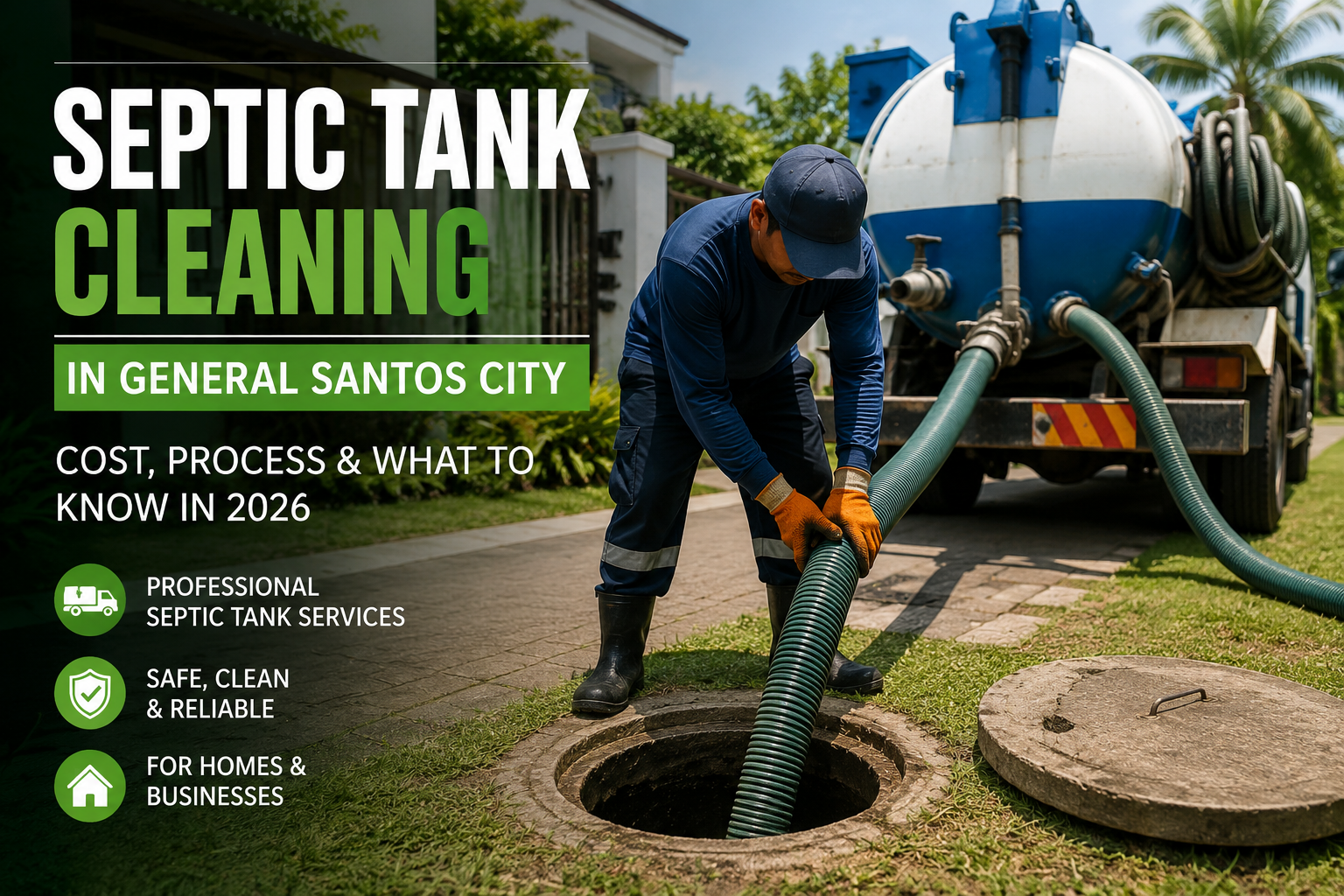
  • Septic Tank Cleaning in General Santos City: Cost, Process & What to Know in 2026

    Septic Tank Cleaning in General Santos City: Cost, Process & What to Know in 2026

    Septic tanks play an important role in homes and businesses that are not connected to a centralized sewer system. Over time, solid waste and sludge accumulate inside the tank, reducing its capacity and potentially causing unpleasant odors, slow drains, wastewater backups, and other sanitation problems.

    For homeowners and businesses in General Santos City, regular septic tank cleaning and desludging can help prevent expensive problems and keep wastewater systems working properly.

    If you’re looking for septic tank cleaning in General Santos City, understanding the cleaning process, possible costs, warning signs, and what to ask a service provider can help you choose the right local professional.

    What Is Septic Tank Cleaning?

    Septic tank cleaning, often called septic tank pumping or desludging, involves removing accumulated sludge, scum, and wastewater from a septic tank using specialized equipment.

    A professional septic service provider typically uses a vacuum tanker or similar pumping equipment to remove the contents of the tank. The collected wastewater and sludge should then be transported and disposed of according to applicable environmental and sanitation requirements.

    Regular cleaning is important because a septic tank does not make solid waste disappear. Instead, solids gradually accumulate at the bottom of the tank.

    When too much sludge builds up, the system can stop functioning efficiently.

    Why Septic Tank Cleaning Is Important

    A neglected septic tank can eventually create problems throughout a property.

    Common warning signs include:

    • Slow-draining sinks and toilets
    • Unpleasant sewage odors
    • Wastewater backing up into drains
    • Wet or unusually green areas around the septic tank
    • Gurgling sounds from plumbing fixtures
    • Toilets that flush poorly
    • Frequent drainage problems
    • Sewage surfacing in the yard

    Ignoring these signs can allow a relatively simple maintenance issue to become a much more expensive repair.

    For households in General Santos City, regular septic maintenance is particularly important for properties with older septic systems or heavy wastewater use.

    How Often Should a Septic Tank Be Cleaned?

    There isn’t one schedule that works for every property.

    The appropriate interval depends on several factors, including:

    • Number of people using the property
    • Size of the septic tank
    • Amount of wastewater produced
    • Frequency of laundry and bathing
    • Garbage disposal usage
    • Property type
    • Age and condition of the septic system
    • Previous maintenance history

    A household with several occupants may need servicing more frequently than a small household.

    Instead of waiting until wastewater backs up, homeowners should keep a record of previous septic tank servicing and ask a qualified provider how frequently the system should be inspected or desludged.

    How Much Does Septic Tank Cleaning Cost in General Santos City?

    The cost of septic tank cleaning varies depending on the property and the service provider.

    Factors that may affect the price include:

    1. Tank size
      Larger tanks may require more pumping capacity and additional time.
    2. Amount of accumulated sludge
      A heavily filled tank can require more extensive pumping.
    3. Accessibility
      If the septic tank is difficult to access, additional labor may be necessary.
    4. Distance from the service provider
      Properties farther from the service area may incur additional transportation charges.
    5. Vacuum tanker requirements
      The size and capacity of the pumping truck can affect the overall service price.
    6. Waste transportation and disposal
      Proper handling and disposal of collected septage can form part of the service cost.
    7. Emergency service
      Urgent pumping caused by sewage backup may cost more than scheduled maintenance.

    Because prices can change, it’s best to request a current quotation from a local septic tank cleaning provider in General Santos City rather than relying on an old advertised price.

    What Happens During Septic Tank Cleaning?

    Professional septic tank cleaning generally follows several steps.

    1. Locate the septic tank

    The service provider first needs to identify the septic tank and determine where the access covers are located.

    2. Open the access covers

    The tank is opened carefully so the service provider can inspect its condition and prepare the pumping equipment.

    3. Pump out the tank

    A vacuum tanker removes wastewater, sludge, and accumulated solids from the tank.

    4. Inspect the tank

    Depending on the service provided, the technician may check for visible damage, excessive sludge buildup, or other potential problems.

    5. Close and secure the tank

    After pumping and inspection, the access covers should be properly replaced and secured.

    6. Transport and dispose of the septage

    The collected material should be transported and handled through appropriate disposal procedures.

    Homeowners should ask the provider where the collected septage will be taken and whether the company follows applicable local and environmental requirements.

    Septic Tank Cleaning vs. Septic Tank Repair

    These services are not the same.

    Cleaning or desludging removes accumulated waste from the tank.

    Repair, on the other hand, addresses physical or functional problems such as damaged pipes, cracked tanks, blocked drainage fields, or other system failures.

    Cleaning may solve a problem caused by excessive sludge, but it won’t necessarily fix a damaged septic system.

    If wastewater continues backing up shortly after pumping, the property may have another underlying issue that requires inspection.

    Signs You May Need Septic Tank Cleaning

    If you’re unsure whether your septic tank needs servicing, watch for these signs:

    Slow drains

    Multiple slow drains throughout the house can indicate a problem with the wastewater system.

    Bad odors

    Persistent sewage smells around toilets, drains, or the septic tank area can indicate that the system needs attention.

    Sewage backup

    Wastewater coming back through toilets, sinks, or floor drains is a serious warning sign.

    Standing wastewater

    Pools of wastewater around the septic tank or drainage area should not be ignored.

    Unusually lush grass

    A small area of unusually green or fast-growing grass above the septic system can sometimes indicate wastewater leakage.

    Gurgling plumbing

    Gurgling sounds from toilets or drains can indicate drainage or septic system problems.

    How to Choose a Septic Tank Cleaning Service in General Santos City

    Choosing the cheapest provider isn’t always the best approach.

    Before hiring a company, ask:

    • How much is the total service cost?
    • What size is the vacuum tanker?
    • Does the quotation include transportation?
    • Does it include disposal?
    • Is there an additional charge for difficult access?
    • How quickly can the provider respond?
    • Does the company serve your barangay?
    • Can they provide an official receipt or service documentation?
    • Where is the collected septage transported?
    • What happens if the tank cannot be fully accessed?

    Getting the complete price before work begins can help prevent unexpected charges.

    Should You Wait Until the Septic Tank Is Full?

    No.

    Waiting until sewage backs up into the house can turn routine maintenance into an emergency.

    Regular inspection and scheduled desludging are generally preferable to waiting for obvious signs of failure.

    This is especially important for households with many occupants, commercial establishments, restaurants, rental properties, and other locations that generate significant wastewater.

    Septic Tank Services for Homes and Businesses

    Septic tank cleaning isn’t limited to residential properties.

    Local providers may also serve:

    • Restaurants
    • Small businesses
    • Apartment buildings
    • Boarding houses
    • Resorts
    • Hotels
    • Schools
    • Offices
    • Farms
    • Commercial establishments

    Commercial properties may require more frequent service because of higher wastewater volumes.

    Septic Tank Cleaning in Different Parts of General Santos City

    When searching for a provider, look for a company that specifically services your area of General Santos City.

    Searches can include:

    • Septic tank cleaning in Lagao
    • Septic tank cleaning in City Heights
    • Septic tank cleaning in Calumpang
    • Septic tank cleaning in Bula
    • Septic tank cleaning in Apopong
    • Septic tank cleaning in San Isidro
    • Septic tank cleaning in Dadiangas
    • Septic tank cleaning near General Santos City

    A provider located nearby may be able to respond faster and may have lower transportation costs.

    Find Local Septic Tank Services

    Looking for a septic tank cleaning provider doesn’t have to mean searching through dozens of unrelated websites.

    Search Hub is designed to help people discover local businesses and services in the Philippines.

    When available, browse Search Hub’s local listings to compare septic tank service providers, contact information, locations, and other relevant business details.

    [Internal Link Opportunity: Septic Tank Cleaning Services in General Santos City]

    You can also explore related Home Services listings to find other local professionals for plumbing, electrical, construction, maintenance, and property-related services.

    [Internal Link Opportunity: Home Services in General Santos City]

    Frequently Asked Questions

    How much does septic tank cleaning cost in General Santos City?

    The price varies depending on tank size, sludge level, accessibility, distance, equipment, and disposal requirements. Contact local providers for a current quotation.

    How often should a septic tank be cleaned?

    The recommended frequency depends on tank size, household occupancy, wastewater usage, and the condition of the septic system. A professional inspection can help determine an appropriate schedule.

    How long does septic tank cleaning take?

    Routine pumping can often be completed relatively quickly, but the total time depends on tank accessibility, tank size, accumulated sludge, equipment, and site conditions.

    Can I clean my septic tank myself?

    Septic tank cleaning is generally not a suitable DIY project. Professional pumping equipment and appropriate handling and disposal procedures are needed.

    What should I do if sewage is backing up into my house?

    Reduce water usage and contact a septic tank or wastewater service provider as soon as possible. Avoid direct contact with sewage because it can present sanitation risks.

    Is septic tank cleaning the same as septic tank pumping?

    The terms are often used interchangeably. Septic tank pumping generally refers to removing wastewater and accumulated solids from the tank, while desludging may specifically emphasize removal of accumulated sludge.

    Can septic tank cleaning prevent plumbing problems?

    Regular maintenance can help reduce problems caused by excessive sludge buildup, but it cannot prevent every plumbing or septic-system failure.

    Final Thoughts

    Regular septic tank maintenance is an important part of maintaining a clean and functional property.

    For homeowners and businesses in General Santos City, scheduling septic tank cleaning before serious problems develop can help reduce the risk of sewage backups, unpleasant odors, drainage problems, and costly emergency repairs.

    When choosing a local provider, compare the complete service price, equipment, response time, accessibility requirements, and septage disposal practices.

    If you’re looking for a septic tank cleaning service in General Santos City, start by checking local providers and comparing the services available in your area.

    Search Hub makes it easier to discover local businesses and service providers across the Philippines.

  • How to Compare Carpenter Quotations: A Homeowner’s Guide

    How to Compare Carpenter Quotations: A Homeowner’s Guide

    Getting several quotations is one of the smartest things you can do before hiring a carpenter.

    Whether you’re planning custom cabinets, a built-in wardrobe, furniture, wooden doors, shelving, repairs, or a larger renovation project, comparing quotations can help you understand what you’re actually paying for.

    However, comparing carpenter quotations isn’t as simple as putting three prices beside each other and choosing the lowest one.

    One carpenter might quote ₱50,000 while another quotes ₱70,000 for what appears to be the same project.

    At first glance, the lower quotation may seem like the obvious choice.

    But what if the cheaper quotation uses a different material?

    What if it doesn’t include installation?

    What if the hardware is lower quality?

    What if finishing isn’t included?

    What if delivery is charged separately?

    This is why you need to compare the entire project scope, not just the final price.

    This guide explains how to compare carpenter quotations in the Philippines and what you should check before accepting an estimate.


    Why You Should Get More Than One Carpenter Quotation

    Getting multiple quotations gives you a better understanding of the potential cost of your project.

    It can also reveal differences in:

    • Materials
    • Labor
    • Hardware
    • Finishing
    • Design
    • Construction methods
    • Delivery
    • Installation
    • Project timelines

    For a simple repair, one quotation may be enough if you already know and trust the carpenter.

    For a large custom project, however, comparing several providers can be extremely useful.

    A good target is to obtain two or three detailed quotations based on the same project specifications.


    Start With the Same Project Specifications

    One of the biggest mistakes homeowners make is asking different carpenters for quotations without giving them the same information.

    For example, you might tell Carpenter A:

    “I need kitchen cabinets.”

    But tell Carpenter B:

    “I need 12 feet of kitchen cabinets using plywood, soft-close hinges, six drawers, laminated finish, delivery, and installation.”

    The two quotations won’t be comparable.

    Instead, give every carpenter the same basic information.

    Include:

    • Approximate dimensions
    • Type of project
    • Preferred material
    • Number of cabinets or furniture pieces
    • Hardware requirements
    • Finish
    • Delivery requirements
    • Installation requirements
    • Desired timeline

    The more consistent your specifications are, the more useful the comparison becomes.


    What Should Be Included in a Carpenter Quotation?

    A detailed carpenter quotation should ideally identify several major cost components.

    These can include:

    1. Labor
    2. Materials
    3. Hardware
    4. Finishing
    5. Delivery
    6. Installation
    7. Design
    8. Additional work
    9. Timeline
    10. Payment terms

    Not every project requires every category.

    The important thing is that you understand what is included.


    1. Compare Labor Costs

    Labor is one of the largest components of many carpentry projects.

    But labor can be calculated in different ways.

    A carpenter may charge:

    • A fixed project price
    • A daily labor rate
    • A per-piece rate
    • A per-square-meter rate
    • A combination of labor and materials

    Ask how the carpenter calculated the labor component.

    For a fixed-price project, ask:

    “Does this labor price cover the complete project?”

    For daily labor, ask:

    “How many days do you estimate the project will take?”

    A low daily rate isn’t necessarily cheaper if the project takes significantly longer.


    2. Compare Materials

    Material specifications are one of the most important parts of a carpenter quotation.

    Don’t accept a quotation that simply says:

    “Wood materials — ₱XX,XXX”

    Ask exactly what will be used.

    For cabinets, materials may include:

    • Plywood
    • MDF
    • Particle board
    • Solid wood
    • Laminated boards
    • Veneer

    For a detailed comparison, read:

    Plywood vs MDF vs Particle Board for Cabinets


    Ask About Material Thickness

    Material type alone isn’t enough.

    Ask about thickness.

    For example:

    “What thickness of plywood will you use for the cabinet sides?”

    Also ask about:

    • Shelves
    • Doors
    • Drawer components
    • Cabinet backs

    Different components may use different thicknesses.

    If one carpenter quotes a higher price because they are using thicker or higher-grade material, the difference may be justified.


    3. Compare Hardware

    Hardware can have a significant effect on both price and usability.

    Depending on the project, hardware can include:

    • Hinges
    • Drawer slides
    • Handles
    • Knobs
    • Locks
    • Brackets
    • Pull-out systems
    • Soft-close mechanisms

    Don’t assume that “hardware included” means the same thing in every quotation.

    Ask for the actual specifications.

    For example:

    Quotation A: Standard hinges

    Quotation B: Soft-close hinges

    Those aren’t necessarily equivalent products.


    4. Compare the Finishing

    Finishing can make a substantial difference in both appearance and price.

    Possible finishes include:

    • Paint
    • Varnish
    • Stain
    • Clear coat
    • Laminate
    • Veneer
    • Sealer

    Ask whether the quotation includes:

    • Sanding
    • Surface preparation
    • Primer
    • Paint
    • Final coat
    • Sealing
    • Touch-ups

    A quotation that looks cheaper may simply exclude finishing.


    5. Check Delivery Costs

    Delivery is often overlooked.

    Large cabinets and furniture may require a vehicle and several people to move them.

    Ask:

    “Is delivery included?”

    Also ask:

    • Where will delivery start?
    • Is transportation included?
    • Are carrying charges included?
    • Are stairs included?
    • Is there an additional charge for difficult access?

    For condominium projects, delivery may also have building-specific requirements.


    6. Check Installation Costs

    Another common source of confusion is installation.

    One quotation might include installation while another doesn’t.

    For example:

    Carpenter A: ₱80,000 including installation

    Carpenter B: ₱70,000 + ₱15,000 installation

    The second quotation is actually more expensive.

    Always identify whether the quoted price includes:

    • Assembly
    • Wall mounting
    • Cabinet leveling
    • Hardware adjustment
    • Final fitting
    • Cleanup

    7. Compare Project Timelines

    Time is another important part of a quotation.

    Ask:

    “When can you start?”

    and:

    “When do you expect the project to be completed?”

    The quotation should ideally provide an estimated timeline.

    For custom cabinetry, the process may involve:

    1. Measurement
    2. Design
    3. Material purchasing
    4. Fabrication
    5. Finishing
    6. Delivery
    7. Installation

    A carpenter who promises an extremely short timeline should be able to explain how they plan to achieve it.


    8. Compare Payment Terms

    Payment terms should be clear before work begins.

    Ask:

    • How much is the deposit?
    • When are progress payments due?
    • When is the final payment due?
    • What triggers each payment?
    • How are additional costs handled?

    For larger projects, you may want payments to correspond to identifiable milestones.

    For example:

    Deposit → Materials

    Progress payment → Fabrication

    Final payment → Installation/completion

    The exact arrangement should be agreed upon by both parties.


    9. Look for Hidden Costs

    A quotation can appear inexpensive because important items are excluded.

    Potential additional costs may include:

    • Delivery
    • Installation
    • Additional materials
    • Hardware upgrades
    • Finishing
    • Site preparation
    • Removal of old cabinets
    • Electrical adjustments
    • Plumbing adjustments
    • Design changes

    Ask:

    “Are there any costs that aren’t included in this quotation?”

    This simple question can prevent unpleasant surprises.


    10. Compare the Scope of Work

    The quotation should clearly describe what the carpenter will actually build.

    For example:

    “Kitchen cabinets”

    is vague.

    A better description might specify:

    • Cabinet length
    • Number of base cabinets
    • Number of wall cabinets
    • Number of drawers
    • Material
    • Hardware
    • Finish
    • Installation

    The more specific the scope, the easier it is to compare quotations.


    Use a Carpenter Quotation Comparison Table

    A simple table can make the differences obvious.

    Item Carpenter A Carpenter B Carpenter C
    Labor ₱30,000 ₱35,000 ₱28,000
    Materials ₱45,000 ₱50,000 ₱40,000
    Hardware Included Premium Standard
    Finishing Included Included Extra
    Delivery Included Extra Included
    Installation Included Included Extra
    Estimated timeline 3 weeks 4 weeks 3 weeks
    Total ₱75,000 ₱85,000+ ₱68,000+

    The table immediately shows why the lowest headline price may not actually be the cheapest complete option.


    Don’t Compare Price Alone

    This is probably the most important rule.

    A ₱60,000 quotation isn’t necessarily better than a ₱75,000 quotation.

    The ₱75,000 quotation may include:

    • Better material
    • Better hardware
    • Better finishing
    • Delivery
    • Installation
    • Longer workmanship coverage

    The lower quotation may not include these things.

    Instead of asking:

    “Who is cheapest?”

    ask:

    “Which quotation gives me the best combination of quality, scope, and value?”


    Why Extremely Cheap Quotations Can Be Risky

    An unusually low quotation doesn’t automatically mean the carpenter is unreliable.

    There could be a legitimate reason.

    Perhaps the carpenter:

    • Has lower overhead
    • Works from a small workshop
    • Has direct access to materials
    • Has a simpler construction method
    • Is offering a promotional rate

    However, a very large price difference should make you ask questions.

    For example:

    “Can you explain why your quotation is significantly lower than the others?”

    Compare the specifications before deciding.


    Check the Carpenter’s Previous Work

    Price isn’t the only indicator of quality.

    Ask for examples of completed projects.

    If you’re building kitchen cabinets, ask to see kitchens.

    If you’re ordering furniture, ask to see furniture.

    Look at:

    • Alignment
    • Edges
    • Joints
    • Finishing
    • Hardware
    • Door operation
    • Drawer operation
    • Overall workmanship

    For a general hiring checklist, see:

    Reliable Carpenter Near You


    Ask About Materials You Don’t Understand

    You don’t need to become a woodworking expert before hiring a carpenter.

    If you don’t understand a material or construction method, ask.

    For example:

    “Why are you recommending MDF instead of plywood?”

    or:

    “Why are the cabinet doors a different material from the cabinet boxes?”

    A professional should be able to explain the reasoning in understandable terms.


    Check Whether the Carpenter Handles Design

    Some carpenters work from customer-provided drawings.

    Others can design the project themselves.

    Ask:

    “Do you provide the design, or do I need to provide the drawings?”

    If design is included, find out whether revisions are included.

    For custom cabinets, design changes can affect both material requirements and labor.


    Watch for Design Change Charges

    Changes after fabrication begins can become expensive.

    For example, changing:

    • Cabinet dimensions
    • Number of drawers
    • Hardware
    • Material
    • Finish
    • Layout

    may require additional work.

    Before approving a change, ask for the additional cost in writing.


    Ask About Material Price Changes

    For longer projects, material prices can potentially change.

    Ask:

    “Is this quotation fixed until completion?”

    If it isn’t fixed, ask how price changes will be calculated.

    This is particularly important for larger projects where materials represent a substantial part of the budget.


    Check Whether Old Furniture Removal Is Included

    If you’re replacing existing cabinets or furniture, ask who will remove the old items.

    Potential services include:

    • Dismantling
    • Carrying
    • Disposal
    • Transportation

    These may not be included in the new cabinet quotation.


    Compare the Timeline With Your Needs

    Sometimes paying slightly more for a reliable timeline is worthwhile.

    For example, if you’re renovating a kitchen, delays can affect:

    • Appliance installation
    • Plumbing
    • Electrical work
    • Countertops
    • Moving back into the space

    Don’t choose a carpenter based on price alone if the project deadline is important.


    Get Everything in Writing

    Once you’ve chosen a carpenter, make sure the important details are documented.

    At minimum, record:

    • Project description
    • Dimensions
    • Materials
    • Hardware
    • Finish
    • Total price
    • Payment schedule
    • Timeline
    • Delivery
    • Installation
    • Additional work terms

    Written documentation protects both sides from misunderstandings.


    What Makes a Good Carpenter Quotation?

    A good quotation should be:

    Clear

    You should understand what you’re paying for.

    Detailed

    Materials and services should be identified.

    Realistic

    The price and timeline should make sense for the project.

    Comparable

    The specifications should allow you to compare it with other quotations.

    Transparent

    Additional costs should be explained.


    Red Flags in Carpenter Quotations

    Be careful if a quotation:

    • Has no material specifications
    • Has no project dimensions
    • Doesn’t identify hardware
    • Doesn’t mention installation
    • Has unclear payment terms
    • Has unexplained additional charges
    • Changes frequently without documentation
    • Is dramatically cheaper without explanation
    • Requires a large payment without clear milestones

    Again, any one issue doesn’t necessarily mean the carpenter is unreliable.

    Look at the overall picture.


    Questions to Ask Before Accepting a Quotation

    Before you say yes, ask:

    1. What exactly is included?
    2. What material will be used?
    3. What thickness will be used?
    4. What hardware is included?
    5. Is finishing included?
    6. Is delivery included?
    7. Is installation included?
    8. How long will the project take?
    9. When can you start?
    10. What is the payment schedule?
    11. Are design changes extra?
    12. Can the price change?
    13. What happens if there is a delay?
    14. Do you provide workmanship guarantees?

    The answers should be clear before work starts.


    Example: Comparing Kitchen Cabinet Quotations

    Imagine you need a custom kitchen cabinet project.

    Carpenter A

    ₱95,000

    Includes:

    • Plywood
    • Standard hardware
    • Laminate finish
    • Delivery
    • Installation

    Carpenter B

    ₱110,000

    Includes:

    • Higher-grade plywood
    • Soft-close hardware
    • Premium laminate
    • Delivery
    • Installation
    • More detailed internal storage

    Carpenter C

    ₱80,000

    Includes:

    • MDF
    • Basic hardware
    • Basic finish

    But:

    • Delivery extra
    • Installation extra

    The quotations aren’t directly equivalent.

    Once you compare the specifications, the price differences become easier to understand.


    What If One Carpenter Won’t Give a Detailed Quote?

    You can ask them to provide one.

    Say:

    “Could you please break down the quotation into materials, labor, hardware, finishing, delivery, and installation?”

    If they still refuse to explain what you’re paying for, consider getting another quotation.

    Transparency is particularly important for expensive custom projects.


    How Search Hub Can Help You Find Local Carpenters

    Once you understand how to compare quotations, the next step is finding providers.

    Search Hub’s Local Business Services directory can serve as a starting point for discovering local businesses and service providers.

    You can search based on the service and location you need.

    For example:

    • Carpenter
    • Cabinet maker
    • Furniture maker
    • Custom furniture
    • Home improvement

    The goal is to make it easier to move from:

    Search → Compare → Contact → Request quotation

    rather than choosing the first provider you find.


    Comparing Carpenter Quotations in Davao City

    If you’re looking for a carpenter in Davao City, try to compare providers based on the same project specifications.

    For example:

    “I need 12 feet of kitchen cabinets, plywood construction, six drawers, soft-close hardware, laminated finish, delivery and installation.”

    Giving each carpenter the same information makes the resulting quotations much more useful.


    Comparing Carpenter Quotations in General Santos City

    The same principle applies in General Santos City.

    Don’t simply ask:

    “How much for a cabinet?”

    Instead, provide:

    • Dimensions
    • Material
    • Design
    • Hardware
    • Finish
    • Delivery
    • Installation

    Then compare the responses.

    You can also use Search Hub Local Business Services to discover local providers.


    How Much Should You Pay for a Carpenter?

    There isn’t a single price that applies to every carpentry project.

    Costs depend on:

    • Location
    • Project size
    • Materials
    • Labor
    • Design
    • Hardware
    • Finishing
    • Delivery
    • Installation

    Instead of relying on one generic price, obtain project-specific quotations.

    For additional pricing information, see:

    How Much Does a Carpenter Cost in the Philippines?


    Frequently Asked Questions

    How many carpenter quotations should I get?

    For a significant project, getting two or three detailed quotations can provide a useful comparison.

    Should I always choose the cheapest quotation?

    No. Compare the complete scope, materials, hardware, finishing, delivery, installation, and timeline.

    What should a carpenter quotation include?

    Ideally, it should identify the project scope, materials, labor, hardware, finishing, delivery, installation, timeline, and payment terms.

    Should I negotiate a carpenter’s quotation?

    You can discuss the quotation, but don’t focus only on lowering the price. Ask whether there are ways to adjust the design, materials, or scope while maintaining acceptable quality.

    Why are two carpenter quotations so different?

    Differences can come from materials, hardware, labor, finishing, design, delivery, installation, experience, overhead, or project scope.

    Should I pay a large deposit?

    Payment terms vary by project. Before paying, make sure the scope, materials, timeline, and payment milestones are clearly documented.

    What if the carpenter changes the price later?

    Ask why the price changed and request the revised scope and cost in writing before approving additional work.


    Final Thoughts

    Learning how to compare carpenter quotations can save you from choosing a provider based solely on a tempting low price.

    The best quotation isn’t necessarily the cheapest.

    Instead, look at the complete package:

    Materials

    Labor

    Hardware

    Finishing

    Delivery

    Installation

    Timeline

    Payment terms

    Workmanship

    When all of these factors are compared using the same project specifications, you can make a much more informed decision.

    Before hiring, review the carpenter’s previous work and make sure you understand exactly what is included.

    For a broader hiring checklist, read Reliable Carpenter Near You.

    For material selection, read Plywood vs MDF vs Particle Board for Cabinets.

    For pricing information, see How Much Does a Carpenter Cost in the Philippines?.

    When you’re ready to find local service providers, browse Search Hub Local Business Services.

    You can also visit the Search Hub homepage for more local business guides.

  • How Much Does a Carpenter Cost in the Philippines? Rates, Labor, Materials & Project Pricing

    How Much Does a Carpenter Cost in the Philippines? Rates, Labor, Materials & Project Pricing

    If you’re planning a home improvement project, one of the first questions you’re likely to ask is:

    “How much will a carpenter cost?”

    The answer isn’t as simple as giving one fixed daily rate.

    Carpenter pricing in the Philippines can vary significantly depending on the location, skill level, type of project, materials, complexity, finishing requirements, transportation, and whether you’re hiring someone for a few hours of repair work or a complete custom-furniture project.

    A carpenter building a simple shelf and a skilled craftsman constructing a complete set of custom kitchen cabinets are performing very different jobs, so their quotations can be very different as well.

    Another important distinction is the difference between a worker’s wage or labor rate and the price a customer pays for a completed carpentry project.

    Those two figures are not necessarily the same.

    A customer’s quotation may include labor, materials, hardware, finishing, transportation, installation, tools, overhead, and the carpenter’s business margin.

    This guide explains how carpenter costs work so you can evaluate quotations more intelligently before starting your project.


    Is There a Fixed Carpenter Rate in the Philippines?

    No single nationwide “carpenter rate” applies to every project.

    The Philippine government establishes regional minimum wage rates for covered workers, but a minimum wage should not be interpreted as the standard price a homeowner will pay a carpenter for a private project.

    The National Wages and Productivity Commission publishes different minimum wage rates by region and wage category. As of the NWPC’s May 5, 2026 summary, for example, the non-agricultural minimum wage in Region XI was ₱525, while Region XII had reached ₱460 for non-agriculture, retail, and service establishments under its applicable wage order.

    Those figures are useful context for understanding labor costs, but they are not a universal quotation for hiring a carpenter.

    The actual amount a homeowner pays can be higher because a project may involve:

    • Skilled labor
    • Specialized tools
    • Transportation
    • Materials
    • Hardware
    • Finishing
    • Installation
    • Design or measurement
    • Business overhead
    • Project management
    • Warranty or after-sales service

    This distinction is particularly important when comparing quotations.


    What Determines Carpenter Cost?

    There are several major factors that influence how much you’ll pay.

    1. Type of Carpentry Work

    A small repair job usually requires much less labor and material than a custom-built project.

    Examples include:

    • Door repair
    • Shelf installation
    • Furniture repair
    • Cabinet repair
    • Custom shelving
    • Kitchen cabinets
    • Built-in wardrobes
    • Beds
    • Tables
    • TV cabinets
    • Staircases
    • Custom furniture
    • Major renovation work

    The more complicated the project, the more time and skill may be required.


    2. Carpenter Skill and Experience

    Not all carpenters have the same level of experience.

    A carpenter who specializes in basic construction work may charge differently from someone who focuses on detailed custom furniture or cabinetry.

    For example, a custom furniture specialist may need experience with:

    • Precise joinery
    • Cabinet construction
    • Furniture design
    • Wood selection
    • Finishing
    • Hardware installation
    • Measurements
    • Power tools
    • Detailed surface preparation

    Higher skill can result in higher labor costs, but it may also produce better results and fewer costly mistakes.

    This is one reason you shouldn’t automatically choose the lowest quotation.

    Your existing Search Hub guide on finding a reliable carpenter recommends comparing previous work, experience, materials, quotations, and customer feedback rather than looking at price alone.

    Internal link: Reliable Carpenter Near You


    3. Location

    Where the project is located can affect the quotation.

    A carpenter working in a major urban area may have different labor and operating costs from someone working in a smaller municipality.

    Transportation can also matter.

    For example, a carpenter may need to travel to the customer’s property for:

    • Measurements
    • Site inspection
    • Material delivery
    • Installation
    • Repairs
    • Adjustments

    If the project is far from the carpenter’s workshop, transportation may be included separately or incorporated into the quotation.

    This is one reason comparing local carpenters can be useful.


    4. Materials

    Carpenter comparing wood materials and hardware for a custom project
    Material selection can have a major effect on the cost, durability, appearance, and performance of a carpentry project.

    Materials can represent a substantial portion of the total cost.

    A quotation for a cabinet made from one type of board will not necessarily be comparable with a quotation using another material.

    Common materials can include:

    • Solid wood
    • Plywood
    • MDF
    • Particle board
    • Laminated boards
    • Veneers
    • Wood composites
    • Metal hardware
    • Glass
    • Finishing materials

    When comparing quotations, ask the carpenter exactly what materials are included.

    Don’t simply compare:

    Carpenter A — ₱30,000
    Carpenter B — ₱40,000

    Instead ask:

    What materials, thicknesses, hardware, finishing, delivery, and installation are included?

    The ₱40,000 quotation might actually provide considerably more.


    5. Hardware

    Hardware is easy to overlook when estimating a carpentry project.

    Cabinet and furniture projects may require:

    • Hinges
    • Drawer slides
    • Handles
    • Locks
    • Brackets
    • Connectors
    • Cabinet legs
    • Soft-close mechanisms
    • Mounting hardware

    The quality and quantity of hardware can affect the total price.

    A basic hinge and a premium soft-close hinge are not necessarily equivalent.

    The same applies to drawer systems, handles, locks, and other fittings.


    6. Finishing

    Finishing can also affect the cost.

    Depending on the project, finishing may include:

    • Sanding
    • Staining
    • Varnishing
    • Painting
    • Sealing
    • Laminating
    • Polishing
    • Surface preparation

    A simple unfinished structure may require considerably less finishing work than a piece of furniture that needs a smooth, highly detailed finish.

    When requesting a quotation, ask whether finishing is included.


    Daily Rate vs Project-Based Pricing

    Carpenters may price work in different ways.

    Two common approaches are:

    Daily labor pricing

    You pay based on the number of working days.

    Project-based pricing

    The carpenter gives you one price for completing an agreed scope of work.

    Neither method is automatically better.

    The right approach depends on the project.


    When Daily Carpenter Pricing Makes Sense

    Daily labor can make sense when the scope isn’t completely predictable.

    Examples include:

    • General repairs
    • Renovation work
    • Multiple small jobs
    • Construction assistance
    • On-site modifications
    • Repair and maintenance work

    If you discover additional problems during the project, a daily arrangement may provide more flexibility.

    However, you should still establish:

    • Expected working hours
    • Daily labor amount
    • Number of workers
    • Material responsibility
    • Transportation
    • Tools
    • Expected project duration

    Otherwise, the final cost can become difficult to predict.


    When Project-Based Pricing Makes Sense

    Project pricing can work particularly well for clearly defined jobs.

    Examples include:

    • Custom cabinets
    • Built-in wardrobes
    • Tables
    • Beds
    • Shelves
    • TV consoles
    • Doors
    • Custom furniture

    For example, instead of agreeing to an undefined number of working days, you might receive a quotation for:

    Custom built-in wardrobe — materials, fabrication, delivery and installation included.

    That gives the customer a clearer overall project budget.

    However, make sure the scope is written down.

    Carpenter reviewing a project quotation with a homeowner in the Philippines
    A detailed quotation helps homeowners understand exactly what is included in a carpenter’s project price.

    What Should Be Included in a Carpenter’s Quotation?

    A good quotation should be detailed enough that you understand what you’re actually buying.

    Ideally, ask for:

    Cost ItemWhat to Check
    LaborNumber of workers and estimated labor
    MaterialsExact type and quantity
    HardwareHinges, slides, handles, locks
    FinishingPaint, varnish, laminate, etc.
    DeliveryWhether transportation is included
    InstallationIncluded or charged separately
    MeasurementsIncluded or additional
    DesignIncluded or additional
    TimelineExpected completion
    PaymentDeposit and installment schedule
    WarrantyWorkmanship coverage, if offered

    This makes comparing quotations much easier.


    Why Two Carpenters Can Give Very Different Prices

    Imagine you request quotations for the same cabinet.

    Carpenter A quotes:

    ₱35,000

    Carpenter B quotes:

    ₱50,000

    At first glance, Carpenter A looks cheaper.

    But suppose Carpenter A’s quotation includes:

    • Basic board
    • Standard hinges
    • Labor
    • No delivery
    • No installation
    • Basic finishing

    while Carpenter B includes:

    • Higher-grade plywood
    • Premium hardware
    • Professional finishing
    • Delivery
    • Installation
    • Additional internal storage
    • Longer workmanship coverage

    The two quotations aren’t actually for the same product.

    This is why comparing the total scope is more important than comparing the headline price.


    How Much Should You Budget for a Small Carpentry Job?

    For small jobs, it’s usually better to request an actual quotation rather than relying on a generic online price.

    A carpenter may need to consider:

    • Travel time
    • Minimum labor charge
    • Materials
    • Tools
    • Job complexity
    • Time required
    • Number of workers

    A job that appears to take “only an hour” may still involve travel, measuring, purchasing materials, and returning for installation.

    For this reason, a carpenter may establish a minimum service charge.


    How Much Does Custom Furniture Cost?

    Filipino carpenter building custom wooden furniture in a workshop
    Custom furniture requires skilled workmanship, accurate measurements, quality materials, and careful assembly.

    Custom furniture can have a much wider price range than simple repairs.

    The final cost can depend on:

    Size

    A large dining table requires more material and labor than a small side table.

    Design

    Simple designs are generally easier to fabricate than highly detailed pieces.

    Material

    Solid wood, plywood, MDF, and other materials have different characteristics and costs.

    Hardware

    Specialized hinges, drawer systems, lifts, and other fittings can add to the price.

    Finish

    A detailed finish can require substantial preparation and labor.

    Installation

    Large built-in furniture may require delivery and on-site installation.

    This is why custom furniture should generally be quoted individually rather than relying on one standard price.


    How Much Does Custom Cabinet Carpentry Cost?

    Cabinets are another category where project pricing can vary considerably.

    A quotation may depend on:

    • Cabinet dimensions
    • Number of cabinets
    • Material
    • Board thickness
    • Shelves
    • Drawers
    • Hinges
    • Drawer slides
    • Handles
    • Countertop
    • Finishing
    • Installation

    Kitchen cabinets can be particularly complex because they may need to accommodate plumbing, electrical outlets, appliances, walls that aren’t perfectly square, and other site conditions.

    Always request an on-site measurement when appropriate.


    Does the Type of Wood Affect Carpenter Cost?

    Yes.

    The material selected can significantly affect the overall cost of a project.

    Solid wood projects may have different material and fabrication requirements from engineered-board projects.

    But the most expensive material isn’t automatically the best choice for every application.

    A good carpenter should be able to explain:

    • Why a material is suitable
    • Where it should be used
    • How it handles moisture
    • How it should be finished
    • How it will be maintained
    • How long it is expected to last under normal use

    For cabinets, for example, the best material choice may differ from furniture intended for outdoor use.


    Should You Pay a Carpenter by the Day or by the Project?

    Use the type of project as your starting point.

    Consider daily labor when:

    • The scope is uncertain
    • You’re doing general repairs
    • You have multiple small tasks
    • The project is expected to evolve

    Consider project pricing when:

    • The design is finalized
    • Materials are clearly specified
    • Measurements are known
    • The scope is clearly defined
    • You want a clearer total budget

    For larger projects, you may also use a combination of approaches.

    The important thing is to document what both parties have agreed to.


    Don’t Forget the Carpenter’s Helper

    Some projects require more than one person.

    A carpenter may need a helper for:

    • Carrying materials
    • Holding large boards
    • Installation
    • Measuring
    • Cleanup
    • Transportation
    • Site preparation

    If a quotation includes two or more workers, ask whether the labor amount covers everyone.

    This can prevent misunderstandings later.


    Ask About Materials Before Agreeing to the Price

    One of the most important questions you can ask is:

    “What exact material are you using?”

    Don’t settle for:

    “Wood.”

    Ask for more detail.

    For example:

    • Solid wood or engineered board?
    • What type?
    • What thickness?
    • What surface finish?
    • What brand of hardware?
    • What type of adhesive?
    • What type of paint or varnish?

    The more specific the project, the more important these details become.


    How to Save Money on Carpentry Without Sacrificing Quality

    You don’t necessarily need to choose the cheapest carpenter to reduce costs.

    Instead, consider these strategies.

    Simplify the design

    Complicated designs often require more labor.

    Reduce unnecessary features

    Do you really need ten drawers when six would be sufficient?

    Compare materials

    Ask your carpenter whether a less expensive material is appropriate for certain components.

    Compare several quotations

    Three detailed quotations can give you a better understanding of the market.

    Avoid changing the design repeatedly

    Changes after fabrication begins can increase labor and material costs.

    Plan before construction

    Good measurements and planning can reduce mistakes and wasted materials.

    Choose local providers

    A nearby carpenter may have lower transportation requirements.


    Warning Signs of a Problematic Quotation

    Be careful if a quotation:

    • Has no written details
    • Doesn’t identify materials
    • Doesn’t explain labor
    • Has an unusually low price without explanation
    • Requires an unusually large upfront payment
    • Doesn’t specify the project scope
    • Has no expected completion date
    • Changes significantly from the original discussion
    • Refuses to explain what is included

    A low quotation isn’t automatically bad.

    But an unexplained quotation is a problem.

    Carpenter discussing custom cabinet plans and project costs with a homeowner
    Discussing the design, measurements, materials, and scope before construction can help prevent unexpected carpentry costs.

    How to Compare Three Carpenter Quotations

    Suppose you receive three quotations.

    Don’t rank them simply:

    ₱30,000 → cheapest

    ₱40,000 → middle

    ₱50,000 → most expensive

    Instead create a comparison:

    ItemCarpenter ACarpenter BCarpenter C
    Labor✓✓✓
    MaterialsBasicStandardPremium
    HardwareStandardPremiumPremium
    Finishing✓✓✓
    DeliveryExtraIncludedIncluded
    InstallationExtraIncludedIncluded
    Warranty—✓✓

    Suddenly, the cheapest quotation may not actually be the cheapest complete solution.


    Carpenter Cost in Davao City and Other Philippine Cities

    Carpenter pricing can vary by location.

    This is especially relevant for Search Hub because users may search for:

    • carpenter in Davao City
    • carpenter in General Santos City
    • carpenter in Koronadal City
    • carpenter in Cebu City
    • carpenter in Manila
    • carpenter near me

    Regional wage data provides useful context, but it should not be presented as a universal customer-facing carpenter price.

    For example, the NWPC’s current data lists Region XI’s non-agriculture minimum wage at ₱525, with another tranche scheduled for September 1, 2026 that would bring the rate to ₱540 under the applicable wage order.

    In SOCCSKSARGEN, which includes General Santos City and Koronadal City, the current non-agriculture/retail/service minimum wage is ₱460 under Wage Order XII-25.

    These are minimum wage benchmarks, not carpenter quotations.

    A skilled independent carpenter or specialist may charge substantially more based on skill, project requirements, tools, transportation, overhead, and business model.


    A Note About 2026 Carpenter Labor Costs

    Labor costs are not static.

    DOLE and the National Wages and Productivity Commission continue to review regional wage conditions. In June 2026, DOLE also urged the construction industry to consider a Progressive Wage Model, linking higher compensation to skills, experience, and productivity. The advisory specifically addresses lower-wage construction occupations including carpenter helpers.

    That reinforces an important point for homeowners:

    Don’t expect one nationwide carpenter rate to remain accurate indefinitely.

    For a real project, getting a current quotation from local carpenters is more useful than relying on an old price list.


    10 Questions to Ask Before Hiring a Carpenter

    Before accepting a quotation, ask:

    1. How is your price calculated?
    2. Is this daily labor or a project price?
    3. What materials are included?
    4. What hardware is included?
    5. Is finishing included?
    6. Is delivery included?
    7. Is installation included?
    8. How long will the project take?
    9. What payment schedule do you require?
    10. What happens if the project changes after work begins?

    These questions can prevent many common misunderstandings.

    For a more comprehensive hiring checklist, see our guide:

    Reliable Carpenter Near You: How to Find and Hire the Right Carpenter


    When Should You Get Multiple Carpenter Quotations?

    For a very small repair, one quotation may be sufficient.

    For a major project, however, comparing several providers is usually worthwhile.

    Consider getting at least several quotations when you’re planning:

    • A full kitchen cabinet project
    • Built-in wardrobes
    • Custom furniture
    • Major renovations
    • Multiple rooms
    • Large wooden structures
    • Expensive materials

    Ask each carpenter to quote the same specifications.

    Otherwise, you’re comparing different projects rather than different prices.


    How to Find a Carpenter Near You

    Once you understand how pricing works, finding the right carpenter becomes easier.

    Search specifically for the service you need.

    Instead of:

    carpenter

    try:

    custom cabinet carpenter Davao City

    or:

    furniture carpenter General Santos City

    or:

    carpenter for door repair near me

    You can also use local business directories, recommendations, community groups, search engines, and business profiles.

    Search Hub can help organize local providers by business category and location, allowing customers to move from a general search toward individual businesses and their services.

    Browse local business services on Search Hub


    Frequently Asked Questions

    How much does a carpenter charge per day in the Philippines?

    There is no single nationwide customer-facing daily carpenter rate. Labor costs vary according to region, skill, project type, and arrangement. Government minimum wage rates provide a legal wage benchmark for covered workers but should not be treated as the price a homeowner will necessarily pay for a private carpentry project.

    Is it cheaper to hire a carpenter by the day?

    Not necessarily. Daily labor can be useful for uncertain or repair-oriented work, while project pricing can provide greater budget clarity for clearly defined jobs. Compare the total scope rather than assuming one pricing method is always cheaper.

    Why do carpenter quotations vary so much?

    Differences can come from materials, hardware, finishing, labor, experience, transportation, installation, project complexity, and the exact scope of work.

    Should materials be included in the carpenter’s price?

    They can be, but this should be clearly stated in the quotation. Ask exactly which materials and quantities are included.

    Should I pay a carpenter a large deposit?

    Payment terms vary by project. For larger projects, clearly document the deposit, progress payments, final payment, materials, milestones, and completion conditions before work begins.

    Is a cheap carpenter always a bad choice?

    No. A lower quotation isn’t automatically poor quality. The important question is whether the price covers the same scope, materials, workmanship, finishing, delivery, and installation as competing quotations.

    How do I know if a carpenter’s quotation is reasonable?

    Compare several detailed quotations based on the same specifications. Look at labor, materials, hardware, finishing, delivery, installation, timeline, and workmanship—not just the total number.


    Final Thoughts

    There isn’t one universal answer to the question “How much does a carpenter cost in the Philippines?”

    The final price depends heavily on what you’re asking the carpenter to build or repair.

    A simple repair may require only a limited amount of labor, while custom cabinetry, built-in furniture, or a major renovation can involve substantial material, fabrication, finishing, delivery, and installation costs.

    The best way to get an accurate price is therefore to define your project clearly and request a detailed quotation.

    Ask what materials will be used.

    Ask whether hardware and finishing are included.

    Ask about delivery and installation.

    Ask about the timeline.

    And compare quotations based on the complete scope of work, not simply the cheapest number.

    Government wage data can provide useful context for labor costs, but actual private-project pricing is determined by many additional factors. Regional rates also change over time, so current local quotations are more useful than outdated generic price lists.

    If you’re ready to hire a carpenter, start by identifying exactly what you need, then compare qualified local professionals and request a written quotation.

    A little research before hiring can help you avoid unexpected costs and get a better result from your carpentry project.

  • How to Find a Reliable Carpenter Near You

    How to Find a Reliable Carpenter Near You

    Finding a reliable carpenter can make a big difference in the quality, cost, and durability of your home improvement project. Whether you need a custom cabinet, wooden door, furniture repair, built-in storage, or other carpentry work, choosing the right professional is important.

    If you’re searching for a reliable carpenter near you, don’t simply choose the first person you find. Take time to compare experience, previous work, pricing, materials, and customer feedback.

    1. Know What Carpentry Work You Need

    Carpenter measuring a wooden board for a custom carpentry project
    Accurate measurements are essential for quality carpentry and a proper fit.

    Before contacting a carpenter, clearly identify the work you need.

    Common carpentry services include:

    • Custom cabinets
    • Built-in wardrobes
    • Kitchen cabinets
    • Wooden doors
    • Shelves and storage
    • Bed frames and tables
    • Furniture repair
    • Wood restoration
    • Staircases
    • General home repairs
    • Custom furniture

    Having a clear idea of your project makes it easier to explain your requirements and compare quotations.

    2. Search for Local Carpenters

    Carpenter discussing a woodworking project with a homeowner
    Discuss your project, measurements, materials, and design ideas before work begins.

    Start by searching online for carpenters near you. Local directories, Google search results, Facebook business pages, and recommendations from people in your community can help you find potential carpenters.

    A local carpenter may also be easier to contact for measurements, site inspections, deliveries, and follow-up repairs.

    When searching online, try specific searches such as:

    • carpenter near me
    • carpenter in [your city]
    • carpentry services in [your city]
    • custom furniture maker near me
    • cabinet maker near me
    • furniture repair near me

    Using specific search terms can help you find professionals who actually serve your area.

    3. Check Their Previous Work

    One of the best ways to evaluate a carpenter is to look at their previous projects.

    Ask for photos of completed work, especially projects similar to yours. Pay attention to:

    • Quality of woodwork
    • Straight and even edges
    • Door and cabinet alignment
    • Quality of finishing
    • Hardware installation
    • Overall workmanship
    • Attention to detail

    A carpenter who regularly produces quality work should be able to show examples of previous projects.

    4. Ask About Experience

    Experience matters, particularly for complicated custom projects.

    Ask how long the carpenter has been working and whether they have experience with the specific type of project you need.

    For example, someone who specializes in basic repairs may not necessarily have the experience required to build a large set of custom kitchen cabinets.

    The right carpenter should understand the materials, measurements, construction methods, and finishing techniques required for your project.

    5. Get a Detailed Quotation

    Carpentry project quotation being reviewed before work begins
    Always request a detailed carpentry quotation before starting your project.

    Don’t rely only on a verbal price.

    Ask for a written quotation that explains what is included in the project.

    Ideally, the quotation should include:

    • Labor cost
    • Material cost
    • Type of wood or board
    • Hardware
    • Finishing
    • Delivery
    • Installation
    • Estimated completion date
    • Payment terms

    A detailed quotation makes it easier to compare different carpenters and reduces misunderstandings later.

    6. Don’t Automatically Choose the Cheapest Carpenter

    Price is important, but the cheapest quotation isn’t always the best deal.

    A very low price may mean cheaper materials, less experienced labor, or fewer services included in the quotation.

    Instead of asking only, “How much?”, ask:

    “What exactly is included in the price?”

    Two carpenters might provide very different quotations because they are using different materials, hardware, finishes, or construction methods.

    7. Ask About Materials

    Different types of wood and lumber prepared for a carpentry project
    Choosing the right material can improve the durability, appearance, and overall quality of your carpentry project.

    The quality of the finished project depends heavily on the materials used.

    For furniture and cabinets, ask whether the carpenter recommends solid wood, plywood, MDF, particle board, or another material.

    For outdoor projects, ask about wood species and protection against moisture, insects, and weather.

    A good carpenter should be able to explain why a particular material is suitable for your project.

    8. Check Reviews and Recommendations

    Customer feedback can provide useful information about a carpenter’s reliability.

    Look for reviews that mention:

    • Quality of work
    • Communication
    • Meeting deadlines
    • Fair pricing
    • Professional behavior
    • After-sales service

    You can also ask friends, relatives, neighbors, or local contractors if they have worked with a carpenter they would recommend.

    Personal recommendations can be particularly useful when hiring someone for a large or expensive project.

    9. Discuss the Timeline Before Starting

    Make sure you understand how long the project is expected to take.

    Custom carpentry can take longer than ready-made furniture because the carpenter may need to measure, design, purchase materials, construct the project, apply finishes, and install everything on-site.

    Ask:

    “When can you start, and when do you expect the project to be finished?”

    Having an agreed timeline helps prevent unnecessary delays.

    10. Make Sure Communication Is Easy

    Carpenter shaking hands with a homeowner after discussing a carpentry project
    Good communication and trust are important when choosing a reliable carpenter.

    Good communication is an important part of any home improvement project.

    Your carpenter should be willing to discuss measurements, materials, design changes, costs, and deadlines.

    If a carpenter is difficult to reach before the project even begins, communication may become even more difficult once work starts.

    Choose someone who responds clearly and keeps you informed.

    Questions to Ask Before Hiring a Carpenter

    Before making your final decision, consider asking:

    1. How long have you been working as a carpenter?
    2. Do you have photos of similar projects?
    3. What materials do you recommend?
    4. Is the quotation for labor and materials?
    5. Are delivery and installation included?
    6. How long will the project take?
    7. What payment schedule do you require?
    8. Do you provide any workmanship guarantee?
    9. What happens if materials increase in price?
    10. Can you provide references from previous customers?

    Final Thoughts

    Finding a reliable carpenter near you doesn’t have to be difficult. The key is to compare more than just the price.

    Check previous work, ask about experience, understand the materials being used, request a detailed quotation, and make sure the carpenter can communicate clearly about your project.

    Whether you’re building custom furniture, installing cabinets, repairing wooden doors, or completing a larger home improvement project, choosing the right carpenter can help you achieve better results and avoid costly problems.

    If you’re looking for a local carpenter, start by comparing several professionals in your area and request an on-site assessment or quotation before making your decision.

    Need carpentry work done? Contact a local carpenter today and ask for a project assessment and detailed quotation.

  • 10 Home Repairs You Shouldn’t Ignore in the Philippines

    10 Home Repairs You Shouldn’t Ignore in the Philippines

    A lot of home repairs start with something small.

    A faucet drips every few seconds. There’s a dark patch appearing on the ceiling. One electrical outlet has stopped working. Your air conditioner isn’t cooling the room like it used to.

    It’s easy to think, I’ll deal with it later.

    The problem is that “later” can sometimes turn a simple repair into a much bigger one.

    Living in the Philippines also means our homes have to deal with plenty of heat, humidity, heavy rain, storms, and, in some areas, flooding. Those conditions can make certain maintenance problems develop faster than they might elsewhere.

    Not every problem requires an emergency repair, but these are ten issues that are worth paying attention to before they become expensive.


    1. A Leaking Roof

    Filipino homeowner inspecting a ceiling leak and leaking kitchen plumbing
    A leaking pipe and water-damaged ceiling can be signs of a home repair problem that should not be ignored.

    A small roof leak might only show up as a tiny stain on the ceiling during heavy rain.

    It can be tempting to put a bucket underneath it and forget about it once the rain stops.

    But water doesn’t always stay where you can see it.

    A leak can gradually damage ceiling materials, insulation, wooden components, and other parts of the house. Persistent moisture can also contribute to mold growth.

    If you notice:

    • Water stains on the ceiling
    • Dripping during rain
    • Damp areas around windows or walls
    • Peeling paint
    • Sagging ceiling material

    it’s worth finding the source rather than simply covering the stain.

    A roofing professional can determine whether the problem is a damaged roof sheet, flashing, seal, gutter, or another part of the roof system.


    2. Slow or Frequently Clogged Drains

    A drain that takes longer than usual to empty may seem like a minor inconvenience.

    But if it keeps happening, there’s probably a reason.

    Hair, grease, food particles, soap residue, and other materials can gradually restrict a drainage pipe. In some cases, the problem can become a complete blockage.

    Watch for:

    • Water draining slowly
    • Gurgling sounds
    • Unpleasant smells
    • Water backing up
    • Repeatedly clogged sinks or showers

    Pouring something down the drain may temporarily improve the situation, but repeated blockages are a sign that the underlying problem needs attention.


    3. A Constantly Dripping Faucet

    One dripping faucet doesn’t sound like a major household problem.

    And financially, a few drops here and there may not seem significant.

    But a faucet that continues leaking can indicate a worn-out washer, valve, cartridge, or another component that needs replacing.

    More importantly, persistent leaks can eventually damage cabinets, countertops, walls, or flooring depending on where the water is escaping.

    If tightening the handle doesn’t solve the problem, it’s probably time to have it checked.


    4. Electrical Outlets That Get Hot

    This one deserves more attention than most homeowners realize.

    If an electrical outlet, switch, plug, or extension cord becomes unusually hot during normal use, don’t simply ignore it.

    Electrical Outlet Inspection
    Signs of electrical problems should be checked by a qualified professional to help keep your home safe.

    Other warning signs include:

    • Burning smells
    • Buzzing or crackling
    • Sparks
    • Discoloration around an outlet
    • Flickering lights
    • Frequently tripped breakers

    Electrical problems can have serious consequences, so this isn’t a good area for guesswork or improvised repairs.

    If something doesn’t seem right, have a qualified electrician inspect it.

    If you see smoke, active sparking, or signs of an electrical fire, treat it as an emergency and prioritize safety over troubleshooting.


    5. An Air Conditioner That Isn’t Cooling Properly

    Technician cleaning a wall-mounted air conditioner in a Philippine home
    Regular air conditioner cleaning can help maintain airflow and keep cooling problems from getting worse.

    Air conditioning gets plenty of use in many Philippine homes, particularly during the hottest months.

    If your air conditioner gradually becomes less effective, don’t automatically assume you simply need to turn the temperature down.

    Possible causes can include dirty filters, restricted airflow, insufficient refrigerant, drainage problems, or components that need servicing.

    Signs that your air conditioner may need attention include:

    • Weak airflow
    • Water leaking from the indoor unit
    • Unusual noises
    • Bad smells
    • Longer cooling times
    • Increasing electricity consumption

    Regular cleaning and maintenance can also help prevent small problems from becoming bigger ones.


    6. Mold or Persistent Dampness

    Filipino homeowner inspecting mold and dampness on an interior wall
    Mold and persistent dampness can be signs of an underlying moisture problem that should not be ignored.

    Humidity is a fact of life in many parts of the Philippines.

    But there’s a difference between a humid room and a persistent moisture problem.

    If you repeatedly see mold, mildew, peeling paint, or damp walls, don’t just clean the visible surface and assume the problem is gone.

    There may be an underlying source of moisture such as:

    • A plumbing leak
    • Roof leakage
    • Poor ventilation
    • Condensation
    • Water entering through walls
    • Drainage problems

    Cleaning the mold may improve the appearance temporarily, but identifying and addressing the moisture source is often the more important step.


    7. Cracked or Damaged Plumbing Pipes

    Some plumbing problems announce themselves with a large leak.

    Others don’t.

    A small leak inside a wall, underneath a sink, or beneath a floor can go unnoticed for quite a while.

    Keep an eye out for:

    • Unexpectedly wet areas
    • Water stains
    • Musty smells
    • Sudden changes in water pressure
    • Unexplained increases in water consumption
    • Damp cabinets or walls

    If you suspect a hidden leak, getting it investigated early can potentially prevent more extensive water damage.


    8. Damaged Gutters and Poor Drainage

    During a heavy Philippine rainstorm, your home’s drainage system can suddenly become very important.

    Gutters and downspouts help move rainwater away from the building.

    If they’re blocked, damaged, or poorly positioned, water may collect around areas where you don’t want it.

    Look for:

    • Overflowing gutters
    • Plants or debris growing inside gutters
    • Water running down exterior walls
    • Pooling water around the house
    • Damaged downspouts
    • Soil erosion near drainage outlets

    Keeping gutters and drainage areas clear is one of those relatively simple maintenance jobs that can help prevent much larger problems.


    9. Termite or Other Pest Damage

    Not every pest problem is immediately obvious.

    Termites, for example, can damage wooden parts of a home without producing an obvious warning sign from the outside.

    Pay attention to:

    • Damaged or hollow-sounding wood
    • Small holes
    • Mud tubes
    • Discarded wings
    • Doors or windows that suddenly become difficult to close
    • Wood that appears unusually weak

    If you suspect an infestation, don’t wait until significant damage becomes visible.

    A pest-control professional can inspect the affected areas and determine what you’re dealing with.


    10. Peeling Paint or Damaged Walls

    Peeling paint isn’t always just a cosmetic problem.

    Sometimes it’s the first visible sign that moisture is getting into a wall.

    If paint repeatedly bubbles, cracks, or peels in the same area, repainting it may only hide the problem temporarily.

    Check for possible causes such as:

    • Water leaks
    • Roof problems
    • Plumbing issues
    • Condensation
    • Exterior water penetration

    Fixing the source before repainting usually makes more sense than repeatedly painting over the damage.


    When Should You Call a Professional?

    A useful rule is to distinguish between routine maintenance and problems where professional help makes more sense.

    You may be comfortable handling simple tasks such as replacing an air-conditioner filter, cleaning a gutter, or tightening a loose fitting.

    But it’s better to call a professional when the problem involves:

    Electricity
    Electrical work can be dangerous if you’re not qualified to perform it.

    Gas
    Suspected gas leaks require immediate attention and should not be treated as a DIY repair.

    Structural problems
    Significant cracks, movement, sagging, or other structural concerns deserve proper assessment.

    Major plumbing leaks
    Especially when water is entering walls, ceilings, or electrical areas.

    Roof work at height
    A repair isn’t worth risking a fall.

    Persistent pest infestation
    Especially when there may already be structural damage.

    Knowing when not to DIY is part of good home maintenance too.


    Don’t Wait Until a Small Repair Becomes a Big One

    Home maintenance isn’t about fixing every little thing the moment it happens.

    Sometimes a loose cabinet handle really can wait.

    The important thing is recognizing the problems that can spread or become more expensive if ignored.

    A small roof leak can lead to water damage.

    A slow drain can become a blockage.

    A minor plumbing leak can damage walls or cabinets.

    A neglected electrical problem can become a safety hazard.

    And an air conditioner that simply “isn’t working as well as before” may eventually stop working altogether.

    The earlier you identify the problem, the more options you usually have.


    Finding Local Home Services

    When a repair is beyond a simple DIY job, finding the right local professional is the next step.

    Search Hub’s Home Services directory is designed to help people discover local service providers and businesses.

    You can also browse home and other local services across the Philippines and narrow your search by location.

    The goal isn’t simply to find the first service provider you see. Take the time to compare the available information, check the provider’s location, ask questions, and understand what the work involves before agreeing to a job.


    Final Thoughts

    Your house doesn’t have to be perfect to be well maintained.

    What matters is paying attention to changes and dealing with problems before they have a chance to grow.

    A dripping faucet, damp wall, clogged drain, damaged gutter, or unusual electrical outlet may seem insignificant today. But if something keeps getting worse, it’s usually worth investigating.

    And when a repair involves electrical systems, major plumbing, roofing, structural issues, or other potentially dangerous work, getting the right professional involved is often the safest choice.

    A little maintenance today can save you a much bigger repair tomorrow.